
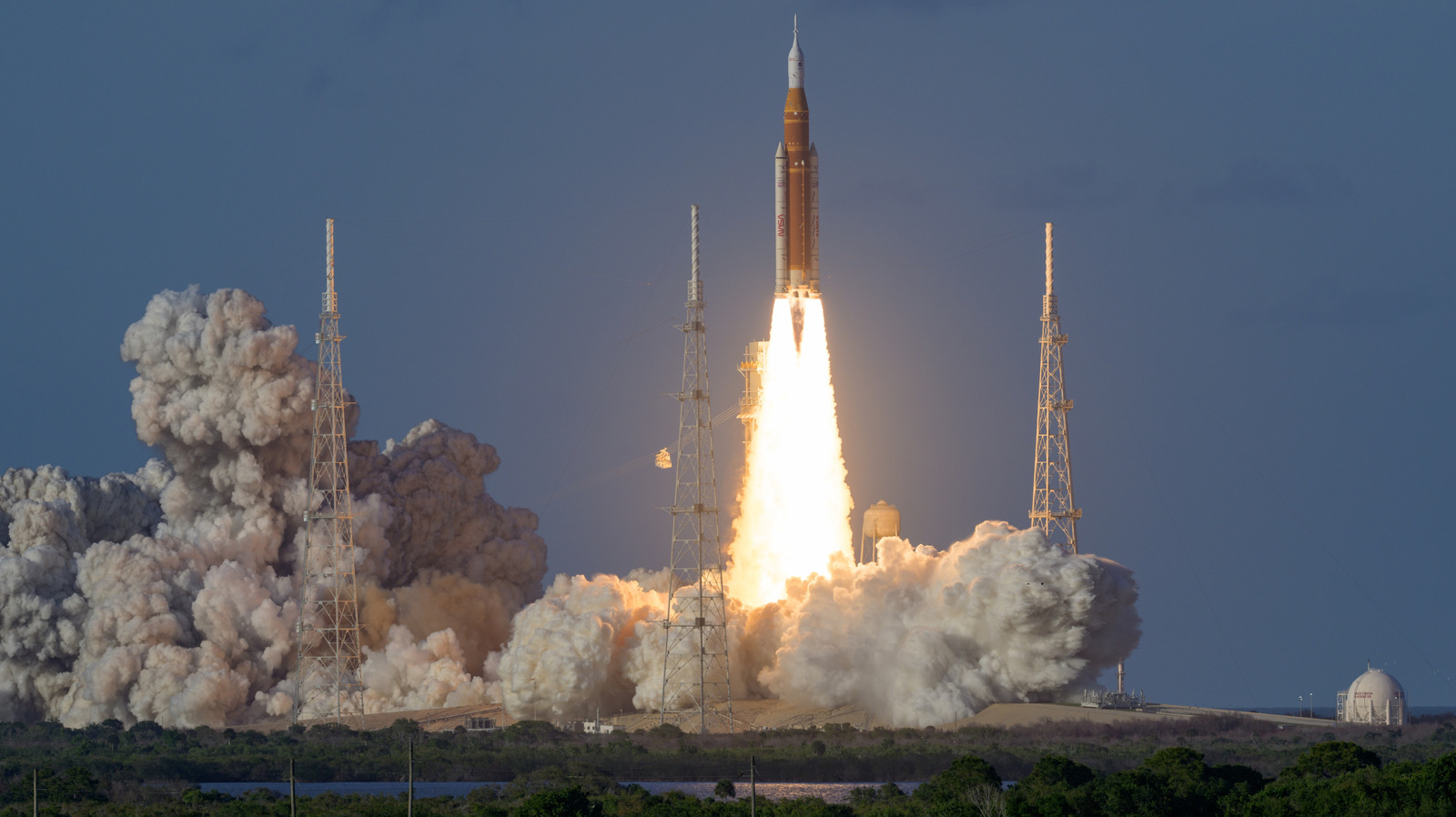
Artemis II pushed human spaceflight forward with a clean run through launch, translunar injection, a crewed lunar loop, and a high‑speed return to Earth, and this article walks through the key milestones and the speeds the rocket and Orion capsule hit at each phase. You will read about what the SLS accomplished during ascent, the velocity needed to escape low Earth orbit, how fast the spacecraft coasted toward the Moon, and the blistering reentry speed the crewed capsule endured. The focus stays on concrete performance and why those numbers matter for future lunar missions.
The mission began with a textbook liftoff that moved from pad to supersonic in the first minute and through maximum dynamic pressure soon after. The core stage and boosters burned with massive thrust, pushing the stack through several speed regimes as it climbed away from Earth. By the time the upper stage delivered Orion to its initial parking orbit, the vehicle was moving at typical low Earth orbital velocity, roughly 17,500 miles per hour, which equals about 28,000 kilometers per hour.
After parking briefly in low Earth orbit, the upper stage reignited for translunar injection, giving the spacecraft the additional push it needed to head toward the Moon. That burn increased velocity enough to change the spacecraft’s trajectory from Earth-circling to a translunar path, placing the combined stack on a trajectory that would carry it out of Earth orbit. Translunar injection brings the vehicle into the tens of thousands of miles per hour range, with speeds commonly reported near 24,000 to 25,000 miles per hour, or about 38,000 to 40,000 kilometers per hour.
Once on the translunar coast, Orion and its crew experienced long stretches of high-speed coasting where velocity slowly changed under the influence of gravity and midcourse corrections. Without significant engine firings, the spacecraft’s speed relative to Earth varied as it climbed away and then fell back under Earth’s gravity and the Moon’s pull. During that cruise phase the vehicle remained in a regime of tens of thousands of miles per hour, a reminder that even nonpowered segments of a lunar mission occur at velocities that dwarf any terrestrial travel.
Close to the lunar loop portions of the trajectory, gravitational dynamics altered relative speed with the Moon, and small burns refined the path to ensure the correct return corridor. Mission planners used precise velocity tweaks to set up the free-return or planned return trajectory, relying on measured speeds to determine timing for burns and communications windows. Those small but critical changes kept the crew on track for the targeted return velocity needed for safe Earth reentry months later.
Reentry is where raw speed becomes a life-or-death engineering problem, and Orion reentered the atmosphere at the extreme end of human-rated return velocities. The capsule slammed into the upper atmosphere at roughly 24,000 to 25,000 miles per hour, which is roughly 38,000 to 40,000 kilometers per hour, creating intense heating and aerodynamic deceleration. The heat shield and the capsule’s aerosciences were tested directly as the vehicle shed most of its kinetic energy before parachutes softened the final descent to splashdown.
Telemetry and ground tracking were vital for confirming those peak numbers, with onboard sensors, Doppler tracking, and range radar providing independent velocity measurements. The data streams verified not only peak speeds but also acceleration profiles and the exact timing of stage separations and burns. Having multiple, cross-checked velocity records is essential because those numbers feed back into trajectory design and safety analyses for upcoming Artemis missions.
From a human-systems point of view, traveling at those speeds puts enormous demands on hardware and crew procedures, and Artemis II served as a stress test for both. Life support, radiation monitoring, guidance and navigation, and abort options were all exercised while the spacecraft moved at the recorded velocities typical of lunar missions. The successful performance under those conditions strengthens confidence in the systems that will carry astronauts on longer stays and eventual lunar surface operations.
Beyond the headlines about distance and drama, the velocity data from Artemis II feeds into practical next steps: refining entry models, improving margin calculations, and tuning guidance so future missions can target landing sites with greater precision. Engineers will use those numbers to tighten uncertainty envelopes and shorten the timeline between planning and execution for Artemis III and other crewed lunar efforts. The mission’s flight profile and its recorded speeds are now part of the engineering baseline that the next generation of lunar missions will build on.
