
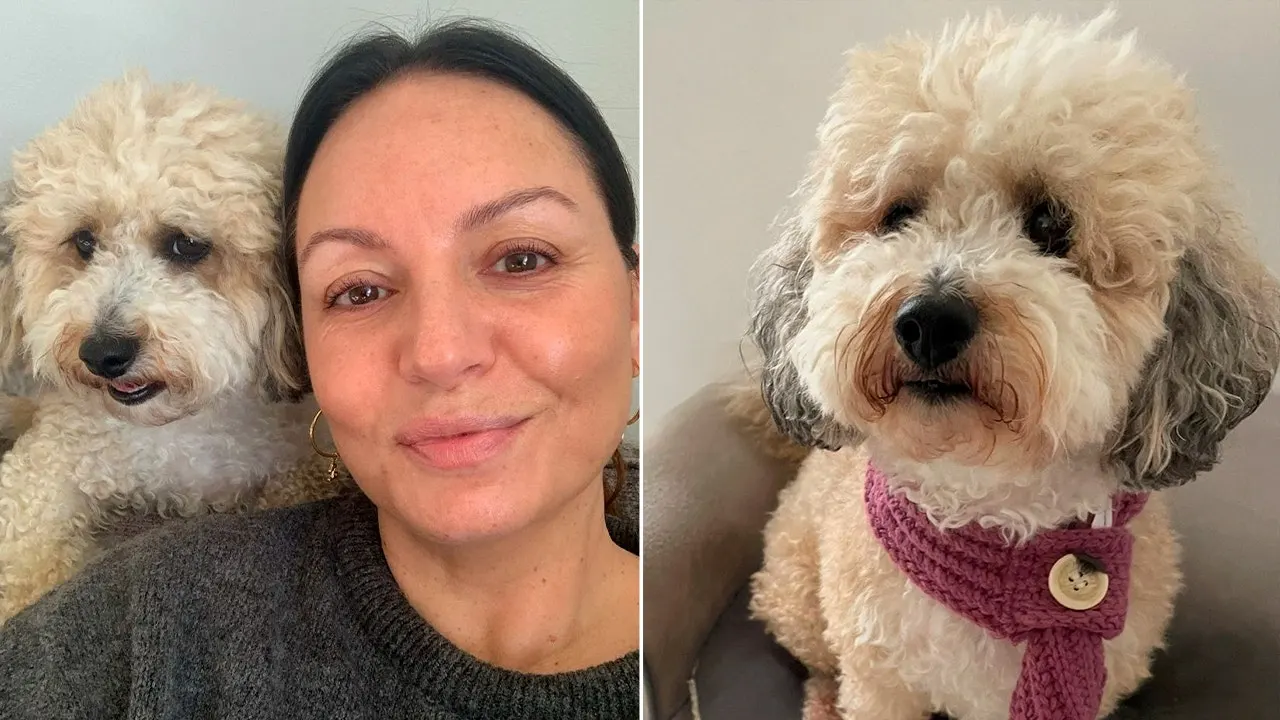
A woman in England who survived two bouts of breast cancer found unexpected company in a small dog she adopted during recovery, only to face a startling turn years later when the pet developed a similar illness. This piece follows her medical journey, the role her dog played in healing, the discovery at the vet, and the messages of resilience she now shares.
Vickie Doogan was first told she had breast cancer at 39 after a dull pain and a lump under her arm prompted medical checks. Doctors confirmed the disease had become invasive, and she entered a grueling treatment routine that would shape the next chapter of her life. That initial diagnosis set the tone for how she would approach health, family, and unexpected sources of comfort.
Treatment involved chemotherapy, surgery, and radiation, each step taking its toll physically and emotionally. After an intensive course of care she was eventually declared cancer-free, a milestone that felt like reclaiming a life that medicine had almost taken. The relief was huge, but Doogan knew the shadow of the disease could return.
At 44 she was hit again with another diagnosis and faced a second round of treatment before genetic testing revealed a BRCA2 gene mutation. Confronted with that risk, she made the difficult decision to undergo a double mastectomy to reduce the chance of recurrence. Those choices reshaped her relationship with her body and her sense of urgency around health.
In 2018, while recovering at home, she brought a small poochon into her life and named her Dolly, and the dog quickly became a constant. “She’s like my shadow,” Doogan said. “She’s the most perfect little dog.” Dolly proved to be a steady presence during the harder days, offering a simple, unwavering comfort when the world felt uncertain.
Years later, in February 2026, a routine trip to the vet for what seemed like an upset stomach led to an unsettling discovery when a lump was found under one of Dolly’s nipples. “The vet said she needed to have a mastectomy. I was so shocked,” Doogan said. “I didn’t even know dogs could have mastectomies.” The moment blurred the lines between pet care and personal history in a way Doogan never expected.
The diagnosis forced a flurry of appointments and decisions that echoed Doogan’s own medical past, and the emotional overlap was striking for her. Caring for Dolly while processing the news stirred old fears but also revealed how much strength she had developed through her own treatments. The vet’s recommendation for surgery underscored how seriously vets treat mammary tumors in dogs and how pets, like people, sometimes need major interventions.
Doogan wants her experience to be more than a strange coincidence; she hopes it offers a real message to anyone facing illness and the long work of recovery. “When I was first diagnosed, I was absolutely floored,” she said. “Chemo was brutal, but thankfully I responded well.” Those lines capture both the shock of diagnosis and the relief of a positive response to treatment.
She also speaks plainly about the possibility of finding joy again after trauma and the way companionship can change the calculus of recovery. “Now I’m living my best life again,” she added. “I want people to know that although breast cancer is scary, you can still live a really full life.” Her words are a mix of hard-won caution and a refusal to let fear define the future.
The story draws attention to genetic risk factors like BRCA2 and to the realities of pet health, reminding readers that vigilance matters for both people and animals. It’s an unusual pairing of human and animal medicine, and it shows how care and compassion can travel both ways. For Doogan, Dolly has been more than a pet — she’s a mirror of resilience and a daily reminder that recovery and love can coexist.
