
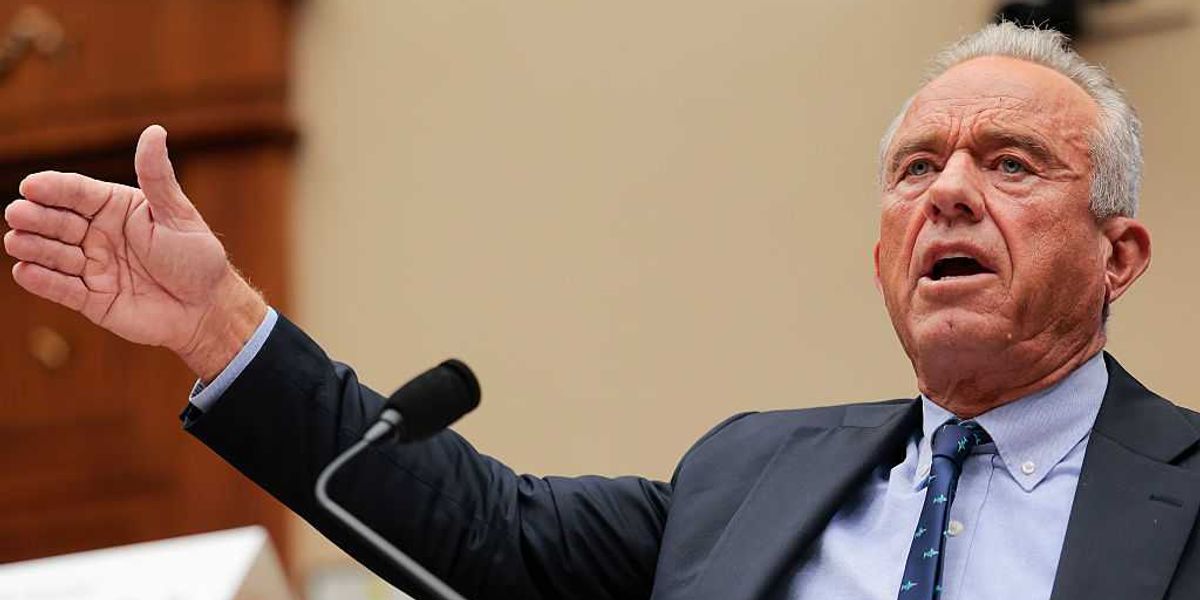
Robert F. Kennedy Jr. pushed back hard during his House testimony, correcting false claims, defending HHS policy choices, and blasting Democrats over who truly benefited from past health law changes. He challenged accusations linking him to the measles outbreak, cited international case comparisons, and brought up findings about illegal immigrants and Medicaid. Kennedy also humanized the debate by talking about two tragic child deaths and insisting on treatment with compassion. Throughout, he framed Obamacare as a giveaway to insurers and billionaires rather than ordinary Americans.
Kennedy faced an early, pointed question about whether he was “responsible for the measles outbreak.” He did not dodge it, calling that accusation “not science-based.” He then laid out a simple timeline and context, arguing the outbreak began before he took office and is a global problem, not one caused by his actions or policies.
He used numbers to make his point, noting the U.S. counted roughly 2,200 measles cases in 2025 while neighboring countries had more per capita. That comparison was meant to push back on partisan finger-pointing and show the situation is complex, not a tidy political talking point. Kennedy insisted facts matter when the stakes are public health and public trust.
Kennedy told the committee about two little girls who died in a Mennonite community, saying those families felt they were treated as pariahs when they sought care. He said he attended one funeral and spent time with the other family, who believe the hospital response could have saved their children. He pushed for compassion and access to proper treatment for people who decline vaccines for religious or other reasons, arguing humane care shouldn’t be withheld because of politics.
When Rep. Greg Casar accused him of “kicking 15 million Americans off of their affordable health care,” Kennedy pushed back that he meets with everyday Americans and advocacy groups regularly. “I meet with everyday Americans every day,” Kennedy replied, pointing out his outreach to tribes and communities. He framed his work as hands-on and focused on real people rather than elite donors or talking points.
On Medicaid spending, Kennedy firmly rejected the idea of cuts, saying, “There are no cuts to Medicaid. … We are increasing Medicaid spending by 47% over the next 10 years. … How is that a cut? That is only a cut in Washington, D.C.” That line was meant to underline a disconnect between political rhetoric and budget realities, and to push lawmakers to stop weaponizing budget language for headlines.
Casar pressed on, asking about 1.4 million people who allegedly lost coverage under Obamacare, and Kennedy answered bluntly about the program’s unintended beneficiaries. “They’re almost all illegal immigrants. … We found 1.5 million illegal immigrants illegally collecting Medicaid,” Kennedy remarked, using the figure to argue that enforcement and priorities matter. From a Republican perspective, that point lands as a direct indictment of how taxpayer dollars have been redirected away from citizens.
Kennedy did not accept a framing that he spends time with billionaires instead of average voters, and he turned the table on Democrats’ record. “‘It is the Democratic policy to benefit billionaires,'” he said, accusing the architects of past health laws of padding insurer profits at the expense of patients. He pointed to surging stock gains for insurance companies after Obamacare as evidence that the money flowed upward, not into better care for Americans.
Throughout the hearing, Kennedy stayed on message: defend the department’s record, correct misleading claims, press for compassionate treatment for nonvaccinating communities, and call out what he sees as Democratic policy that funnels money to powerful interests. He repeatedly pushed lawmakers to look at data and real-life consequences rather than rely on partisan narratives that obscure accountability.
