
The sheriff of a Midwestern county has filed a defamation suit after a woman’s dramatic claim that she was detained for more than a day failed to hold up under scrutiny, and the case has sparked a messy fight over accountability, political amplification, and the cost of unverified allegations.
Sundas “Sunny” Naqvi came forward with a story that drew national attention, saying she and co-workers were held more than 30 hours despite being U.S. citizens. Her account quickly found sympathetic ears and was repeated by local activists and elected officials, turning a personal claim into a public controversy. But questions mounted as authorities gathered records and messages that did not line up with her timeline.
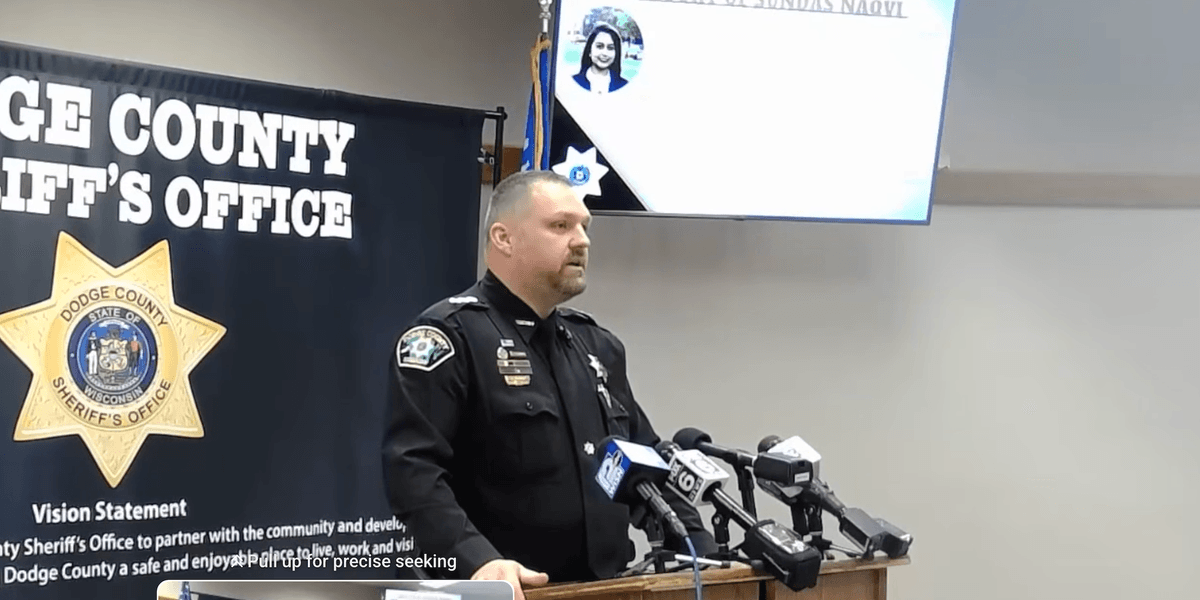
Dodge County Sheriff Dale Schmidt moved from public denial to a legal response, filing a defamation lawsuit seeking damages and clarity. He took the unusual step of releasing investigative material he said contradicted Naqvi’s account and showed she was not in Dodge County custody. The sheriff insists the evidence demonstrates the story was not supported by verifiable facts.
‘They have not been supported by any — any — verified evidence at all.’ That exact line came from Sheriff Schmidt at a briefing where he outlined what the sheriff’s office says are video clips, messages, and witness accounts that undermine the initial narrative. His point was blunt: when claims of official misconduct surface, those claims deserve proof before they are amplified as fact. The lawsuit names Naqvi and others alleged to have published or republished the disputed story, and includes placeholder defendants to be identified later.
Naqvi said she arrived at O’Hare from Turkey and was taken to multiple facilities, including what she described as an ICE location in one suburb and a county jail in another state. Those allegations were enough to prompt public outrage and force officials to respond. But the sheriff’s released timeline and statements from people connected to Naqvi suggest she left the airport quickly and was not held in Dodge County custody.
A local Democratic county commissioner publicly supported the initial account and criticized federal immigration actions in strong terms, saying at the time, “I don’t think they want to own up to the fact that once again they have illegally detained American citizens without due process.” That political amplification helped the story spread, but it also put spotlight on how easily accusations can be weaponized before facts are checked. The commissioner has since softened his tone in light of the lawsuit.
“I don’t have any charges here in Dodge County to bring against her. My only recourse is to make sure that the public knows that she can’t do this,” Sheriff Schmidt said, explaining why he pursued civil litigation instead of criminal charges. For him, the suit is about deterrence and restoring trust. He argues that false public accusations damage the office, waste resources, and erode confidence in real cases of misconduct.
The sheriff’s complaint says he will add additional defendants once they are identified, calling out people who allegedly helped spread the story. That move is meant to trace the chain of publication and hold accountable those who circulated the claims without proper verification. The $1 million figure in the suit is a clear signal the sheriff wants a strong remedy and a public statement that the office was wrongly accused.
Naqvi’s past has also come under scrutiny, with reporting documenting prior incidents that authorities say involved false statements. Those reports are part of why this case has taken on a larger political and legal life beyond a single dispute. The controversy showcases the risks when explosive allegations meet social media, partisan actors, and a rush to judgment.
As the lawsuit proceeds, local officials are asking for patience and proof rather than headlines and hot takes. “It is my understanding that a lawsuit has been filed. I have not seen it. And if a suit has in fact been filed, I cannot comment on pending litigation,” the commissioner said after the suit was announced, signaling a pause in public commentary. Meanwhile, the sheriff intends to press his case and let the courts decide responsibility and facts.
