
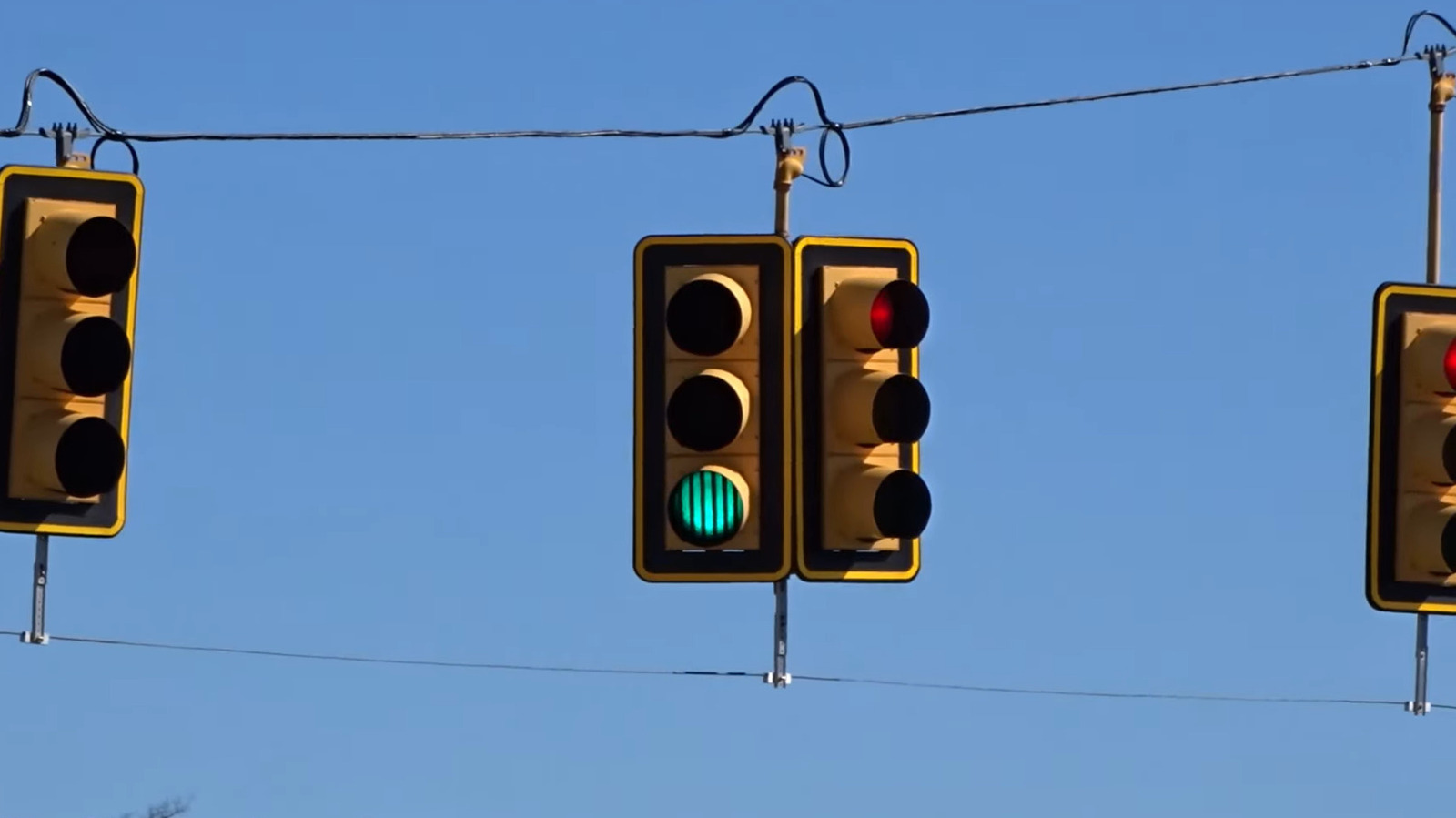
This piece explains why some traffic lights have black stripes or slats over their faces, what those slats are called, how they work to improve visibility, and why engineers still use them even as signal technology changes. You’ll get clear, practical reasons for the design and a sense of when and where you’re most likely to see them in use. Read on if you’ve ever wondered whether those little black fins are decoration or engineering.
Those black stripes are usually called visors, louvers, or slats, and they sit in front of the lens like a tiny sunshade for the signal. On close inspection they look like shallow fins or a short hood, often painted matte black so they don’t reflect light back into a driver’s eyes. They are simple bits of hardware but they make a surprisingly big difference in how clearly a light reads from the road.
The primary job of a visor is to control the viewing angle so the driver in the intended lane sees the signal cleanly while drivers elsewhere do not get confusing flashes. When low sun hits a lens at the wrong angle it can wash out the color or create a flare that looks like a lit signal, and those slats help block direct rays that would otherwise interfere. That targeted shading reduces the chance that someone will mistake glare for a real green or red and helps the correct driver quickly identify the active indication.
Visors also sharpen the signal’s apparent contrast by shielding ambient light and focusing the beam toward the approach lane, which is especially helpful at busy, multi-lane intersections. Without them, signals can appear washed out by bright sky or reflected light from nearby glass on buildings or vehicles, making it harder to distinguish colors at a glance. By narrowing the visible cone of light, the slats push the signal’s appearance toward a crisp, unmistakable dot of color for the drivers who need to see it.
Materials and shapes vary: some are molded plastic pieces that snap on, others are metal and riveted into place, and many are adjustable so technicians can tune the cutoff for different road geometries. LED signals changed the thinking because LEDs produce tighter, directional beams, but visors still have a place to tame stray light and reduce side glare. In some cases designers use louvered inserts with thin, horizontal blades to achieve a more precise cutoff without blocking the signal for legitimate viewing angles.
Standards and local practice guide when visors are used, and many agencies pair them with backplates to further boost contrast against bright backgrounds. The Manual on Uniform Traffic Control Devices sets general principles, and local traffic engineers apply those principles to complex intersections where sightlines and sun angles cause problems. Drivers won’t notice the planning behind it, but engineers rely on these small features to keep intersections safer and more predictable.
They are not a cure-all: badly positioned visors can block the view for some road users, and in rare cases the slats themselves collect dirt or ice that needs routine maintenance. That’s why city crews inspect signals and clean or replace visors as part of regular upkeep, and why newer designs try to balance shielding with unobstructed sightlines for pedestrians and cyclists. Still, the maintenance trade-off is usually worth it once you factor in fewer confused drivers and a lower chance of signal-related incidents.
Next time you spot a traffic light with those black stripes, think of them as a tiny tool that shapes visibility and cuts down on glare rather than as mere ornament. They sit quietly doing their job: narrowing unwanted light, guiding attention to the correct signal, and making complicated intersections easier to read. For drivers, that means one less distraction and one clearer decision at a time when every second matters.
