
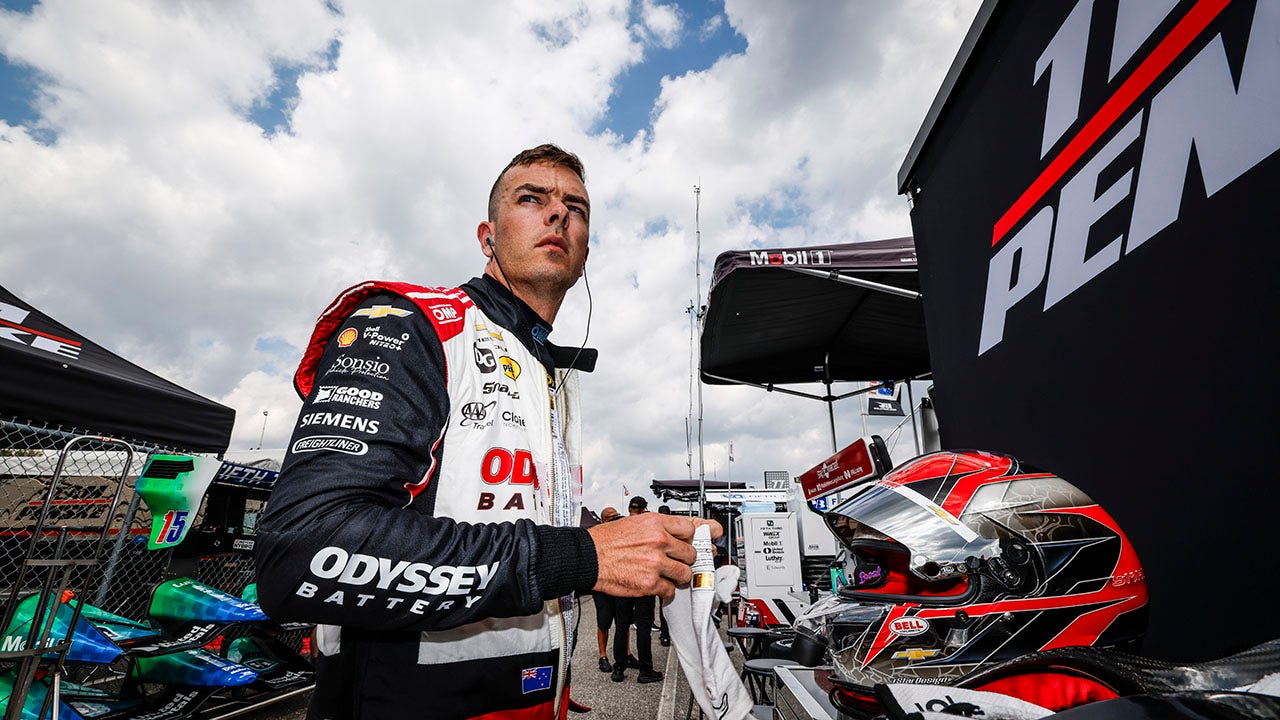
Scott McLaughlin suffered a violent crash during practice ahead of the Grand Prix of Alabama but emerged from the wreck on his feet. The incident came after he lost control and hit the wall rear-end first, leaving his car badly damaged while track crews moved quickly to secure the scene and check on the driver.
The impact sent McLaughlin’s car into the tire barrier at speed, and the rear section absorbed most of the force. Emergency crews responded immediately and performed standard medical checks before clearing him from the scene, and he was later confirmed to be out of the car under his own power. Photographs of the aftermath showed significant rear-end damage, underlining how brutal the contact was.
Teams and officials paused on-track activity while debris was cleared and the barrier inspected for safety, a normal precaution after a high-speed collision. The session stoppage allowed engineers to evaluate track conditions and gave organizers time to confirm the wall and safety structures remained fit for continued running. That process minimized further risk to drivers and ensured the weekend schedule could proceed once the area was pronounced safe.
McLaughlin’s crew immediately began damage assessment on the wrecked chassis, cataloging what could be repaired and what would need replacement. The rear crash structure is designed to take hits like this, so while the visual damage looked severe, the core survival cell was intact. Teams often face a scramble to source replacement parts and prepare a backup car if the primary chassis is compromised beyond repair.
IndyCar’s safety systems, from reinforced cockpits to helmets and restraint harnesses, played a central role in protecting McLaughlin during the crash. The sport has invested heavily in improving driver survivability after high-profile incidents in past decades, and quick extraction protocols remain drilled and precise. Track medics carry out thorough checks even when drivers appear uninjured, because the nature of high-speed impacts can mask underlying issues.
From a championship and team standpoint, any crash like this has ripple effects beyond the immediate repair bill. Lost track time can hinder setup work and data gathering that teams rely on to tune race cars for the event. Engineers must balance the urgency of repairs with the need to maintain a car’s competitive baseline, often working through the night to get everything ready for qualifying or the race.
Fans and paddock insiders watched closely as mechanics removed damaged components and consulted telemetry to reconstruct what happened in the seconds before the wall impact. Telemetry provides a detailed record of steering, throttle, and brake inputs that helps determine whether an equipment failure, a driver error, or changing track conditions precipitated the loss of control. That data is crucial for both immediate fixes and longer-term learning aimed at avoiding repeats.
Race control’s post-incident review typically looks at track surface, tire condition, and potential debris that could have destabilized the car. Safety upgrades and barrier repairs are prioritized if any structural weakness is identified, and stewards may adjust session protocols to mitigate recurring risks. Meanwhile, the team’s logistical challenges include coordinating spare parts, arranging repair windows, and keeping the driver engaged and focused through what can be an unsettling experience.
Ultimately, the most important outcome was McLaughlin being able to walk away after a rear-end, high-speed collision that left his car visibly mangled. The scene served as a reminder of the physics involved at race speeds and the layers of safety that modern open-wheel racing relies on. Crews, officials, and the driver moved quickly from incident response to recovery and preparation for the rest of the weekend’s program.
