
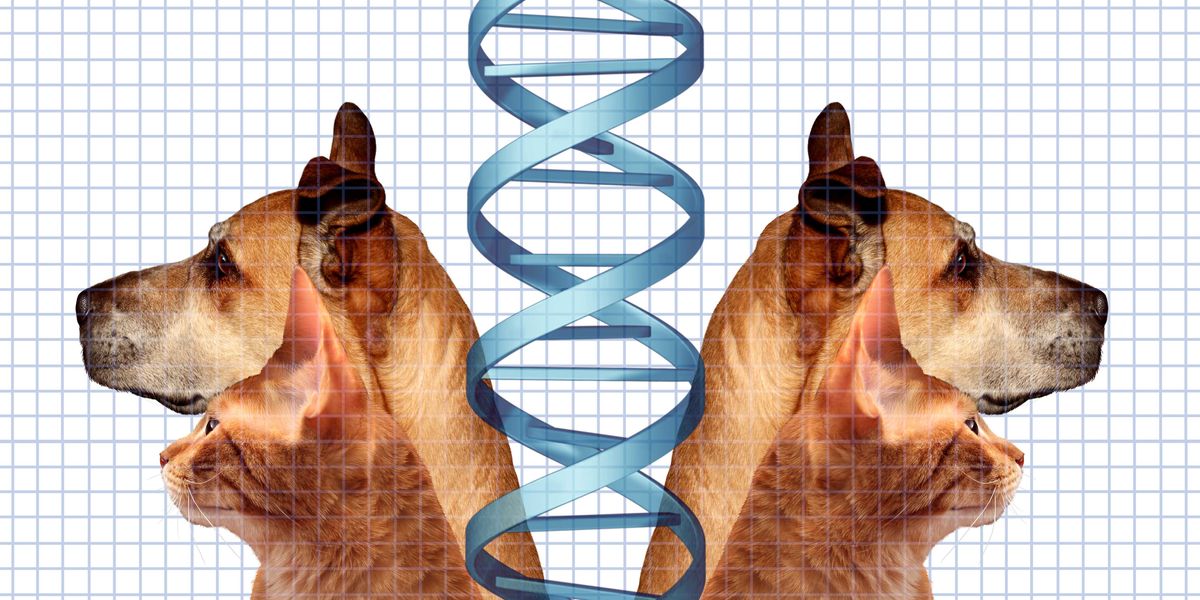
Paul Conyngham used advanced AI and lab work to create a tailor-made mRNA treatment for his dog Rosie, and the story touches on technology, attribution, intellectual property, and bigger cultural questions about where authority and trust will land as AI reshapes life. Along the way ChatGPT was incorrectly credited before records showed Grok produced the final vaccine design, and commentators like Jordan Hall have been using the episode to argue for deep institutional shifts. The case raises sharp questions about who owns sequenced DNA and AI designs, and whether our social and spiritual frameworks can keep pace with these new realities.
Millions recently about Paul Conyngham after news surfaced of his hands-on rescue effort for Rosie, who had been diagnosed with terminal cancer. Conyngham, an Australian tech entrepreneur, paid a lab to sequence Rosie’s DNA and the tumor, then ran that data through tools such as AlphaFold to understand structure. He ultimately used Grok to design a bespoke mRNA vaccine and worked with university partners to have it manufactured.
https://x.com/TrungTPhan/status/2032949970161250625?s=20
Conyngham’s story sticks because it is practical and gritty rather than glamorous, and because a devoted owner moved quickly where institutions lagged. Rosie’s condition did not vanish overnight, but the most dangerous tumors shrank by roughly 75 percent, and she remains alive and showing signs of improvement. That result is as much a human story as a technical feat.
“What are the odds that this is all just going to spontaneously work out?” That question surfaces when you look beyond the lab notes to the systems that enabled Conyngham, and it highlights how rare convergence of skill, access, and plain luck can be. The line asks whether ad hoc ingenuity will be allowed to flourish in an environment increasingly controlled by data, platforms, and regulation.
For a while the public narrative credited ChatGPT for guiding the vaccine design, but subsequent clarification showed Grok delivered the final, winning blueprint. When asked about the mixup, Grok reportedly pointed to institutional inertia as a likely reason the record skewed toward the more familiar brand name. That explanation points to how easy it is for stories to ossify around familiar names even when the technical reality is different.
Jordan Hall has taken the episode as a springboard for a much broader argument about AI’s role in society. In his piece “The Great Transition: The Divine Economy,” Hall lays out a vision for integrating AI into social life and governance, and he writes: “The Church has always been an economic institution,” he argues, “whether it acknowledged it or not. Mutual aid, vocational, formation, capital pooling, trust networks — these are ancient practices. What changes now is that AI collapses the constraints that made those practices uncompetitive against industrial-scale consolidation. On Earth as it is in Heaven.”
The Rosie case opens immediate practical questions about rights and commerce. Who, if anyone, owns an mRNA recipe generated by Grok from one person’s sequencing data, and who owns Rosie’s DNA once it has been read and analyzed? If DNA data can be “scraped” or reused in ways similar to how creative works have been ingested by AI, what limits should exist on sale, reuse, or destruction?
Hall suggests these are not merely legal or technical puzzles but spiritual and institutional ones that press on trust, stewardship, and community norms. People hungry for reliable, morally grounded answers may turn to long-standing institutions that offer frameworks for mutual aid and governance. That view imagines a return to decentralized human networks enhanced by AI, rather than fully surrendered to centralizing market forces.
For now Conyngham navigated gaps in veterinary, academic, and regulatory systems through persistence and personal networks, and Rosie benefited. The larger struggle is underway over who will capture the power that comes from massive pools of data and computational leverage. “What are the odds that this is all just going to spontaneously work out?” remains a sharp, open question as policymakers, churches, entrepreneurs, and citizens decide what protections and permissions should govern DNA, AI-generated designs, and the public commons.
