
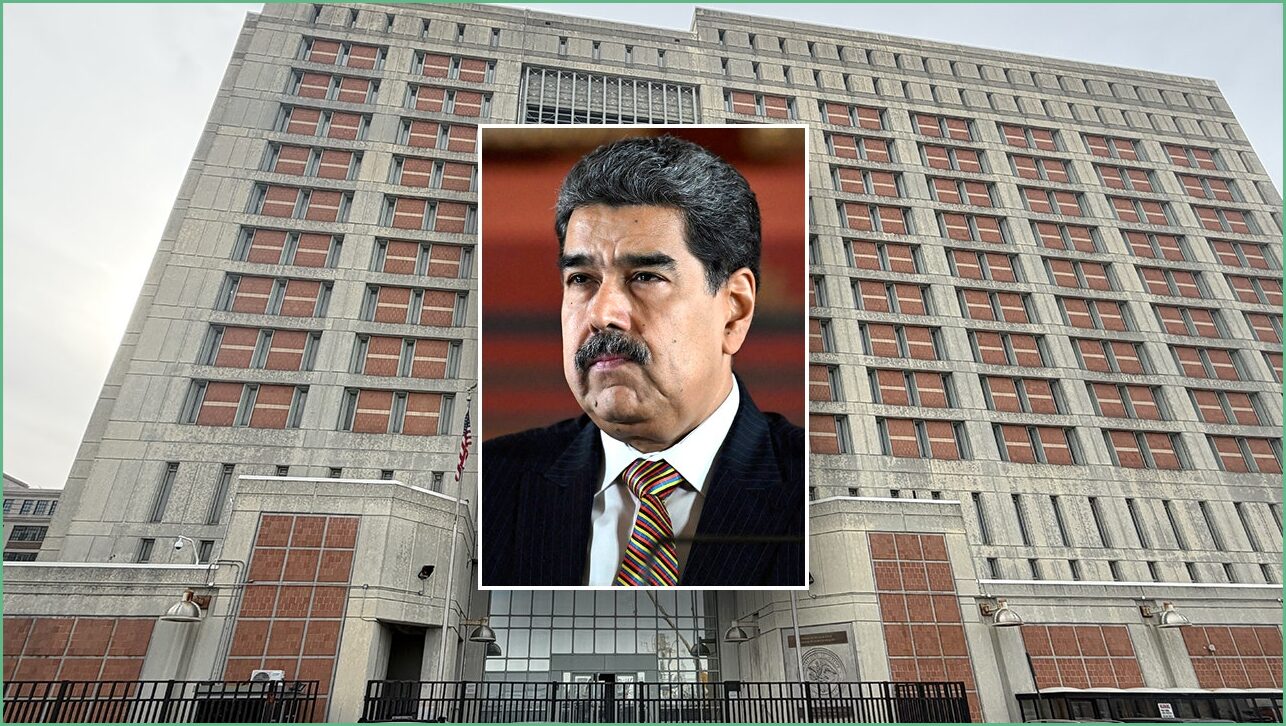
President Trump’s nighttime operation to seize Nicolás Maduro and bring him to U.S. justice has set off a fierce political fight, raised constitutional questions, and resurrected past precedents about when presidents can use military force. This piece argues the action was lawful under Article II, justified by an overwhelming drug threat to Americans, consistent with past administrations, and likely to be welcomed by Venezuelans yearning for freedom and better days.
Democrats reacted in predictable outrage, calling the raid “illegal,” “unjustified” and “unconstitutional.” Their denunciations have less to do with constitutional analysis than with reflexive opposition to anything the president does. If a Democratic president had done the same thing, the chorus would sound very different.
The legal authority for the president to order such an operation rests in Article II of the Constitution, which vests the commander in chief with the power to direct military forces in defense of the nation. That authority is not a relic; modern practice and Supreme Court precedent have long recognized a strong executive role in using armed force short of a formal declaration of war. The constitutional text and historical practice both support decisive executive action when U.S. security is on the line.
The practical justification is plain: Venezuela has been a major source of illegal narcotics that kill Americans and destabilize communities. Government estimates place annual shipments at roughly 200 to 250 metric tons of cocaine originating there, and that flow represents a clear, ongoing threat to U.S. citizens. Stopping the kingpin who allegedly controlled that trafficking is a defensive act, not an adventurism.
Critics who cite the War Powers Act misunderstand its contours. The 1973 resolution imposes reporting duties and timelines, not an absolute prohibition on presidential action. The statute requires notifying Congress within 48 hours once forces are introduced into hostilities, but it does not handcuff the commander in chief before he moves to neutralize an imminent threat. Presidents of both parties have acted under that understanding for decades.
The “Take Care Clause” demands that the president “shall take Care that the Laws be faithfully executed,” and that duty includes enforcing criminal laws against those who traffic in deadly narcotics. When a foreign national stands accused in U.S. courts of running a narco-terror enterprise that floods American streets with poison, the executive has both the authority and the obligation to bring that person to justice. Immunity for de facto rulers is not written in our laws.
History offers a clear analogue. In 1989, President George H. W. Bush ordered forces into Panama to capture Manuel Noriega, who faced indictments for drug trafficking and other crimes. Noriega’s legal challenges to arrest and prosecution failed, and the United States proceeded with prosecution under the same principles being applied now. Precedent matters, and Noriega shows the nation has acted before when criminal conduct and U.S. safety demanded it.
On the international stage, accusations that the operation violated Article 2(4) of the U.N. Charter—prohibiting “the use of force against the territorial integrity” of any state—ignore the Charter’s self-defense exception and the reality of overlapping legal obligations. When American lives are threatened by narco-terror networks operating from abroad, a defensive military response aimed at stopping imminent harm fits within recognized international-law exceptions. The United States also remains a permanent Security Council member with veto power to defend its lawful actions.
Some opponents insist Congress should have approved this specific operation, but the Framers entrusted the president with the day-to-day conduct of national defense and the ability to respond swiftly to threats. Requiring prior legislative sign-off for every necessary operation would paralyze the executive branch at the moment decisions count the most. Courts and historical practice have affirmed the president’s latitude to act when speed and secrecy are essential.
Beyond legality, there is the human angle: millions of Venezuelans have suffered under regimes that looted resources, suppressed dissent, and presided over collapsing economies despite vast oil wealth. Many now see a chance for change and relief from tyranny, and the removal of a drug-running dictator could open the door to free elections, economic recovery, and restored sovereignty. If Venezuelans can vote and rebuild, they will owe a debt to those who acted to remove the threat.
At bottom, this operation reads like a classic exercise of presidential responsibility—combining national-security authority, enforcement of U.S. criminal law, and historical precedent. The coming legal fights are predictable, but the law and practice of past administrations provide a clear framework that supports decisive executive action when American lives and interests are in peril.
