
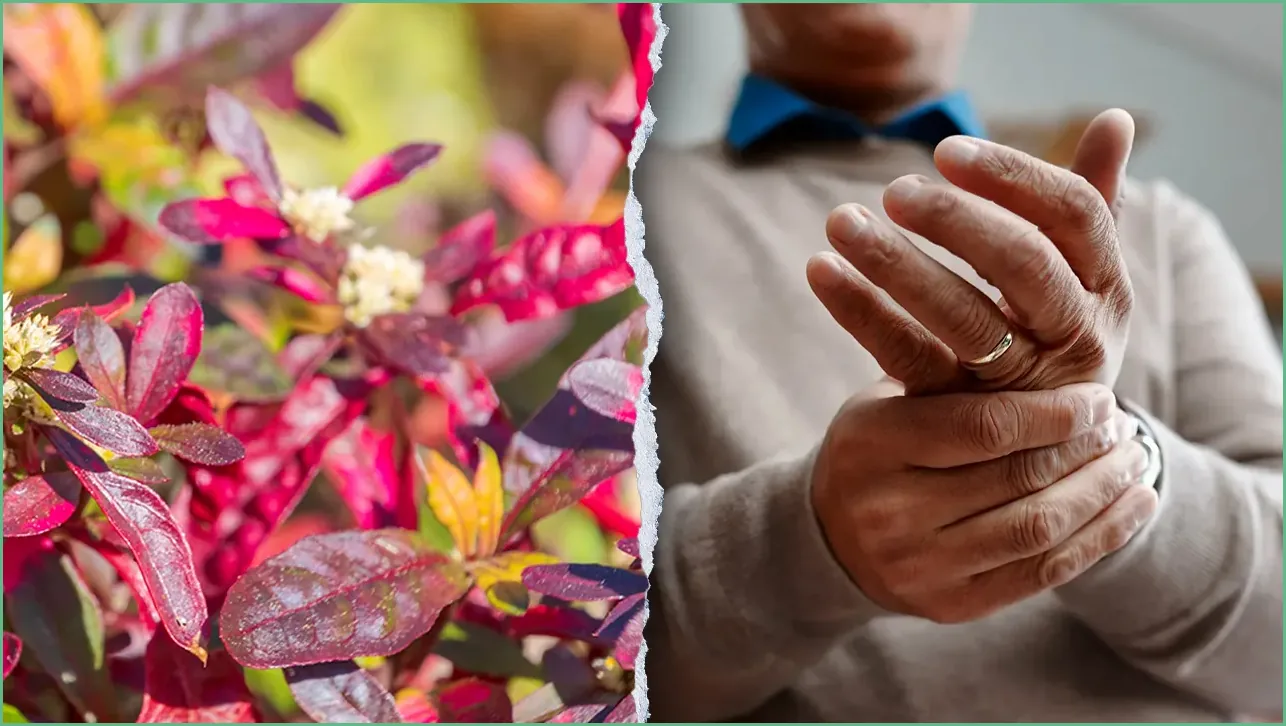
Researchers in Brazil have tested Joseph’s Coat (Alternanthera littoralis) and found lab evidence that an alcoholic extract from its aerial parts reduces swelling, protects joint tissue in arthritis models, and showed no obvious toxicity at the doses studied. The plant grows along Brazil’s coast and has traditional uses for inflammation and infections, and the new work aims to move those folk claims into controlled science. This article walks through what the team did, what they found, and the caveats that keep this from being a treatment for people today.
Joseph’s Coat is a coastal herb used locally for generations to ease inflammation and infections, and scientists wanted to see whether those reports had measurable effects. The researchers focused on the stems and leaves that grow above ground and used an ethanolic extraction to pull out the plant’s active compounds. That approach is common in pharmacology because alcohol extracts a wide range of molecules that might be biologically active.
The lab experiments used established models of arthritis to test whether the extract could reduce visible swelling and markers of tissue damage. The treated joints showed less edema and improved structural signs compared with untreated controls, indicating the extract had a clear effect on the inflammatory process. Joints examined after treatment also displayed fewer signs of degeneration and generally healthier tissue appearance.
“In the experimental models, we observed reduced edema, improved joint parameters, and modulation of inflammatory mediators, suggesting antioxidant and tissue-protective actions,” Arielle Cristina Arena, associate professor in the Department of Structural and Functional Biology at the Institute of Biosciences at UNESP’s Botucatu Campus, said in a press release. The quote summarizes the team’s interpretation that antioxidant activity and modulation of inflammatory signaling contributed to the benefits. Those mechanistic hints are important because they help point future work toward specific pathways and molecules.
The investigators also measured biochemical markers tied to inflammation and oxidative stress, and they saw shifts consistent with a dampened inflammatory response. Oxidative stress is a major driver of tissue damage during chronic inflammation, so any intervention that reduces those signals can preserve joint structure. By showing changes at both the tissue and molecular level, the study strengthens the case that the plant extract has real biological activity.
The teams behind this work came from several Brazilian universities, bringing together expertise in pharmacology, toxicology, and traditional medicine research. They ran toxicology screens in the same animal models to check for harmful side effects and found no obvious toxicity at the doses tested. That safety signal is encouraging, but animal safety does not automatically translate into human safety for reasons the researchers acknowledge.
COMMON SPICE MAY BEAT DEPRESSION AND BOOST SEXUAL HEALTH, DOCTOR SAYS
There are important limitations: these experiments were done in animals and controlled lab settings, not in people, so the results cannot be applied directly to patients with arthritis today. Human bodies metabolize plant compounds differently, and uncontrolled home preparations can vary wildly in concentration and purity compared with a lab-made extract. The study used a specific extraction method under controlled conditions, which would be crucial to replicate in any future clinical development.
EXPERIMENTAL TREATMENT EASES KNEE ARTHRITIS PAIN WITHOUT SURGERY OR PILLS
The research did not isolate the single compound or compounds responsible for the anti-inflammatory effects, so standardizing a future therapy would require further chemistry work. Identifying active molecules allows precise dosing, quality control, and safety testing over the long term, which is why the authors call for isolation and characterization studies next. Long-term toxicology and eventual human clinical trials are the necessary next steps before any recommendation for medical use.
GARLIC EXTRACT RIVALS TRADITIONAL MOUTHWASH FOR DENTAL HYGIENE IN SURPRISING NEW REVIEW
If subsequent studies confirm and expand these findings, Joseph’s Coat could provide leads for new plant-derived anti-inflammatory agents that might complement existing therapies. Modern medications for chronic inflammatory disease can be effective but often come with side effects that limit prolonged use, so safer alternatives or adjuncts are worth exploring. For now, the plant is an intriguing candidate in early-stage research, not a ready-made remedy for people with arthritis.
