
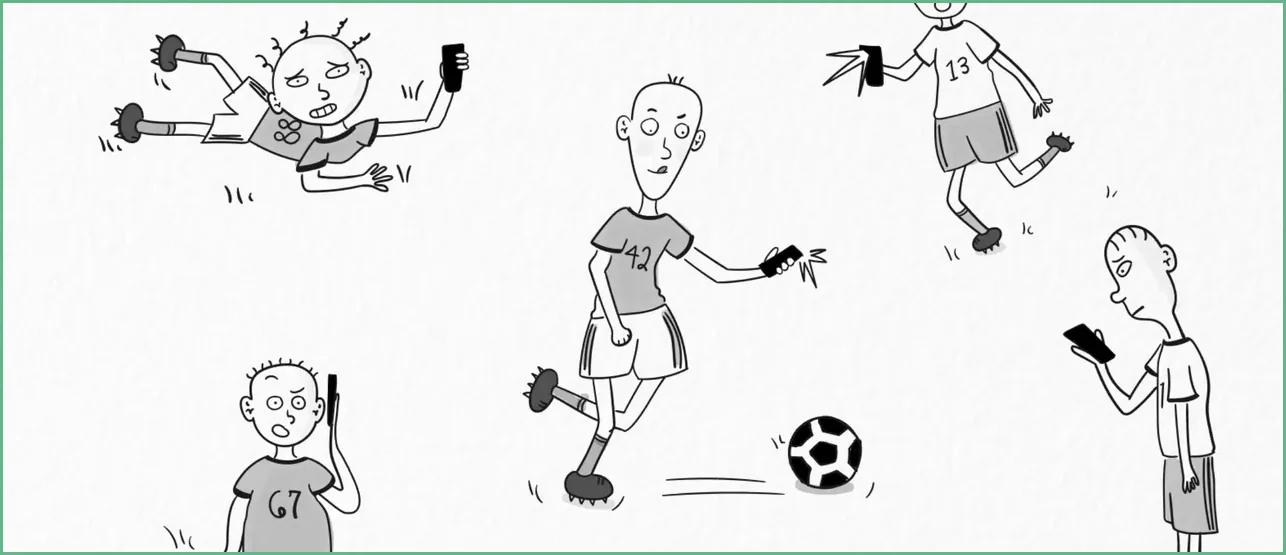
Young athletes are getting pulled into social media in ways that don’t feel right, and that shift is changing the tone of youth sports. This piece looks at mounting pressure on middle school and early teen players to build public profiles, the role of parents and coaches, and why the old ways of sharing highlights still made more sense. The goal here is to push back on the idea that kids need a public brand at age 12 or 13 and offer a clearer, calmer perspective on what youth sports should be.
Is social media corrupting youth sports? Last week, Fox Soccer analyst Stu Holden drew attention to a trend that should worry parents and coaches: some travel and club soccer teams are effectively requiring players under 15 and 16 to create Instagram accounts to showcase their skills. That demand turns an extracurricular into a public audition at an age when kids are still figuring out who they are. Forcing a social identity on a preteen blurs the line between healthy ambition and performative pressure.
Teams and clubs are treating highlight reels like product pages, and the pressure doesn’t just come from kids who want to be noticed. Overinvolved parents and organizations chasing exposure are nudging young players into public profiles before they can consent to the kind of scrutiny that follows. That dynamic introduces comparisons, likes, and commentary into something that used to be a private learning curve. It’s not hard to imagine how that can amplify anxiety and make a hobby feel like a full-time job.
There’s a simpler, less toxic way to do things that athletes used to follow. Talented high school players used to rely on platforms like MaxPreps and unlisted YouTube videos to share stats and clips privately with college recruiters. Those options allowed control over who saw the footage and kept the focus on development rather than clicks. You didn’t need a public Instagram to get recruited; you needed good tape and someone willing to coach you toward improvement.
It’s one thing for a parent to help a kid train in the off-season or to drive them to extra sessions, and that kind of support is often healthy. It’s another thing for a parent to weaponize social media as evidence of worth or future payoff. We’ve all seen the parents who act like every youth game is the World Series, and that intensity can squash the joy of playing. When adult expectations start dictating a child’s online presence, the balance tips from encouragement to exploitation.
Kids already face enough nerves and pressure without an audience watching every moment. Personal anecdotes about pre-game anxiety are common; some players meditate, some get physically sick from nerves, and some carry lingering stress years after the game ends. One writer even admits to doing a zen session before matches and experiencing severe pre-game nerves, which stuck with him long after high school. Adding a public profile only compounds those feelings by making mistakes and bad days part of a permanent, public record.
Youth sports should be a place to escape screens, learn a game, and build friendships without instant evaluation. The best outcomes come when participation is driven by curiosity and a love for the sport, not by followers and dopamine rewards. Coaches and parents who prioritize skill-building, teamwork, and fun help kids grow into athletes who make choices, not athletes groomed to perform for an online audience.
Statistically, the path to the pros is narrow: most kids will play through high school, a smaller number will find a college roster spot, even fewer will reach Division I, and only a whisper will go pro. That reality should free adults from treating every youth season like a lost chance to relive their own dreams. When the goal becomes personal fulfillment for the parent rather than development for the child, something has gone wrong.
Instead of insisting on Instagram profiles for 12 and 13-year-olds, parents and clubs should ask whether publicity truly serves the kid or the adults around them. Let young athletes enjoy the sport, practice without the pressure of public validation, and use private, recruiter-friendly tools when the time is right. (Subscribe to MR. RIGHT, a free weekly newsletter about modern masculinity)
