
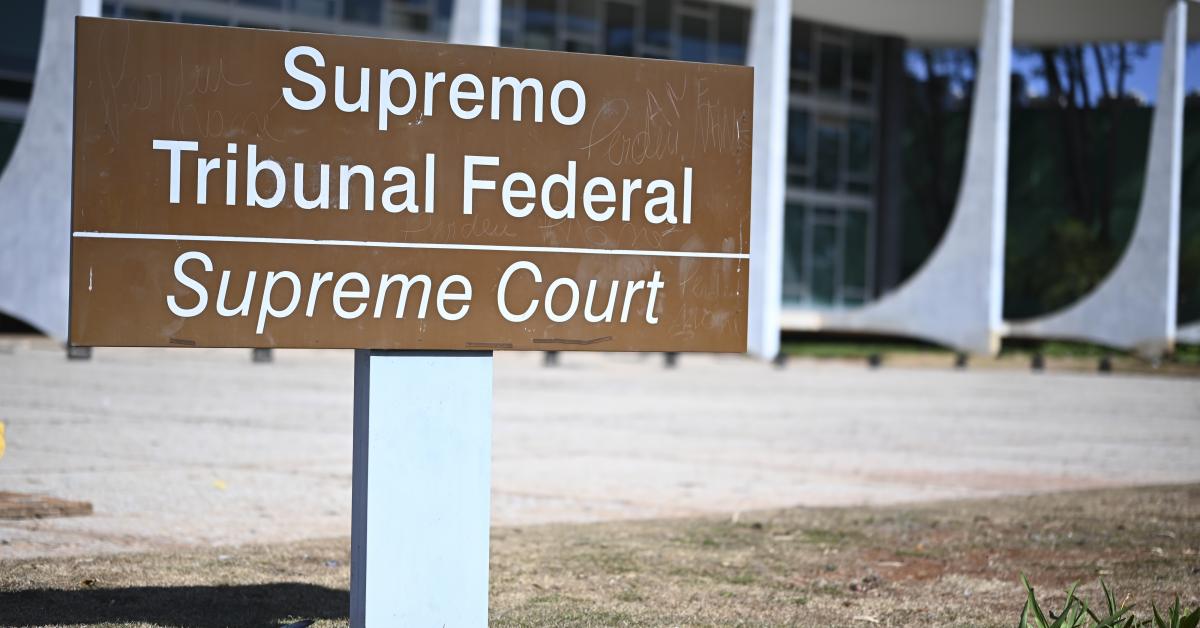
The State Department announced a targeted set of sanctions aimed at the support network of Brazilian Supreme Court Justice Alexandre de Moraes, naming his wife and the family holding company. The move follows a high-profile conviction of former President Jair Bolsonaro and a series of escalating U.S. responses that started months earlier. Washington says the action is meant to choke off the financial and administrative scaffolding that shields a judge accused of political targeting.
Bolsonaro was convicted this month on charges tied to an alleged attempt to retain power after the 2022 election and was handed a substantial prison sentence. Critics in conservative circles see the case as deeply politicized and worry about the message it sends to sovereign nations when international institutions weigh in. From a Republican perspective, the key question is whether U.S. measures defend rule of law or fan the flames of judicial overreach abroad.
The sanctions announced add Viviane Barci de Moraes and the Lex Institute to a growing list of designations tied to the judge. This is an extension of earlier action that singled out Alexandre de Moraes himself in July, and it aims to expand pressure beyond a single actor. By naming family and business structures, the U.S. intends to cut access to assets and administrative cover used to shield personal wealth.
“acts as a holding company for de Moraes, owning his residence in addition to other residential properties. The nominal ownership of many of these properties was transferred from de Moraes and his family to the Lex Institute over a decade ago. De Moraes’ wife, Viviane, is the Managing Partner of the Lex Institute and has been the sole manager and administrator of the Lex Institute since its establishment in 2000. Together, the Lex Institute and Viviane hold the de Moraes family’s wealth.”
That Treasury description makes the mechanics obvious: a family holding vehicle, nominal transfers and a single manager who administers the assets. For those who believe judges should be beyond reproach, the optics of assets being shuffled into a private structure will be hard to defend. For Republicans following the case, the sanctions target behavior that looks more like a corruption of public trust than a simple financial arrangement.
“These sanctions build on a series of actions taken by the Trump Administration to hold Moraes accountable for abusing his authority, creating a censorship complex, blatantly targeting political opponents, and committing serious human rights abuse,” Secretary of State Marco Rubio said in a statement. “Those who protect and enable foreign malign actors like Moraes threaten U.S. interests and will also be held to account.”
The Rubio statement is blunt and unapologetic, reflecting a Republican view that accountability must extend beyond borders when domestic actors engage in rights violations or political persecution. That language is deliberately strong to send a warning to other judicial actors who weaponize the bench for political ends. Supporters see it as a necessary pushback against a pattern of behavior they consider intolerable.
Why this matters
Beyond personalities, the sanctions raise real policy questions about how far the United States should go to punish foreign officials accused of abusing power. Republicans generally favor firm responses when foreign behavior undermines democratic norms and threatens U.S. interests, and this is presented as exactly that kind of case. The strategic calculation is simple: if corruption and censorship go unpunished, those practices spread and embolden anti-democratic actors.
The move also speaks to the interplay between law, politics and foreign relations in Brazil, a large democratic partner whose internal battles have regional consequences. If American measures are viewed as impartial enforcement of norms, they will be welcomed; if seen as partisan interference, they will fuel nationalist backlash. The risk of blowback is real, but Republicans pressing this line argue the cost of silence would be worse.
Domestically, the sanctions feed into a broader narrative that conservatives have advanced for years about selective justice and the need to hold powerful actors to account. The Trump administration’s earlier visa revocations of de Moraes and associates were part of the same continuum, and Republicans claim consistency in applying pressure to those who abuse power. That continuity is intended to show a principled policy rather than ad hoc politicking.
Practically speaking, designations of family members and holding entities complicate the target’s financial life, making asset movement and overseas sheltering more difficult. Banks and service providers typically retreat from flagged names, and travel restrictions limit mobility for sanctioned individuals. Those outcomes are designed to raise the political and personal cost of continued abusive conduct.
The legal and diplomatic fallout is not settled. Appeals, domestic legal maneuvers and political mobilization in Brazil can reshape the story quickly. Republicans will be watching how Brazil’s institutions and voters respond, and they will judge U.S. policy by whether it helps restore fair process or simply escalates a confrontation. For now, Washington’s line is that tolerating judicial abuses or censorship is a threat to U.S. interests and must be countered.
This episode also underscores how modern sanctions policy reaches into private structures and family networks, reflecting lessons learned from past sanctions regimes. The intent is to squeeze the enablers as much as the principals, and to make clear that legal immunity at home does not guarantee safe harbor internationally. Republicans advocating these moves view them as an effective, nonmilitary tool to uphold basic standards of accountability.
