
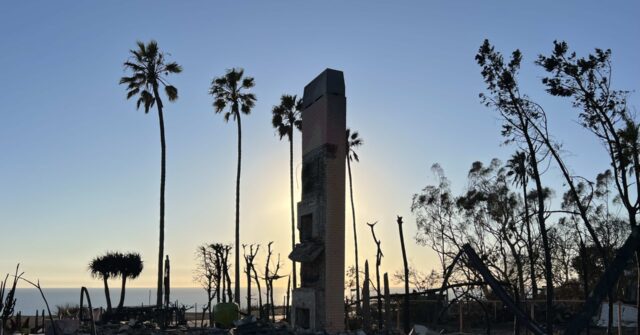
The recent wildfires in California have left a significant impact on communities, highlighting differences in how private and public services responded. In Pacific Palisades, the devastation is evident. The once vibrant neighborhood now looks like a scene from a post-apocalyptic movie, with homes reduced to rubble and familiar landmarks severely damaged. The beloved Business Block, a historic structure, now stands as a charred remnant of its former glory. Nearby mom-and-pop shops and boutiques have been reduced to piles of brick and twisted metal.
Interestingly, the Palisades Village mall, owned by billionaire Rick Caruso, remains unscathed amidst the destruction. The mall’s lights are on as if ready to welcome shoppers again. Caruso reportedly used fire-resistant materials in the construction of his mall and hired private firefighters to protect it. These measures proved effective, with large water tanker trucks stationed outside the mall for days after the fire subsided. Caruso, with his experience as a former commissioner of the Department of Water and Power, seemed to anticipate the limitations of public services in handling such disasters.
In the aftermath, private firefighting companies have become a noticeable presence in the area. About fifteen such companies are reportedly active, with some private security firms also stepping in to protect properties by watering them down, defying evacuation orders. While local residents express gratitude towards public police and firefighters for their efforts, the contrast between the effectiveness of private and public services during the crisis is apparent.
The Wall Street Journal covered the performance of private firefighting services during the fires in Palisades and Malibu. The report indicates that these services were highly successful, albeit costly. This outcome reaffirms Caruso’s understanding of the situation, which he tried to communicate in his 2022 mayoral campaign. Despite losing to Karen Bass, some voters now express regret over the election outcome, wishing for a different approach to disaster management.
For those fortunate enough to still have a home, such as the author, a mix of luck, natural barriers, and neighborly assistance played key roles in survival. The author recounts how a line of ficus trees helped shield his home from embers and how neighbors helped put out fires with buckets of water. This communal spirit, combined with the ability to personally check on properties post-disaster, contributed to some homes being saved.
Over the past ten days, the author has been documenting the damage left by the wildfires. Being one of the few locals allowed in the area during daylight, he has assisted police and firefighters and provided visual updates to neighbors who are unable to access their properties. These tasks have been emotionally taxing, with the weight of loss and destruction evident in every photograph and video shared.
Despite the devastation, there are moments of unexpected beauty. The natural landscape, with its dramatic views of mountains and the ocean, is now punctuated by haunting reminders of the fires: steel skeletons of buildings, solitary chimney stacks, and burned vehicles. Yet, there are glimpses of hope, such as a rainbow in the spray of a firefighter’s hose or a serene Buddha statue partially buried in ash.
The question of whether the community will ever fully recover looms large. Children, displaced by the fires, are far from their homes and friends. The process of rebuilding the physical and social fabric of the community will take time, with the memories of childhood for many likely altered forever.
Reflecting on a friend’s experience in South Africa, where public services are unreliable, the author notes the reliance on private solutions for basic needs. This reliance, while effective for those who can afford it, signals a larger issue of systemic decline. California’s economy, one of the largest in the world, faces similar challenges, as public services increasingly give way to private alternatives.
The author recalls how public schools, despite some success stories, have also shown signs of deterioration. Recent events, such as the Black Lives Matter protests, highlighted vulnerabilities in public safety, reinforcing concerns about the effectiveness of public governance. These experiences contribute to a growing perception of a shift towards private solutions in a state once known for its robust public systems.
Despite the challenges, the author remains hopeful about the future of Pacific Palisades. However, attending a recent town hall meeting where officials praised their own efforts despite the losses faced by residents left a bitter taste. While some officials offered apologies, the lack of accountability and responsibility was palpable. Such attitudes reinforce the sentiment that public officials are not adequately serving their communities.
The current situation suggests that the future of disaster management and community recovery may increasingly rely on private initiatives. The author, while critical of public service failures, continues to hold onto a vision of rebuilding and resilience for his community, even as the path forward remains uncertain.
