
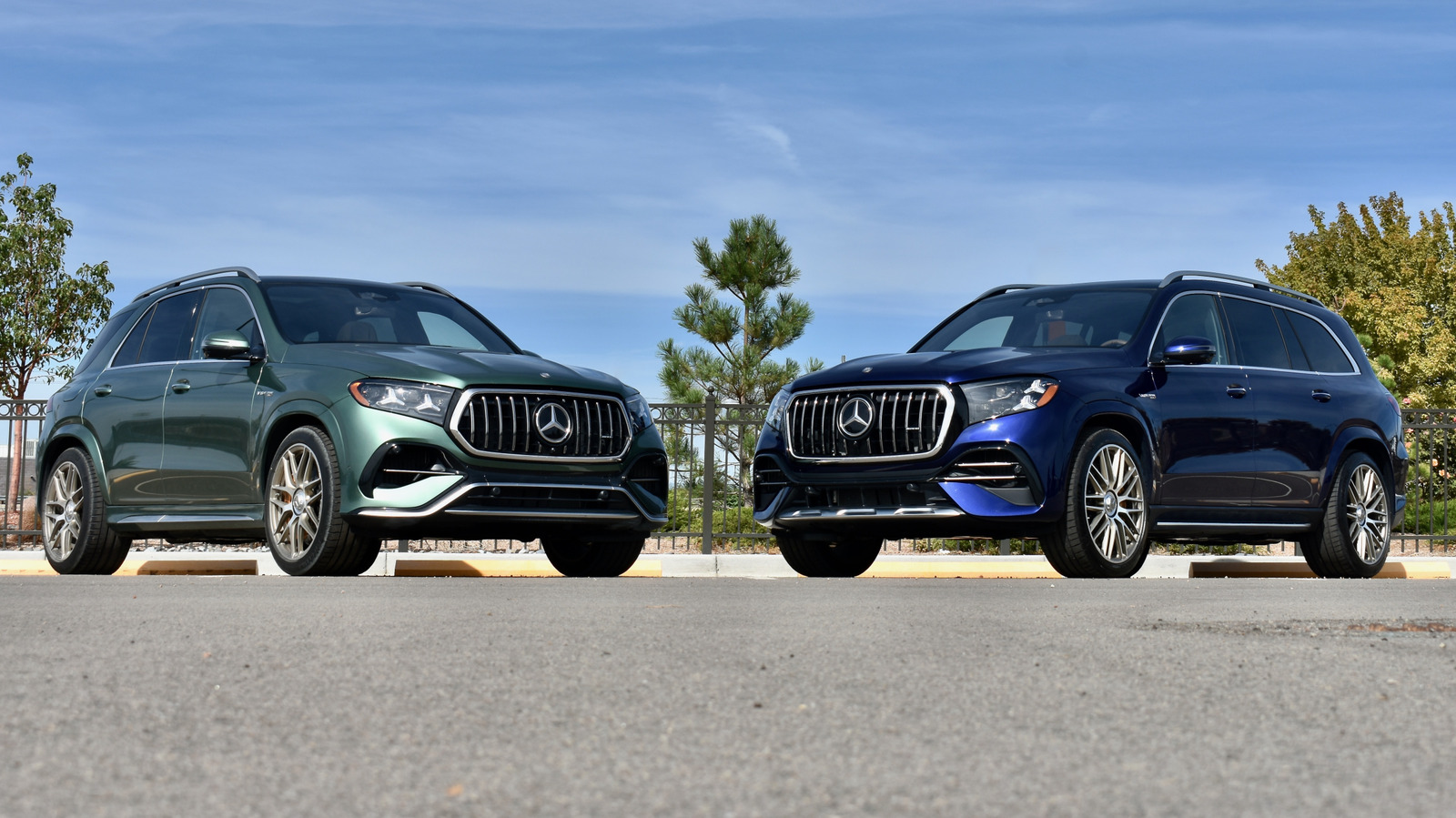
Mercedes-Benz has given the GLE and GLS a heavy refresh for 2027, leaning hard into flashy exterior detailing, a screen-drenched cabin, revised powertrains, and upgraded driver-assist hardware. The changes are broad enough to make both SUVs feel noticeably newer, even though the underlying platforms stay familiar. They still aim squarely at buyers who want luxury, space, and a strong badge without giving up everyday usefulness.
The styling update is the kind that makes an entrance. Mercedes has scattered illuminated three-pointed stars across the front and rear lighting, turned the grille into a logo pattern on most trims, and even added a hood ornament on some GLS models for extra old-school polish. The effect is bold and unmistakable, though not everyone will love how aggressively the brand leans into its own branding.
Inside, the biggest change is the dashboard-wide screen layout. The standard Superscreen stacks three 12.3-inch displays across the front, and the passenger gets a separate display as well, even with another screen sitting nearby in the center stack. Mercedes has added its new MB.OS software and AI-assisted voice control, but the basic feel is still very much in line with the previous setup, just with more glass and less visual breathing room.
That update sounds dramatic, yet it does not completely rewrite the formula. The old interface was already polished, with sharp graphics and voice controls that were easy to use, so the new system feels more like an evolution than a revelation. The extra passenger entertainment options are a nice touch, but the cabin is still more about showing off tech than creating a warm, rich atmosphere.
The powertrain lineup is where the real mechanical changes live. Mercedes has reworked the turbocharged inline-six and twin-turbo V8, with the V8 moving to a flat-plane crank design and gaining a bit more output. The GLE plug-in hybrid also moves from a four-cylinder base to a six-cylinder setup, and the result is stronger numbers along with a larger battery pack.
There is still a wide spread of choices, from the entry four-cylinder GLE to high-output AMG versions. The 450 models keep the inline-six, the 580 trims get the updated V8, and the performance crowd still has serious hardware waiting at the top of the range. The big takeaway is that Mercedes has not stripped away variety in the pursuit of simplicity.
On the road, these SUVs still play the luxury game rather than the sports-sedan game. The inline-six remains smooth and refined, while the V8 keeps its rich, muscular character even after the crankshaft change. The plug-in hybrid can run quietly on electric power for everyday driving, which makes it a sensible choice for shorter trips and stop-and-go commuting.
Handling stays tuned for comfort, not for back-road heroics. Air suspension and E-Active Body Control are still available, but the chassis is clearly set up to isolate passengers from the pavement instead of chasing sharp responses. That may disappoint drivers looking for a sporty edge, but it fits the mission of these vehicles perfectly.
Practicality is still a major selling point, and Mercedes wisely left the basic body shells alone. The GLE continues to offer strong space for its class, while the GLS delivers serious third-row usability without turning into a land yacht that is miserable to park. Both SUVs can tow up to 7,700 pounds, which keeps them firmly in real SUV territory.
There are a few tradeoffs, though. The driving position can feel slightly cramped thanks to seats that seem pushed closer to the dash than they should be, and the GLE Coupe still sacrifices rear headroom and cargo space for style. It is a reminder that every design choice in this segment comes with a bill attached.
Mercedes also gave the driver-assist systems a meaningful hardware upgrade instead of just piling on gimmicks. The new sensor suite includes more cameras, more radar, more ultrasonic sensors, and a more capable processor running the latest software. Adaptive cruise control, lane keeping, and automatic parking are all on board from launch, with hands-free driving set to arrive later if regulators sign off.
Pricing still keeps the GLE and GLS in familiar luxury territory, starting at $69,850 for the GLE and $95,500 for the GLS before the climb into higher trims. The new lineup is broad, expensive, and still aimed at shoppers who want comfort with a badge that speaks loudly on its own. With fresh competition coming from BMW, Audi, and others, Mercedes is counting on familiarity, refinement, and a little theater to keep these SUVs in the mix.
