
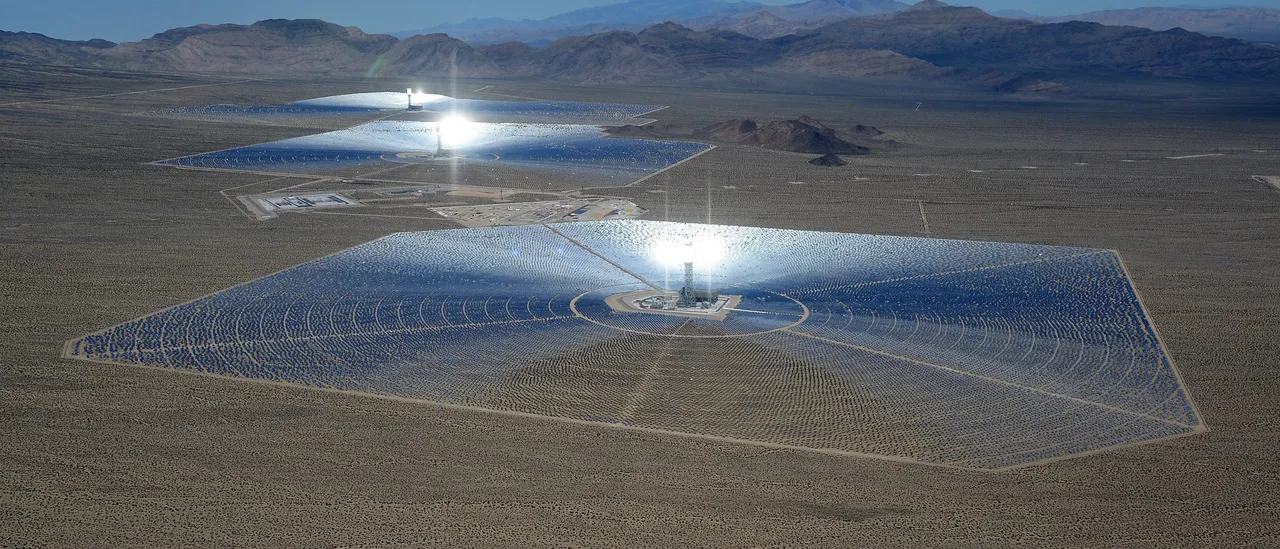
The Ivanpah Solar Power Facility, a centerpiece of big-government clean energy bets, is set to shut down in 2026 after failing to keep up with newer technology. Built with lavish federal support and fanfare, the project had already been written off by some as a classic case of picking winners and losers. Its early closure raises hard questions about taxpayer-backed energy projects and why taxpayers keep paying for experiments that don’t pan out.
The roughly $2.2 billion price tag included federal loan guarantees and public attention, but the plant ultimately could not compete with falling costs for solar photovoltaic panels. Even proponents who praised the plant admit that technology moved faster than expectations. When private markets and consumers choose what works, costly experiments get exposed quickly.
Construction began after approval in 2010 and the plant opened in 2014 with three 459-foot towers designed to concentrate sunlight and drive turbines. The design was ambitious and visible, but ambition does not equal cost-effectiveness. Big, shiny projects attract headlines, not always value for taxpayers.
Speculation about an early shutdown grew earlier this year when Pacific Gas & Electric announced it would end its power purchases from the facility. That decision was a clear market signal that the plant could no longer deliver competitive electricity at reasonable cost. When utilities stop buying power, projects dependent on long-term contracts struggle to survive.
PG&E acknowledged the logic behind the original investment while explaining why its calculus changed, and the company’s move underlined the commercial reality that technology and prices dominate policy promises. “Ivanpah Solar was built when developers were investing in many different types of clean energy. The goal was to find efficient and affordable technologies to reduce the need for greenhouse gas-emitting fossil fuels,” PG&E wrote in a January press statement.
The more efficient and cheaper solar photovoltaic systems raced ahead, making concentrated solar power less attractive. When private-sector alternatives outperform government-backed projects, taxpayers foot the bill for yesterday’s technology. That gap between public investment and private innovation is where wasted money lives.
Federal support played a major role in the project’s creation, including loan guarantees from the Department of Energy during the Obama administration. Those guarantees helped cover construction costs that private lenders might have treated more cautiously without federal backing. The result was a project whose risks were socialized while rewards were supposed to be public benefit and clean-energy leadership.
Secretary of Energy Ernest Moniz praised the plant at its ribbon cutting and used it as a symbol of federal leadership. “The Ivanpah project is a shining example of how America is becoming a world leader in solar energy,” said Secretary Moniz, as reported by PBS. “As the President made clear in the State of the Union, we must continue to move toward a cleaner energy economy, and this project shows that building a clean energy economy creates jobs, curbs greenhouse gas emissions, and fosters American innovation.”
Those words were aspirational, and aspirations do not always translate into enduring value for taxpayers. What looked like leadership at a ceremony can look like a bad bet after the market moves on. The political payoff of a photo op is often easier to achieve than sustained economic efficiency.
California’s broader energy landscape has shown strains in recent years as policies push rapid transitions without solving reliability or cost issues. Backyard solar struggles, subsidies that distort markets, and high interest rates have left companies and consumers exposed. When rooftop installers file for bankruptcy and utilities renegotiate deals, the public sees the downside of aggressive mandates.
SunPower’s bankruptcy, troubles at refineries, and debates over subsidies are symptoms of a larger mismatch between policy ambitions and practical outcomes. Policymakers often act as if throwing money at a sector will fix complex economic and technical problems. History shows that market discipline, not constant bailouts, produces lasting innovation.
Ivanpah’s early closure is a reminder that government is not a perfect venture capitalist and should not pretend to be. There is a role for policy in research and development, but underwriting large-scale commercial deployments carries real fiscal risk. When the public bankrolls commercial-scale plants that fail to compete, taxpayers deserve tough answers.
Lessons from Ivanpah should inform future decisions about federal backing of energy projects, especially when cheaper alternatives exist. Conservative policymakers can support innovation and cleaner options without sacrificing fiscal responsibility. That means letting the market decide which technologies scale and reserving taxpayer support for genuine breakthroughs.
The plant’s shutdown is also a political story about accountability and learning from mistakes rather than doubling down on failed bets. Voters should expect transparency about how federal dollars are spent and what outcomes are achieved. Honest accounting will encourage better decisions next time.
Ivanpah will be a case study in how well-intentioned projects can go wrong when politics, symbolism, and money mix. The debate now should center on smarter energy policy that encourages real results and protects taxpayers. If lessons are learned, future choices can avoid repeating the same errors.
