
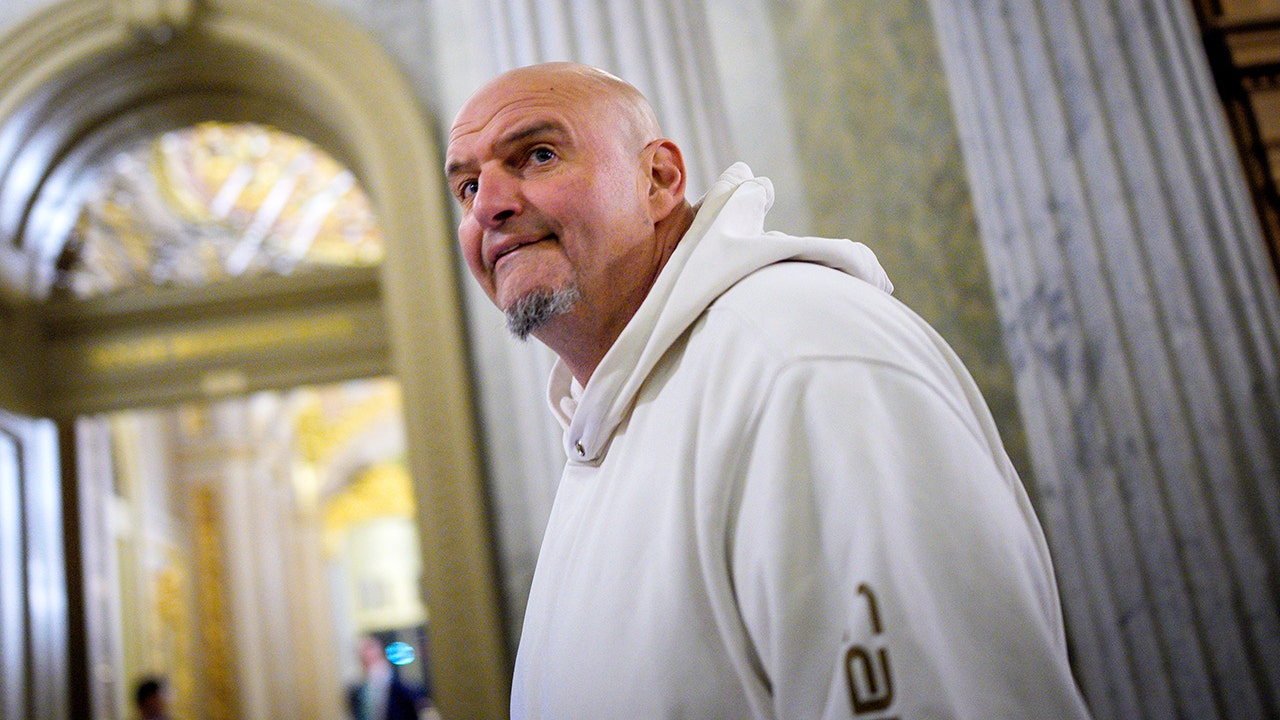
John Fetterman keeps grabbing headlines by sounding like a political wild card, but the record underneath all the noise tells a steadier story. He has broken with Democrats on a few high-profile fights, yet he still votes with his party most of the time, while also drawing attention for his sharp pro-Israel stance and his blunt rejection of the idea that Republicans can match his positions on abortion and LGBTQ issues.
Fetterman has become one of the Senate’s most talked-about figures because he does not fit neatly into the usual partisan script. Since Republicans took control of the chamber, he has occasionally gone his own way on immigration, the war in Iran, and other big flashpoints, which has fueled talk that he could eventually bolt the Democratic Party.
That chatter gets louder because his public image has changed so much in a short time. He once rode into national politics as a left-leaning outsider backed by Bernie Sanders, then pulled off a major upset in Pennsylvania that helped Democrats keep control of the Senate, and now he looks more comfortable in the gray zone than in a straight party lane.
Even with all that, the numbers still matter. Since arriving in the Senate in 2023, Fetterman has voted with Democrats nearly 90% of the time, and this session that figure has slipped only a bit, landing just under 81% along Democratic Party lines.
That kind of record is why plenty of Republicans are skeptical about the idea of a big party switch. One senior GOP aide put it plainly, saying, “John Fetterman is a staunch Democrat that votes with his party 96% of the time, anybody who seriously believes that he is going to switch to the Republican Party is thinking wishfully,” though Fetterman’s actual voting pattern sits well below that claim.
Still, the senator has kept feeding the speculation. He has leaned hard into his support for Israel, saying he would leave Democrats if they kept turning away from the Jewish state, and he has cast himself as someone willing to stand alone when his party drifts in the wrong direction.
That posture has made him a strange kind of celebrity in Republican circles. He has used GOP fundraising platforms, built relationships with Republicans like Sen. Katie Britt, appeared in a video message introducing Dave McCormick at the RNC, and even had one of those awkward public moments at Texas Tribune Tribfest when he referred to himself as a “lifelong Republican.”
That line landed like a flare, because it captured the weird place he occupies in Washington right now. He is close enough to Democrats to keep winning with them, yet he keeps sending signals that make conservatives wonder whether he is drifting toward their side, or simply enjoys making everybody guess.
The pro-choice and pro-LGBTQ pieces of his identity also help explain why a real switch would be so difficult. Fetterman has made clear that he sees those positions as a hard wall, arguing that no Republican can offer the kind of voting record he brings on those issues.
During that same appearance, he spelled it out in a way that cut through the usual political fog: “there are no Republicans with a 90% Democratic vote line. There are no pro-choice, there’s no pro-gay community, that does not exist in the Republican Party.”
That is the heart of the Fetterman story, and it is why the party-switch buzz keeps running into a wall. He may relish the rebel label, but his record still points back to the Democratic column, even as he keeps tossing out lines that make both parties squirm.
