
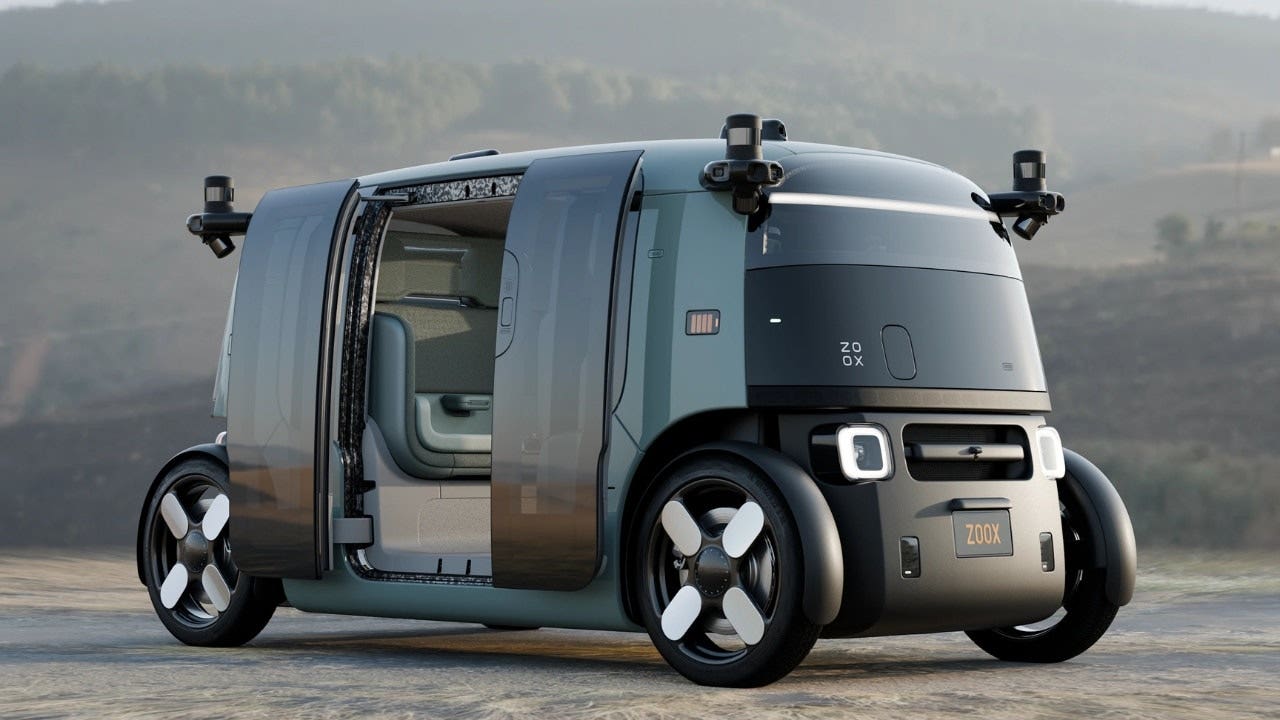
Zoox has reworked its driverless taxi to feel less like a lab prototype and more like a place you might actually want to ride, focusing on comfort, visibility and clearer ways to communicate with the vehicle as it moves toward wider deployment and regulatory scrutiny.
The most visible changes are inside the cabin, where Zoox has padded seats with ergonomic shaping, softer headrests and a lighter color scheme meant to calm riders. The company tested changes with hundreds of thousands of trips and adjusted materials and finishes to make the interior feel less clinical and more like a small lounge. Subtle improvements, like better contrast and fluting on the phone pad, are meant to make everyday forgetfulness less painful. These updates are aimed squarely at improving the human experience rather than the engineering demo.
Practical details matter when a vehicle is expected to ferry many riders each day. Zoox enlarged cupholders, improved the touchscreen legibility and added texture to the wireless charging area so phones stay put. A pale, aloe-green seating palette with stone-grey trim helps passengers spot keys or wallets before the vehicle departs. Those small fixes can be the difference between a one-time novelty ride and something people will choose again.
The company kept the vehicle’s core design: a purpose-built, fully autonomous taxi with no steering wheel, no pedals and cabin-facing seating for four. Passengers sit facing each other, beneath a moonroof and soft lighting that Zoox calls a starry night setup. The sensor suite remains comprehensive, with cameras, lidar, radar and long-wave infrared sensors, which all feed the self-driving stack that lets the vehicle operate without a human at the controls.
A key capability remains the robotaxi’s bidirectional driving, meaning it can travel forward or backward without traditional turnarounds, and it uses four-wheel steering to maneuver. That design choice improves efficiency and route flexibility but also creates communication challenges for people outside the vehicle. To address that, Zoox relocated reflectors and added color-changing elements so bystanders can more easily tell which end of the vehicle is which.
Zoox also outfitted the doors with a new speaker and microphone to enable two-way audio between riders, support staff and first responders. If something goes wrong or a rider needs help, a direct line to support is vital because there is no driver onboard to answer questions or intervene. That capability feels small until you imagine a rider trying to explain a problem to an empty cabin with no obvious way to get help.
Zoox calls this iteration its production intent vehicle and plans large-scale assembly at a Hayward, California facility. The company operates in select markets and is expanding to a few others, but availability still varies by city and depends on local approvals. Zoox has sought temporary exemptions from certain Federal Motor Vehicle Safety Standards as it attempts to clear regulatory hurdles that were written with human drivers in mind.
The experience shift in autonomous mobility now runs two parallel tracks: proving that software and sensors can safely navigate complex streets and proving that the ride itself is comfortable and intuitive. Early attention went to safety and basic feasibility, but the next phase is about repeat use. Riders will judge autonomous taxis not just by whether they arrive intact but by whether the seat is comfortable, the phone stays put and help is easy to get.
WOULD YOU RIDE IN WAYMO’S NEW OJAI ROBOTAXI?
Zoox is not alone in the race; established and startup players are testing various approaches to driverless transport, and the regulatory landscape will shape which concepts scale fastest. A cabin-focused vehicle like Zoox’s stands out visually and operationally, but it also pushes regulators to adapt rules that assume a human driver. How quickly those rules change will affect when steering-wheel-free taxis become a routine option in more cities.
WAYMO RECALLS ROBOTAXIS OVER CONSTRUCTION-ZONE RISK
