
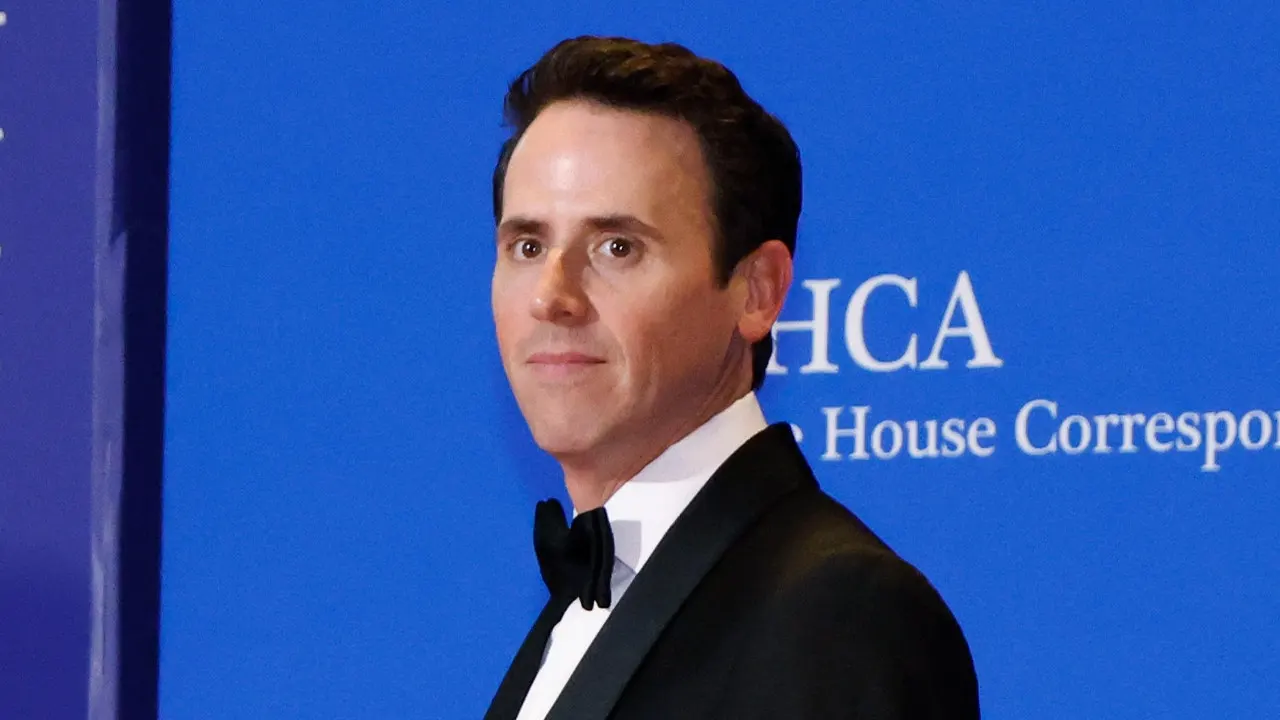
The White House Correspondents’ Association dinner had the right kind of stagecraft this year, with Oz Pearlman stepping in as the evening’s mentalist act and giving the press corps a performance that fit the mood a little too well. The piece argues that what Pearlman does for entertainment, much of the Beltway press now does for a living, turning guesswork, inference, and polished certainty into something that looks a lot like reporting.
Pearlman’s routine was described as a natural fit for an audience that lives off Washington gossip and whispered briefing-room lore. The joke is sharp but simple: if you spend your days trying to divine what President Donald Trump or Vice President JD Vance really think, a mind-reader is less a novelty than a mirror.
That point lands because modern political coverage often leans hard on the language of hidden motives. Instead of sticking to what was said or done, stories frequently drift into what leaders supposedly feel, intend, or are likely to do next, usually with a soft landing from anonymous insiders and “sources with knowledge of his position.”
There is no mystery about why that style keeps showing up. Washington is packed with people who want access, influence, or just a useful angle, and the ecosystem rewards anyone who can feed a narrative before the facts have fully settled. Reporters need copy, sources want leverage, and the result is a stream of confident speculation dressed up as inside baseball.
The article also pushes back on the idea that this is some rare lapse. It treats “sources say” journalism as a routine habit of the capital, especially when the subject is Trump, whose every move attracts a swarm of conjecture, and Vance, who now gets pulled into the same machinery simply by working in Trump’s orbit.
What makes the critique sting is the size of the Washington apparatus itself. With thousands of political staffers, appointees, generals, admirals, Hill aides, and Cabinet-side operators all floating around the system, there is never a shortage of people willing to talk, hint, spin, or leak.
But having a lot of potential voices does not make the end product more solid. If anything, it makes it easier for journalists to find a half-finished rumor, slap a polished headline on it, and let readers assume they are getting a peek behind the curtain when they are really getting someone’s best guess.
The article keeps circling back to a basic media problem: too many reporters now treat prediction as a substitute for confirmation. That habit becomes even more obvious when stories about Trump or Vance are framed around mood, motive, or supposed private frustration instead of clear public action.
There is a reason the piece mocks phrases like “I know what you are thinking” and “I can guess your reaction.” Those lines are not evidence, they are pressure tactics, and in journalism they can function the same way, shutting down debate by pretending to know the answer before the question is even finished.
That is where the comparison to a mentalist works so well. Pearlman’s job is to amaze people by making them believe the impossible for a few minutes, while reporters are supposed to do the opposite, strip away illusion and leave only what can be supported.
Instead, the article suggests that too many media figures have drifted into a performance mode where confidence matters more than certainty. The result is a Beltway culture that rewards clever phrasing, anonymous setup, and the illusion of access far more than plainspoken accuracy.
None of this means reporters should never interpret events or explain motives when the evidence is strong. It does mean there is a huge difference between analysis and pretending to read minds, especially in a town where every faction has an agenda and every leak comes with a price.
That tension is what made the dinner gag land so cleanly. A crowd full of people who spend their careers guessing at hidden thoughts got entertained by someone whose whole act is built on making guesswork feel magical, and the irony was hard to miss.
By the end, the article leaves readers with a pointed image of Washington journalism at work, smiling at its own access while slipping deeper into speculation. Pearlman may have been the billed performer, but the broader argument says the real routine is still being run every day by the people holding the microphones.

1 Comment
Been rigged since day 1 of Term 1 \
Failed group cares Zero for America