
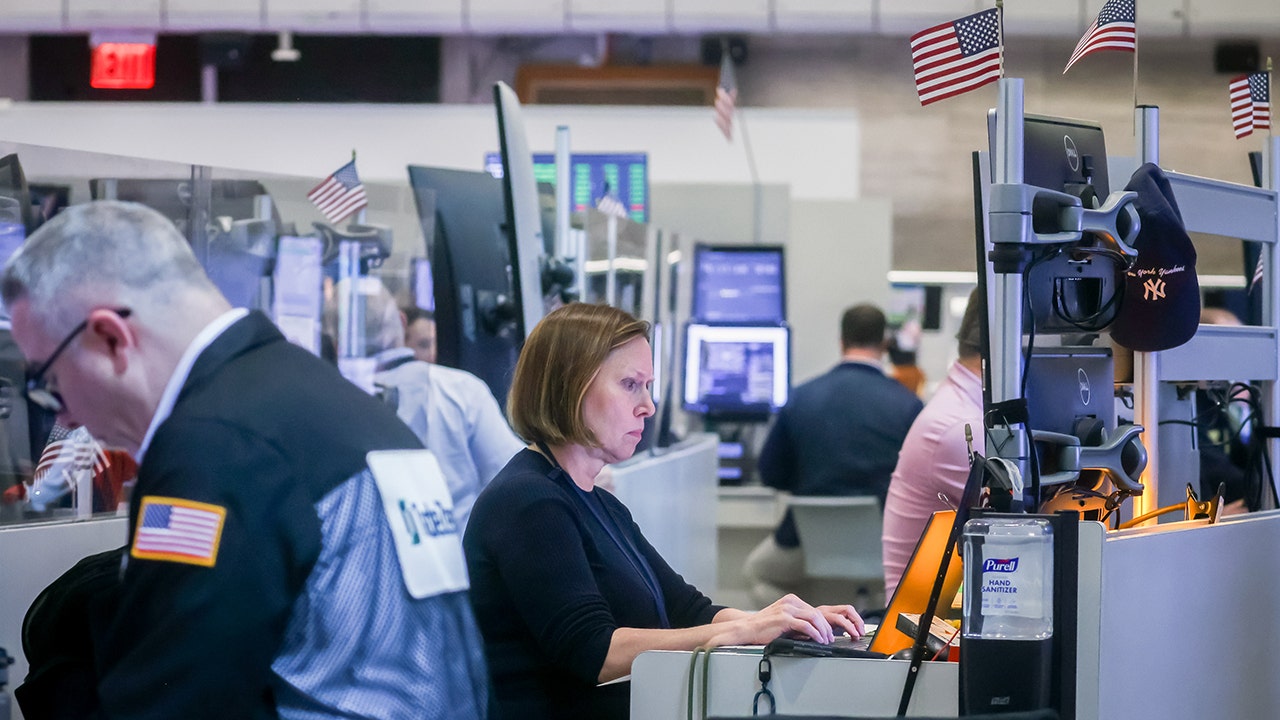
Wall Street’s latest AI wobble has little to do with one ugly trading day and a lot to do with bigger worries bubbling under the surface. Investors are looking at debt-fueled expansion, shaky returns, political pushback, and the strain of powering all the new infrastructure behind artificial intelligence.
U.S. stocks got hammered Thursday after traders rushed out of AI names, sending the Dow down 1,833 points and the Nasdaq into its worst session since April 2025. The Nasdaq also slipped into correction territory, a sign that the selloff was more than just a quick mood swing.
For many on Wall Street, the real issue is how much money is being borrowed and spent to keep the AI buildout moving. Tech companies have been pouring billions into data centers, chips, and the systems needed to support them, and that kind of spending comes with a hefty pile of risk if the payoff takes too long to show up.
“Debt,” economist Paul Mueller said when asked what has the market rattled. He pointed to the huge debt obligations tech firms are taking on to finance data centers, noting that higher interest rates make that burden harder to ignore.
Mueller also flagged political uncertainty, especially around how much resistance new data center construction might face. Local opposition, permitting delays, and concerns about rising power bills are starting to matter just as much as the hype around the technology itself.
The selloff also exposed how crowded the AI trade had become. When too many investors pile into the same names, the exit can get ugly fast, and that is exactly what happened when the mood flipped.
Adam Patti, CEO of VistaShares, said the pressure came from three directions at once: politics, valuation, and positioning. He said midterm election results in key data center states raised fears of more regulation and slower approvals, while investors are also questioning how long hyperscalers can keep spending before free cash flow turns into a problem.
That makes the trade look less like a steady climb and more like a crowded room with nowhere to stand when nerves kick in. Patti said semiconductors were one of the most crowded trades in the market, which means the unwind can hit hard when the first cracks appear.
Another layer of concern is power, and not in the abstract sense. AI data centers need enormous amounts of electricity, and that creates real questions about grid capacity, utility costs, and how quickly new projects can actually get built.
Patti said power is now the biggest bottleneck in AI, even more than chips. That matters because a project can have all the capital in the world, but if the grid cannot support it, the buildout slows down anyway.
Some of the anxiety is regional, not national. A lot of the regulatory and permitting risk sits at the state and local level, which means companies may start shifting expansion toward places with more available power and fewer obstacles.
“Capacity relocates. It does not disappear,” Patti said. That idea is central to the current debate, because investors are trying to separate temporary disruptions from a real break in demand.
EToro market analyst Jakub Rochlitz said the latest drop was made worse by a mix of heavy borrowing, weak sentiment, and disappointing tech earnings. In his view, the market just needed one spark to set off a wider unwind, and the election results provided it.
Even with the selloff, the broader AI story has not suddenly vanished. Patti said the move looks more like a valuation reset and a sentiment check than a sign that the technology itself has lost momentum.
Mueller gave a calmer takeaway for everyday investors, saying the best response is still diversification and patience. In a market this jumpy, the loudest move is not always the smartest one, and that lesson is hitting AI stocks with full force right now.
