
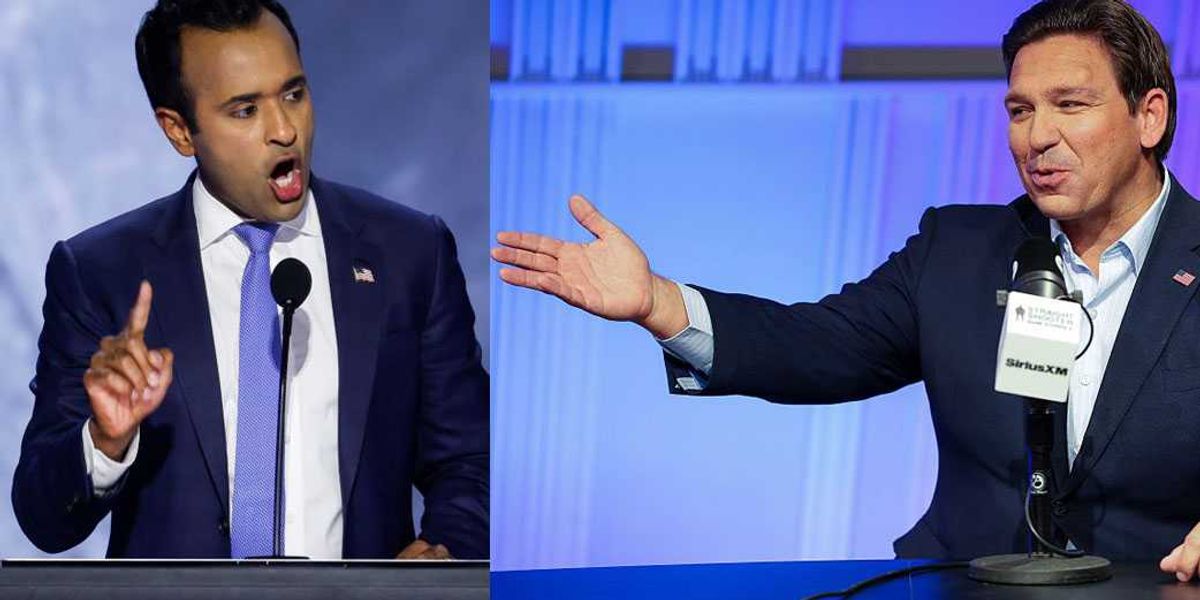
Florida Gov. Ron DeSantis fired a sharp shot at Vivek Ramaswamy, blasting him as a polished tech-world figure who looks ready to protect the interests of foreign workers instead of American ones. The attack landed in the middle of a broader fight over immigration, job competition, and how Republican voters want their party to talk about labor and the border.
DeSantis did not hold back, framing Ramaswamy as the kind of candidate who talks tough on some issues while sounding far too comfortable with the global business crowd on others. That kind of contrast matters in a GOP climate where voters are increasingly suspicious of elite messaging, especially when it comes wrapped in Silicon Valley confidence and talk of flexibility, innovation, and workforce shortages.
The clash taps into a long-running conservative argument over H-1B visas and whether companies use them to sidestep American workers. For a lot of Republican voters, this is not a side issue or a technical debate, it is about whether their party stands up for citizens who feel squeezed by outsourcing, cheap labor, and a system that seems to reward insiders first.
Ramaswamy has tried to make himself into a fresh conservative voice, but that also puts him under a brighter spotlight. When a candidate speaks about ambition, disruption, and economic growth, the natural follow-up is whether those ideas help working families or just polish up the same old corporate playbook with a newer face.
DeSantis has built much of his political identity around fighting cultural elites and rejecting the idea that voters should just accept what the establishment tells them to like. Taking aim at Ramaswamy fits neatly into that posture, especially at a time when many Republicans want sharper lines on immigration and less patience for excuses from the business class.
The issue also reaches beyond one rivalry. Immigration fights keep spilling into debates over wages, job access, and the future of the American workforce, and that is exactly where the GOP base is most energized. Voters who are already angry about border chaos do not tend to react warmly to any message that sounds like more foreign labor should be brought in to fill gaps that Americans are perfectly capable of filling themselves.
That tension is part of why this criticism hits so hard. It is one thing to talk about economic growth in broad terms, but it is another to explain why American workers should trust leaders who seem eager to defend visa programs that many conservatives see as a cheap substitute for hiring at home.
The argument is also a warning sign for candidates trying to balance business-friendly language with populist instincts. Republicans may like free markets, but there is growing impatience with a version of conservatism that feels detached from everyday workers, especially when factories, offices, and neighborhoods are already under pressure from immigration and wage stagnation.
DeSantis is clearly betting that voters would rather hear blunt talk than polished salesmanship. And in a political season where every comment about jobs, borders, and identity can light a fire, that kind of message is not just noise, it is a signal that the fight inside the party is still very much alive.
