
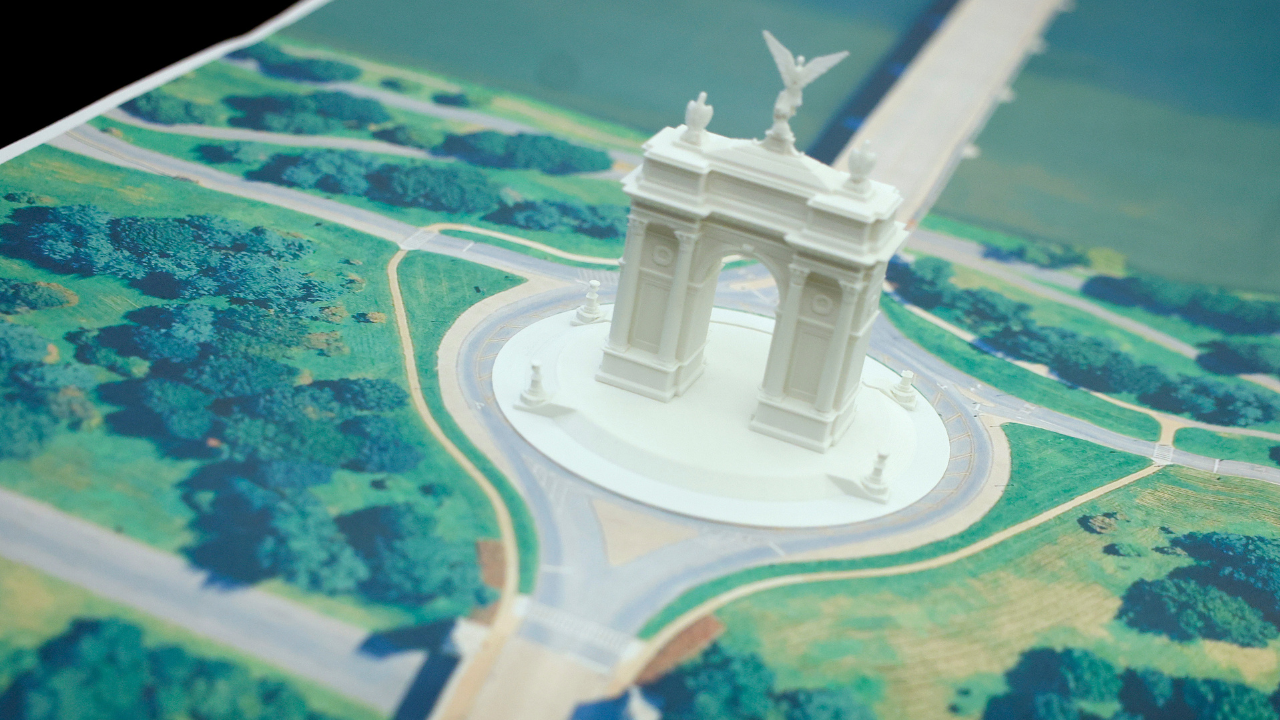
The fight over Donald Trump’s proposed 250-foot arch in Washington, D.C. has turned into a sharp clash between patriotic ambition and historic preservation. Three Vietnam veterans and an architectural historian say the towering structure would choke off a protected view corridor tied to Arlington National Cemetery, while the administration argues its prior authority and landmark goals justify moving ahead. The dispute now sits in court, with both sides digging in over whether the project belongs to Congress, the White House, or the nation’s deeper sense of memory.
At the center of the case is a simple but powerful idea: some views are not just pretty, they matter. The plaintiffs say the arch would disrupt the long-held line of sight between the Lincoln Memorial, the Potomac, and Arlington House, a view that has carried civic and symbolic weight for generations. Their argument is not about whether the capital should be beautiful. It is about whether one oversized monument should be allowed to dominate a setting that was carefully arranged to keep history visible.
Attorney Nicolas Sansone, who represents the group through the Public Citizen Litigation Group, said the connection is personal for the veterans involved. “Our plaintiffs are three Vietnam veterans and an architectural historian. All of them have a deep personal relationship with Arlington National Cemetery,” he said. “Two of our veteran plaintiffs hope to be buried there.”
That detail gives the case an emotional edge that goes beyond drafting tables and legal memos. Arlington is more than a famous cemetery, since it is the final resting place for more than 400,000 service members and a place many families treat with a kind of hushed reverence. Critics say putting a massive arch nearby risks turning a solemn landscape into a stage set for politics.
The government has already admitted in planning documents that the project would create “adverse effects on historic properties”. The National Park Service added, “Such adverse effects cannot be fully avoided while retaining the location-dependent purpose of the undertaking,” which is a careful way of saying the harm cannot be separated from the design itself. That admission has become a key point for opponents who believe the project should never have gotten this far.
Supporters of the project see it differently. Trump has described the arch as a landmark meant to celebrate the country’s 250th anniversary, and administration officials have pointed to a 1925 law that once authorized a pair of 166-foot columns that were never built. Their argument is that this older approval still provides a legal foundation for the new plan, even if the design is much bigger and more ambitious.
Sansone pushed back hard on that logic, saying the old authorization cannot simply be stretched to cover a completely different monument in a different era. He argued that the real issue is who gets to decide what gets built in the nation’s capital and where it belongs. In his view, that choice should not rest with a single president making a unilateral call.
The visual stakes are a big part of why the case has drawn so much attention. Washington was laid out with deliberate sightlines, and the uninterrupted view across the river has long been treated as part of the city’s identity. When a project of this size enters that landscape, it does not just add to the skyline. It changes the conversation about what the skyline is supposed to mean.
The plaintiffs have asked a federal judge for a temporary restraining order to stop the project from moving ahead while the legal questions are sorted out. Meanwhile, the administration has said excavation could begin soon, which keeps the pressure high and the timeline tight. With both sides framing the dispute as a defense of principle, the arch has become more than a construction plan. It is now a test of how far federal power can go when memory, symbolism, and land use collide.
