
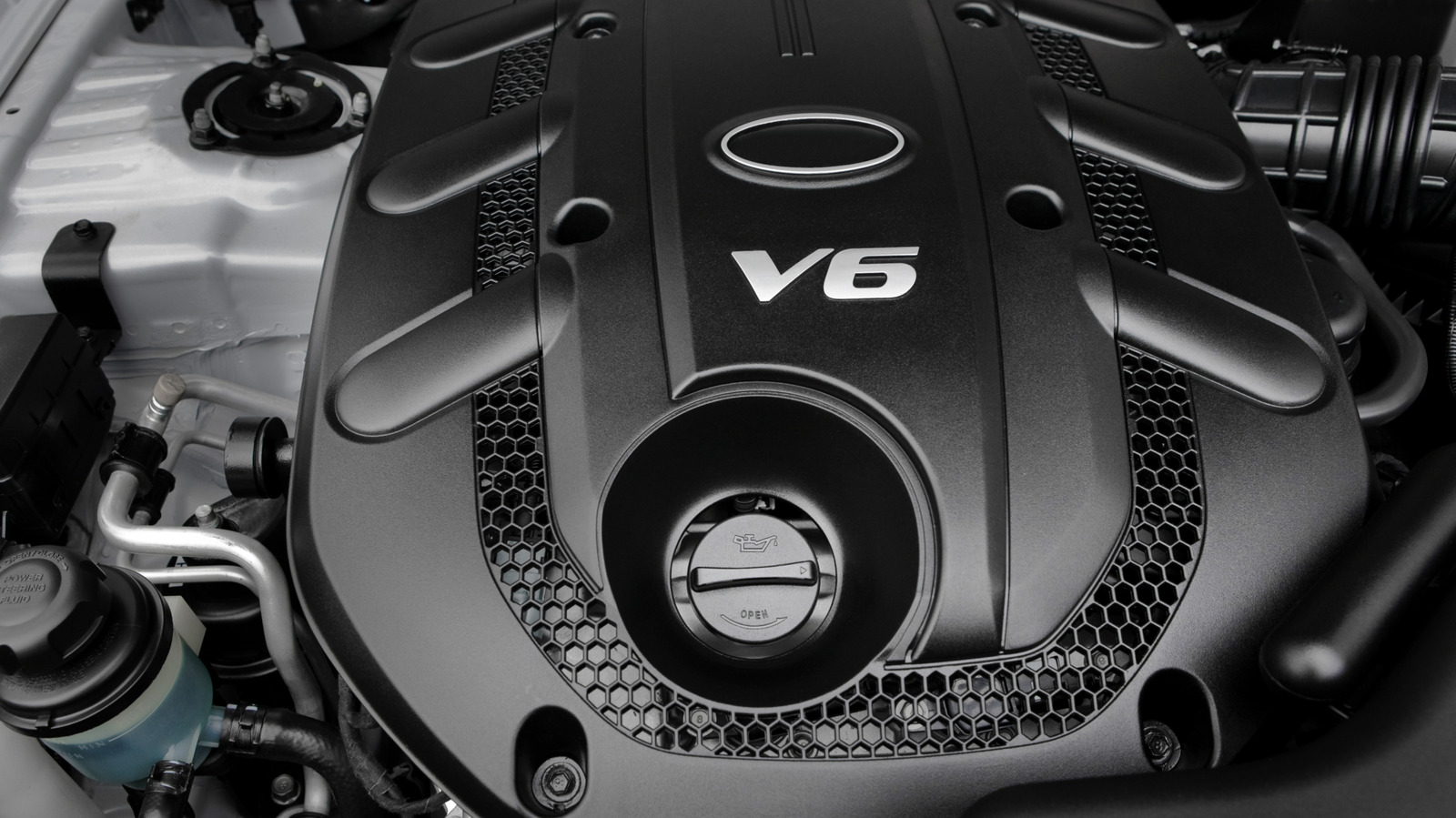
V6 engines sit at the crossroads of practicality and performance, chosen by manufacturers for a mix of compact packaging and usable power. This piece looks at why V6s are so common, what mechanical compromises they carry compared with inline layouts, and how those trade-offs show up in everyday driving and maintenance. You’ll get a clear sense of where V6s shine and where they fall short without technical fluff. Read on for a straightforward look at the engineering realities behind the badge.
Automakers use V6 engines across sedans, SUVs, trucks, and sports cars because they pack more cylinders into a shorter block than an inline-six. That compactness helps with transverse installations and tight engine bays, especially in front-wheel drive and all-wheel drive platforms. The V6 becomes a practical middle ground: more power than a four, smaller than a straight-six or V8, and flexible enough for a range of vehicle sizes and mission profiles.
But V6 geometry brings inherent balance challenges. Unlike an inline-six, which can be naturally balanced both for primary and secondary forces, many V6 configurations suffer from uneven firing intervals and imbalanced reciprocating mass. Manufacturers often counter these tendencies with balance shafts, harmonic dampers, and engineered engine mounts, which add cost, weight, and complexity to the package. Those fixes work well, yet they are signs of a compromise rather than a perfect solution.
The crankshaft layout in a V6 also affects exhaust and intake tuning. With cylinders grouped on two banks, exhaust pulses can be less uniform compared with a straight-six, complicating header design and intake tract geometry. That means engineers have to be more deliberate about cam timing, collector design, and exhaust scavenging if they want smooth torque delivery and efficient breathing. In practice this can translate to extra engineering time and expense, and sometimes to engines that need more sophisticated calibration to feel as refined as their inline counterparts.
Packaging, though, is where the V6 often scores highest. Its shorter length lets designers push the cabin forward, improve crumple zones, or fit a drivetrain into a narrower engine bay — all vital for transverse installations. This compactness makes it a good fit for mid-size crossovers and luxury sedans that demand both space efficiency and respectable performance. The trade-off is a slightly wider engine profile and the engineering work necessary to manage the vibrations that come with the V bank angle and firing order.
Modern tech has softened many traditional V6 weaknesses. Turbocharging, variable valve timing, direct injection, and cylinder deactivation help boost efficiency and smooth out power delivery. Turbo V6s can match the power of larger naturally aspirated engines while offering better packaging and, in some cases, improved fuel economy. Still, those systems introduce more components that can fail and raise long-term maintenance costs compared with simpler engines.
From a maintenance and longevity standpoint, a well-designed V6 can be very reliable, but it often requires more attention to auxiliary systems. Balance shafts, additional coolant passages, and elaborate timing systems mean more potential failure points than a simpler inline layout. Routine service and using manufacturer-recommended fluids and intervals become more important to preserve the refinement that modern V6s aim to deliver.
Why do V6s persist despite their compromises? They are a pragmatic answer to real-world vehicle packaging and market needs. For buyers who want a blend of smooth power and space efficiency without jumping to a V8, the V6 remains a solid choice. Pick one knowing you’re getting a compromise tuned toward compact packaging and usable midrange torque, and you’ll likely be satisfied; prioritize absolute mechanical purity, and an inline configuration might hold more appeal.
