
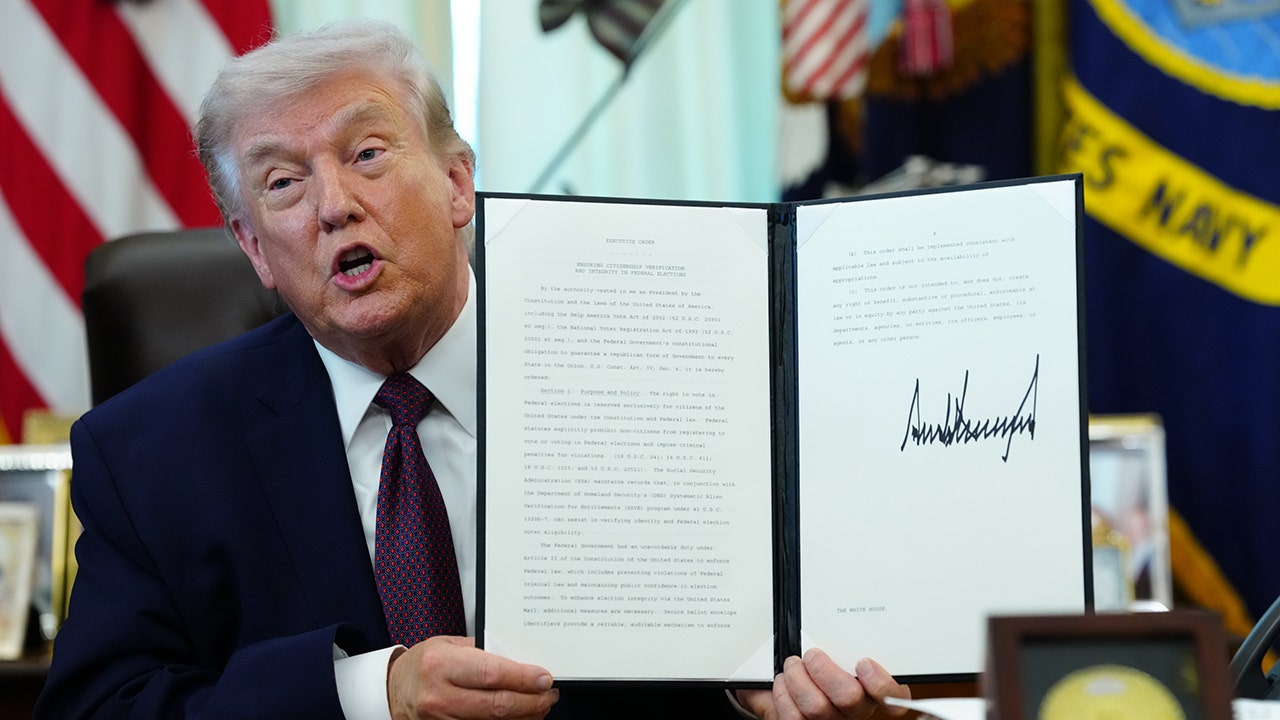
The U.S. Postal Service has moved forward with a new rule that would tie mail-in ballot handling to state voter lists, putting election mail back in the center of a legal and political fight. The policy tracks closely with President Donald Trump’s push for tighter election controls, but a federal injunction is still standing in the way, so the rule remains more flashpoint than finished reality.
The new USPS rule says states must provide the agency with voter information for people receiving mail-in or absentee ballots. It was first floated on June 2 and is meant to line up the Postal Service with Trump’s March 31 executive order on election integrity and citizenship verification.
Under the rule, any state that wants to send ballots through USPS would need to make sure those voters are on a Mail-In and Absentee Participation List. That means states would have to submit names and addresses, along with a uniquely serialized Intelligent Mail barcode on both the outbound ballot and the return ballot.
Supporters of the change argue that this is basic common sense. If the Postal Service is being used to move ballots, then there should be a clean paper trail showing who was supposed to get one and what was actually sent.
The Trump administration has framed the policy as part of a larger effort to tighten election security and reduce sloppy handling of ballots. That message has been a steady theme, especially among voters who believe election systems should be harder to game, not easier.
But the rule cannot take effect right now because a federal court has already blocked key parts of the executive order. U.S. District Judge Indira Talwani issued a preliminary injunction in June, saying two sections of the order, including the USPS ballot piece, were unconstitutional.
That ruling did not end the battle. In July, Talwani renewed the injunction in the League of Women Voters of Massachusetts v. Trump case, keeping the Postal Service from putting the rule into action.
The Postal Service is scheduled to formally publish the rule on Aug. 26, but publication does not mean implementation. It would only matter for the upcoming midterm elections if the injunction gets lifted or narrowed by the courts.
The administration has pushed back hard on the challenge, saying the lawsuit came too early and that no one can claim real harm from a policy that has not gone into force. In its filing, the Justice Department argued that the plaintiffs were objecting to possible future action, not an immediate injury.
USPS Postmaster General David Steiner defended the proposal when it was first announced, saying the agency wants to make sure the ballots a state says it is sending are the same ballots that actually go out. That is a simple standard, but in this fight even simple standards have become loaded with meaning.
The clash also reflects a bigger divide over how much trust should be placed in mail voting. Critics see added bureaucracy and a barrier to access, while supporters see a necessary check on a system that depends heavily on states keeping accurate records.
White House spokesperson Lauren Bis said the administration would keep moving ahead with the agenda Trump was elected to carry out, including what it views as the safety and security of American elections. That stance makes clear this is not some small administrative tweak, but part of a broader showdown over how election rules should work going into 2026.
The next move likely belongs to the courts, not the Postal Service. For now, the rule sits in limbo, ready on paper, blocked in practice, and still pulling new attention every time mail ballots come back into the spotlight.

1 Comment
I receive my ballot directly from the state, it recognizes me as a Citizen and a registered voter having a registered address in my voting precinct, in my county, of my state.
I no longer mail my ballot in, I take it directly to a poling box in a recognized poling place designated by the state. I live in Arizona, the 2020 election results were a scam with a recount stopped by the governor and her minions.
Paper ballots sent to anyone are a scam.