
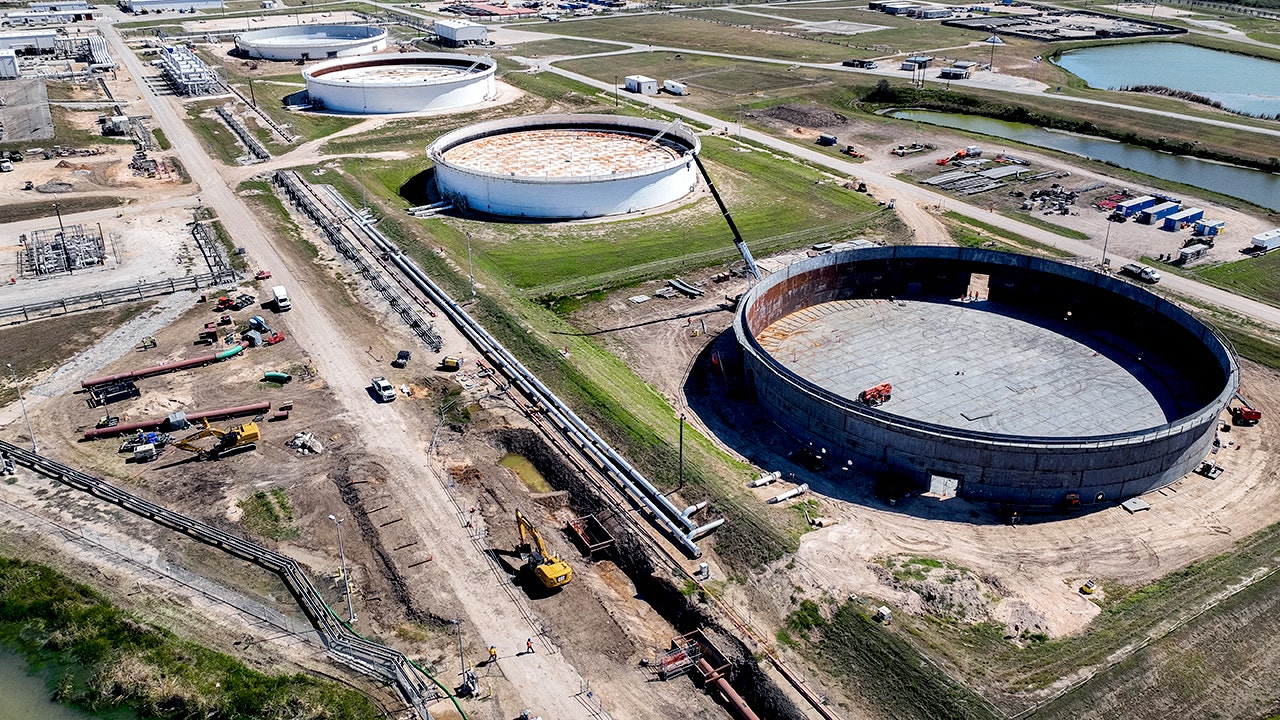
The nation’s emergency oil stockpile has been pushed to a level not seen in more than four decades, after another sharp weekly drop left the Strategic Petroleum Reserve well below where it stood just months ago. The latest decline comes against a backdrop of heavy drawdowns tied to war, supply disruption, and years of political decisions that have steadily drained the reserve.
The U.S. Strategic Petroleum Reserve now holds 298.7 million barrels, according to data released Monday by the Department of Energy, after a weekly decline of 6.1 million barrels. That marks the lowest level in the Energy Information Administration’s weekly records for the SPR since January 1983.
Pressure on the reserve has built fast this year. In March, President Donald Trump authorized releases of up to 172 million barrels after the Iran war rattled energy markets and slowed tanker traffic through the Strait of Hormuz. The move was framed as a response to a real supply threat, but it also extended a stretch of steady erosion that has been underway for years.
By the middle of March, the SPR held about 415.4 million barrels, meaning inventories have fallen by roughly 116 million barrels since then. That kind of drop is hard to miss, especially for a reserve originally built to cushion the U.S. from shocks that can hit fuel prices, shipping, and the broader economy all at once.
The latest pullback also follows the massive drawdown ordered during the Biden administration after Russia’s invasion of Ukraine in 2022. That release totaled 180 million barrels and helped send reserves from around 600 million barrels at the start of 2022 down to 375 million by the end of that year.
After hitting a low near 347 million barrels in the summer of 2023, the stockpile slowly rebuilt and reached 400 million barrels in May 2025. It climbed above 415 million in February, but that rebound did not last long once the new round of releases began in March.
The SPR itself is a relic of a much rougher energy era. It was created in 1975 under the Energy Policy and Conservation Act after the 1973-74 OPEC oil embargo, when Arab producers retaliated for U.S. support of Israel during the Yom Kippur War and showed just how vulnerable American fuel supplies could be.
Congress originally envisioned a reserve with room for 1 billion barrels, though it never came close to that scale. Today, the congressionally authorized ceiling is about 714 million barrels, and the highest inventory ever recorded was 726.6 million barrels in December 2009, when the authorized capacity was 727 million barrels.
The oil is stored far underground in four locations inside salt caverns, where geology does a lot of the work for free. Those caverns are favored because they are cheaper and easier to maintain than surface storage, while also offering security and environmental advantages that matter for a strategic asset.
Salt formations are naturally useful because pressure tends to close small cracks before they become a leak problem, and the underground temperature helps keep crude stable. The caverns can also be expanded through mining methods that dissolve the salt with fresh water, allowing the space to be shaped for storage needs.
Still, the reserve is not just a giant warehouse that can be ignored until the next crisis. The Government Accountability Office warned in May that Congress and the Department of Energy need a single long-term plan to deal with maintenance and decide how the SPR should be managed over time.
That warning matters because the reserve has become a political and practical balancing act. The One Big Beautiful Bill Act, enacted in July 2025, set aside $171 million for petroleum purchases and another $218 million for maintenance, signaling that replenishment and upkeep are now part of the same tense conversation.

1 Comment
You bring that up now? Evil Biden during his Auto-pen Criminal Presidency had his Criminal son Hunter oversee the sale of a Million Barrels of SPR to the CCP our foremost enemies!
What the hell kind of government and news agencies do we actually have in this Insane Joker Country now!!!