
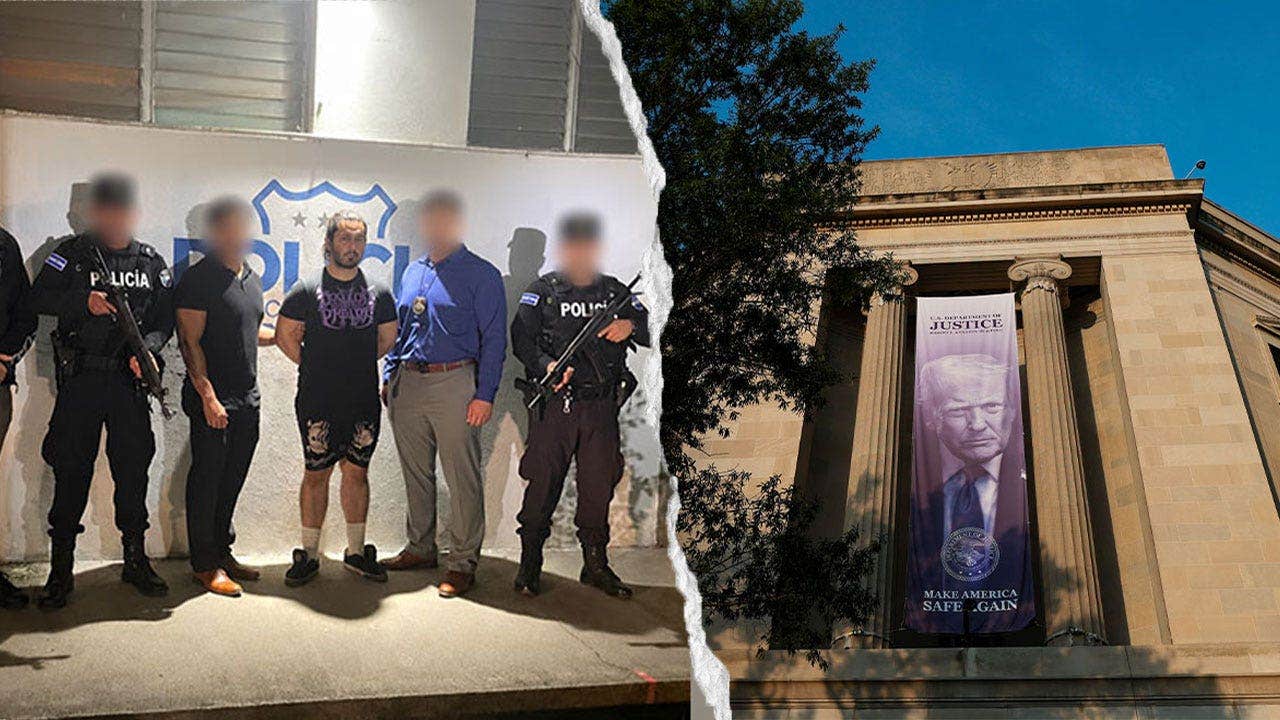
• Dual U.S.-Salvadoran citizen extradited to El Salvador
• Allegations tied to a 2019 killing and abandoned toddler
• DOJ says it is the first U.S. surrender of this kind
• Investigators cited cellphone data, witness accounts, and blood evidence
• U.S. Marshals and federal officials handled the transfer
A California man with dual U.S. and Salvadoran citizenship has been sent to El Salvador to face serious charges tied to the killing of his son’s mother, a case that has drawn attention because of both the brutality of the allegations and the unusual extradition path. The Justice Department said the transfer marked the first time the United States has turned over one of its own citizens for prosecution in El Salvador, putting the case in rare territory.
Michael Alejandro Castillo Murga, 27, of Beaumont, California, was handed over to Salvadoran authorities on Wednesday. He is now expected to answer charges of aggravated femicide and imperfect homicide in connection with a 2019 death that investigators say unfolded after he picked up Melvi Fernanda Nájera Quezada and their toddler son from her mother’s home under the pretense of starting life as a family.
Authorities say that plan turned into something far darker. According to investigators, Castillo Murga instead killed Nájera Quezada and left the child near her body, which was found the next day close to a highway. The account given by officials is grim, and the details have made the case especially disturbing even among violent crime investigations.
An autopsy found that Nájera Quezada died from massive blood loss after cuts to her neck and other injuries inflicted with a plastic knife, the DOJ said. The child, who was younger than 2, was found days later in rough terrain near where the body had been discovered, according to authorities, and he was described as severely dehydrated, hungry, cut on the face, bitten by insects, and showing signs of abuse.
Investigators also say the evidence stretched beyond the crime scene itself. Cellphone location data and witness statements helped link Castillo Murga to the killing, and officials said he even sent a photo to his girlfriend showing blood on his face and neck. That kind of detail can be the difference between suspicion and a case that sticks, especially when prosecutors are trying to piece together a fast-moving escape.
Prosecutors have also alleged that Castillo Murga’s grandmother and a lawyer helped cover up evidence after the killing. According to the DOJ, two people were arranged to clean blood from his vehicle using water, car shampoo, and vinegar, though not every trace could be removed. That effort to scrub away evidence only added another layer to a case already loaded with accusations of deception and flight.
Officials say Castillo Murga fled to Guatemala around Feb. 2, 2019, with help from family and legal contacts before eventually entering the United States. He was later arrested by U.S. Marshals in October 2024 after El Salvador made an extradition request, setting off a long legal fight over whether he could be sent back to face charges there.
He challenged the transfer in federal court, but a judge denied his petition in November 2025 and later rejected another attempt to stop the move in September 2026. After those setbacks, the secretary of state authorized the surrender, and Marshals delivered him to Salvadoran custody, closing the loop on a case that had stretched across borders for years.
The transfer also underscored how closely U.S. and Salvadoran authorities worked together on the case. Federal officials said the U.S. Marshals Service for the Central District of California helped transport and hand over Castillo Murga, giving El Salvador direct control over the prosecution moving forward.
For the family of the child involved, the legal journey has been long and brutal, with the allegations centering on a young mother, a missing trail of evidence, and a toddler left to survive under awful conditions. The case now shifts into a Salvadoran courtroom, where the charges, the timeline, and the role of anyone who may have helped him disappear will likely stay under intense scrutiny.
