
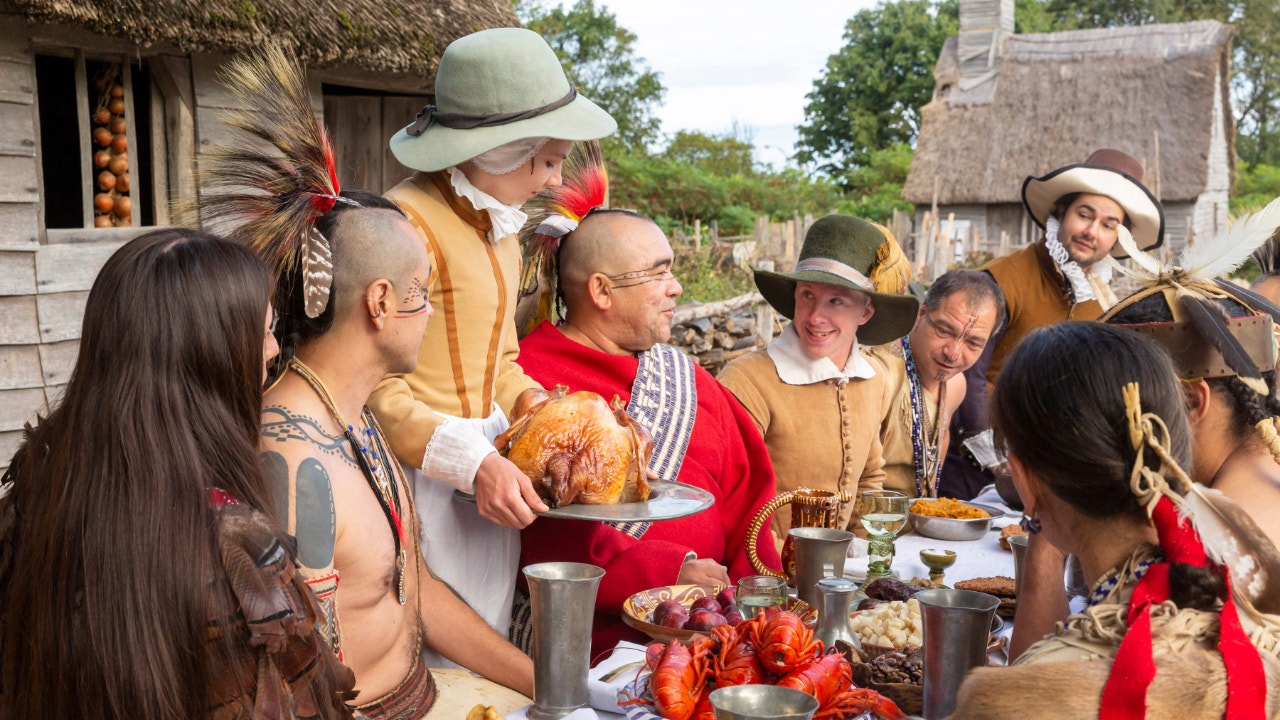
Across the country, Thanksgiving is being pulled into a bigger culture fight over history, identity, and how schools frame America’s past. Universities and K-12 districts are putting out messages that recast the holiday as a time of grief, reflection, and decolonization, setting off backlash from parents and critics who say classrooms are pushing a one-sided narrative.
Salem State University drew attention after promoting a Native American Heritage Month event that described Thanksgiving as a “National Day of Mourning” and told students the land they study on was taken from Indigenous people. The school posted that its campus sits on the traditional and ancestral homeland of the Massachusett tribe, adding, “We acknowledge the genocide and forced removal of the Massachusett tribe and their kin from their summer home in Nâmkek.”
That kind of messaging is not showing up in a vacuum. Other colleges have posted language that treats Thanksgiving as a symbol of harm rather than a broadly shared national holiday, with some calendars and campus resource pages highlighting colonialism, forced displacement, and Indigenous remembrance instead of celebration.
Occidental College, for example, described Thanksgiving as a “reminder of settler colonialism and its devastating impact on Indigenous individuals, communities and tribes.” The Pratt Institute lists “National Day of Mourning” as a time for Indigenous reflection, while the University at Albany labels the holiday “National Day of Mourning/Thanksgiving,” folding both ideas together in a way that keeps the emphasis on conflict and loss.
George Washington University also held an event called “Breaking Bread: The Cost of Celebration,” a title that says plenty without needing much explanation. The theme fits a growing pattern on campuses where holidays once centered on family and gratitude are now used as platforms for political and cultural critique.
The pushback is not coming only from higher education. In Loudoun County, Virginia, a parent recently objected to school lesson plans that told children Thanksgiving is a “Day of Mourning,” saying the material crosses the line from education into ideological messaging. That frustration has become familiar to many families who feel schools are more interested in training kids to question their country than teaching them the basics of its traditions.
San Diego County’s Office of Education took a softer but still pointed approach, saying November is Native American Heritage Month and that Thanksgiving “carries very different meanings for different people, including many Native communities.” The wording sounds careful and balanced on the surface, but it still places the holiday inside a framework of division rather than common civic memory.
Oregon’s Bethel School District went even further by linking to a “Decolonizing Thanksgiving: A Toolkit for Combatting Racism in Schools” on its Equity, Access & Inclusion page. The title alone shows how far the conversation has shifted, turning a holiday into a lesson plan for challenging the country’s founding story and reinterpreting it through a purely critical lens.
For critics, the concern is not about ignoring Native American history. It is about the steady habit of replacing shared traditions with moral lectures that leave kids feeling guilty before they understand the facts. That is why these school messages keep drawing heat, especially from parents who want classrooms to teach history honestly without flattening every American holiday into a story of shame.
At the center of the dispute is a simple question: should Thanksgiving remain a day tied to gratitude, family, and tradition, or should it be used as a springboard for activist messaging? The answer many schools seem to give is that the holiday should be redefined first and celebrated later, if at all, and that is exactly why the fight keeps getting louder each November.
