
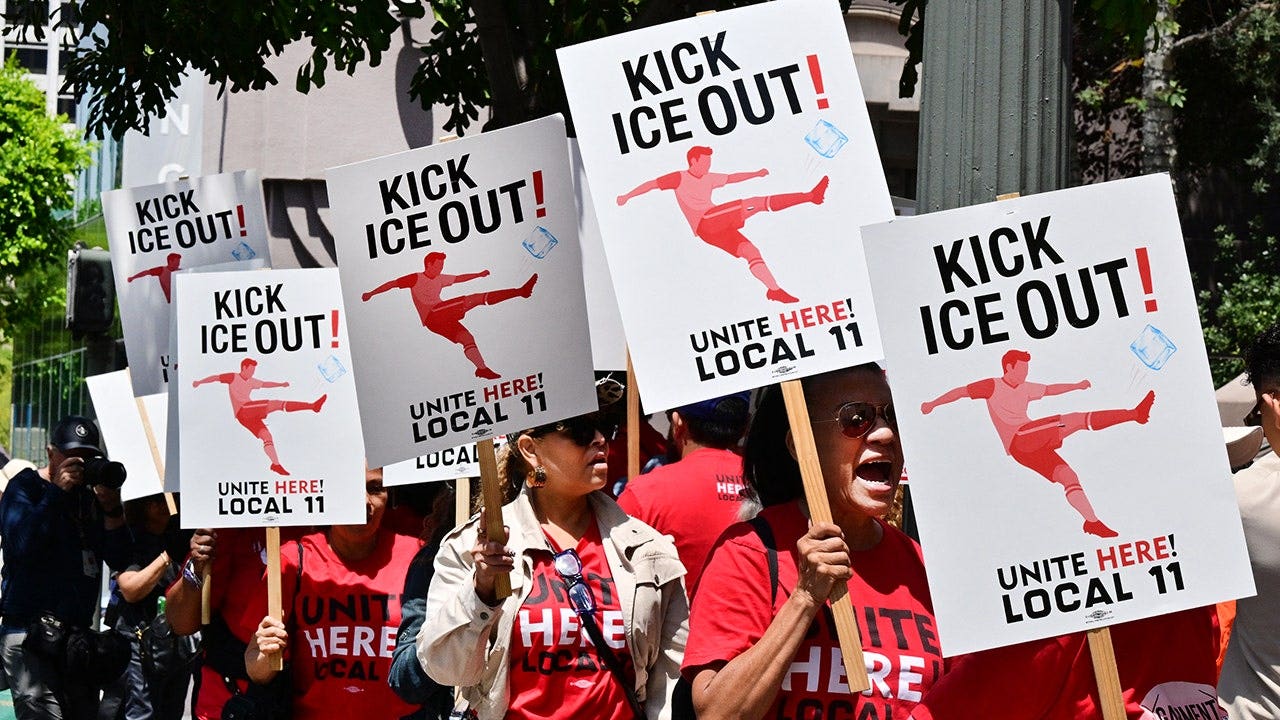
The dispute centers on a labor union’s complaint that FIFA’s World Cup accreditation could funnel employee data in ways that make SoFi Stadium workers vulnerable to immigration enforcement. The complaint argues the accreditation system shares personal details with outside agencies, raising fears of unintended exposure. This article lays out the allegation, the data flow concerns, the union demands, and the broader questions this raises for event security and worker privacy.
A union representing stadium staff filed a formal complaint alleging the accreditation process for the World Cup allows data sharing that could expose workers to Immigration and Customs Enforcement. The complaint says personal information collected for credentials might be accessible beyond the organizers and contractors. That possibility has union leaders worried about people being targeted simply because they worked at the venue.
Accreditation systems collect names, identification numbers, employment details, and sometimes biometric or digital ID information to control access during major events. The complaint highlights how that pool of sensitive data can move between vendors, national governing bodies, and third party platforms. When personal records leave a narrow, secure circle, they become harder to control and easier to subpoena or share with enforcement agencies.
The core concern is not hypothetical, the union argues, because agency requests or informal exchanges could expose workers who lack legal status or who have mixed-status households. Workers who are asked to submit documents for background checks worry those files could be retained or passed on. Even when data was collected only to verify credentials, the presence of central repositories creates new exposure points.
Privacy experts point out several ways data could be at risk: centralized servers without strict access controls, subcontracting to firms with weaker policies, and retention schedules that keep records longer than necessary. The complaint pushes for strict limits on what is collected and who can see it, along with automatic deletion after the event. Those are the kinds of safeguards unions say organizers have not clearly committed to yet.
The union has asked regulators to review the accreditation protocols and to require legal protections before more data is gathered or distributed. They are pressing for audits, transparency on who has access, and concrete promises that information will not be handed to immigration authorities. The legal approach mixes labor rights with privacy and civil liberties arguments, aiming to create enforceable constraints rather than voluntary promises.
Organizers have described accreditation as a standard part of running an international event, and vendors often treat data flows as routine logistics. But this complaint reframes accreditation as a security and human rights matter, not just a checkbox on an operations plan. Without clear, enforceable limits, the line between operational need and intrusive surveillance becomes blurry.
Technically, there are straightforward mitigations that could cut risk without crippling event operations: minimal data collection, localized credential checks that avoid central storage, strict time-limited retention, and independent oversight. Encryption and compartmentalized access are necessary, but they do not replace policy rules that prevent sharing with enforcement agencies. The union wants contractual language that binds vendors and organizers, backed up by penalties if data is abused.
This controversy reaches beyond one stadium because accreditation systems are widely used at major sporting and cultural events around the globe. If this complaint succeeds in forcing tighter rules, it could set new expectations for worker privacy during temporary engagements. Unions and privacy advocates are watching closely, and organizers elsewhere may need to adapt their credentialing procedures to avoid similar disputes.
An administrative review or legal challenge could be the next step, with regulators asked to decide whether current processes meet privacy and labor protections. Meanwhile, workers and their representatives remain wary, arguing that a badge meant to grant access should not become a gateway to legal vulnerability. How authorities and event organizers respond will reveal whether credentialing can be both functional and protective of those it touches.
