
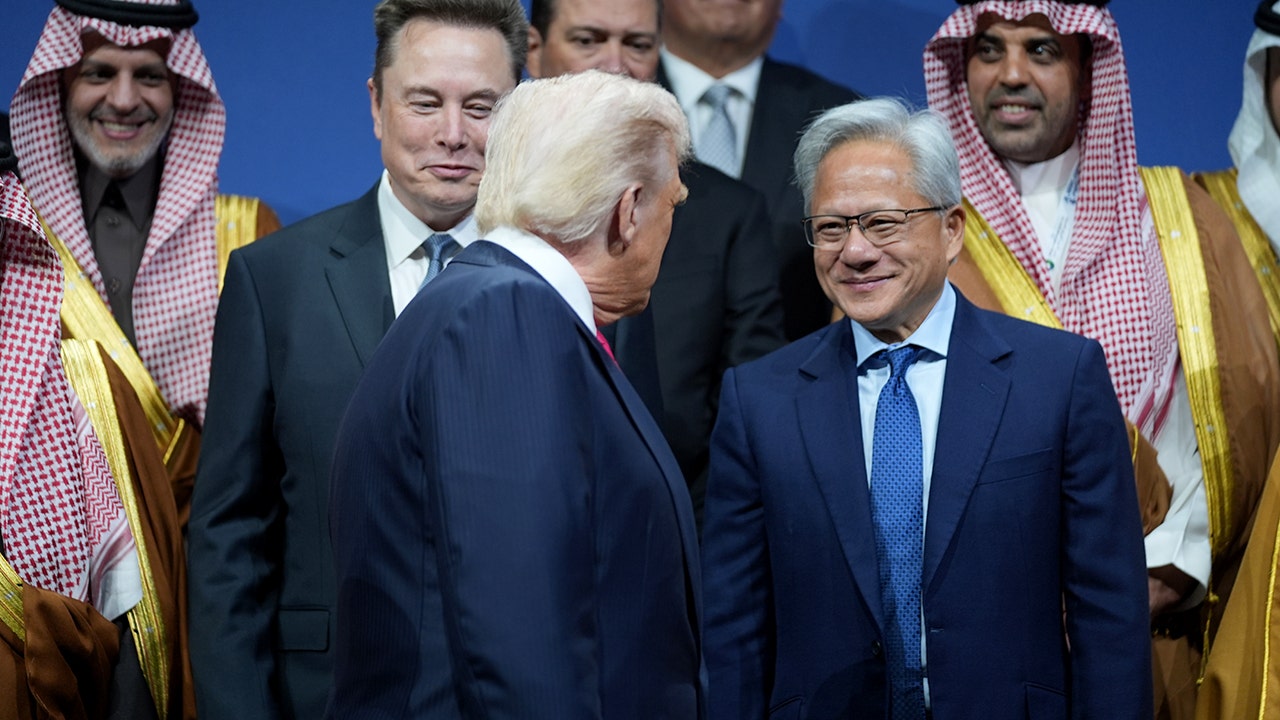
NVIDIA’s leadership drama has turned into a bigger fight about power, precedent, and where a president’s influence should stop. Eric Schiffer says the Trump administration’s push to bring Jensen Huang back to the top job may have solved one crisis, but it also handed Democrats a tempting example they could try to use later for their own allies.
Schiffer, who chairs Reputation Management Consultants, argued that the move gave Huang a kind of political second chance. He said Trump “came in to really give a second life to Jensen, where he would have been dead,” and called the whole episode a sharp example of how much a president can sway events around a major private company.
That influence, in Schiffer’s view, is exactly what makes the situation messy. He said the administration’s intervention may have opened a Pandora’s box, because once a president steps in on behalf of a powerful business leader, future presidents may feel freer to do the same for people they want to protect or promote.
Still, Schiffer drew a line between risky precedent and legitimate national interest. He said the president’s role can extend into situations that touch national security, especially when the company involved sits near the center of America’s competition with China and the broader economy.
The controversy grew after Huang stepped down earlier this month following reports of an extramarital relationship with Alice Huang, a former Megaspeed executive. According to reporting cited in the story, U.S. intelligence identified her as a suspected Chinese intelligence asset operating under corporate cover, which added a national security shadow to an already messy personal scandal.
Sources familiar with the matter said President Donald Trump and Vice President JD Vance worked over the weekend to get Huang reinstated after security briefings convinced them he did not pose a threat in his role. The report also said Vance had been talking with Silicon Valley figures and NVIDIA executives to push the board toward bringing Huang back.
That did not sit well with Democrats. Rep. Robert Garcia said the president’s financial stake in NVIDIA raised serious questions, while House Minority Leader Hakeem Jeffries blasted the move as a sellout of national security for personal gain.
Schiffer, though, was not buying the idea that this was some ordinary boardroom meddling. He said the case was unusual because NVIDIA matters so much to U.S. strategy, especially in the AI race and the fight to stay ahead of China on advanced technology.
In his view, that is where the real pressure sits. If a company is critical to the country’s security and economic strength, a president may feel obligated to act, even if the move draws plenty of heat from political opponents.
But Schiffer also warned that the same logic could be abused. He said if a future Democrat used similar power to help out a crony or an ideological favorite, the backlash would be intense and the public would not just shrug it off.
“I think that, of course, they would have that capability. I think that that is a risk,” Schiffer said. He added that the justification would depend on the facts, and that a truly vital national security case would look very different from a naked political favor.
Trump’s defenders would likely point to that distinction. Schiffer said the administration used soft power rather than brute force, stressing that the government did not storm in and take control of NVIDIA or use military-style pressure to dictate the board’s decision.
“This was not a situation where the government came in under some military policy and tried to take control of NVIDIA,” Schiffer said. “This was the lightest form of power.” That framing leaves the door open to a bigger debate, one that is not likely to cool off anytime soon as Washington keeps mixing politics, business, and national security in the same crowded room.
