
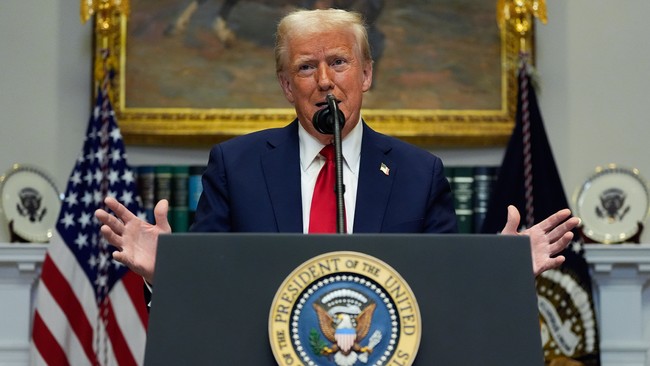
Donald Trump has once again stirred the political pot, this time by taking a swipe at the left with his latest proposal. Remember when Joe Biden had plans to bring on board 87,000 new IRS agents? In a bold move likely to have Democrats fuming, Trump is considering redirecting these new recruits to the southern border.
At a lively rally held at the Circa Resort & Casino in Las Vegas, Trump made his intentions clear. “On day one, I immediately halted the hiring of any new IRS agents — you know, they hired… or tried to hire 88,000 new workers to go after you,” he declared.
“We’re in the process of developing a plan to either terminate all of them or maybe we’ll move them to the border. I think we’re going to move them to the border!” He emphasized his point, hinting at a plan that could shift the focus of these agents from financial investigations to border security.
The agents in question were originally intended for the IRS’s Criminal Investigation Division. This division plays a crucial role in tackling financial crimes, money laundering, tax-related identity theft, and even terrorist financing. They are authorized to carry firearms and use them when necessary, highlighting the serious nature of their tasks.
The IRS job posting was quite specific about the role’s requirements. It stated that all income, whether legal or illegal, could potentially lead to crimes under the IRS Criminal Investigation’s jurisdiction. The position demanded a high level of fitness and readiness to handle life-threatening situations.
Candidates needed to be prepared for arrests, search warrants, and other high-risk assignments, with the expectation that they would carry firearms and use deadly force if necessary.
Trump’s suggestion that these agents could be better utilized at the border rather than scrutinizing American taxpayers underscores his point about the government’s role. He believes the government should be working for its citizens, not imposing on them. The left argues that the IRS is about fairness and accountability, but many see it differently.
Biden’s initial proposal not only involved hiring additional agents but also expanding their authority to monitor Americans’ financial activities. This included lowering the threshold for bank transaction reporting from $10,000 to $600, a move intended to clamp down on illegal activities but seen by some as intrusive.
The idea of shifting IRS agents to the border taps into broader themes about national security and government overreach. Many conservatives argue that resources would be better spent protecting the country rather than examining citizens’ financial activities. This proposal, whether serious or rhetorical, highlights the ongoing debate over the role and reach of government agencies.
Trump’s bold rhetoric continues to resonate with a significant portion of the American public, particularly those who feel overburdened by government oversight. The notion of reallocating IRS agents to the border plays into fears about unchecked immigration and the perceived neglect of national security.
While critics may dismiss Trump’s proposal as impractical, it raises important questions about governmental priorities and resource allocation. The discussion about where to place these agents is also a reflection of larger concerns about the balance between security and personal freedom.
The IRS’s role in financial regulation is crucial, but Trump’s idea challenges whether their skills could be put to better use elsewhere. With border security being a hot-button issue, many believe that a more robust presence could deter illegal activities and enhance national safety.
Trump’s comments at the Las Vegas rally have certainly ignited discussions about the best way to utilize government resources. His call to redeploy IRS agents is seen by supporters as a strategic move to address pressing national concerns.
This proposal also touches on the broader ideological divide between those advocating for increased governmental oversight and those who prioritize individual freedoms. Trump’s stance is a reminder of his commitment to reshaping government to better serve its citizens.
As debates continue, the idea of IRS agents at the border remains a topic of interest, reflecting ongoing tensions about national priorities. Whether this proposal gains traction or not, it serves as a catalyst for examining how best to protect and serve the American people.
Ultimately, Trump’s suggestion is a reflection of his approach to governance: bold, unconventional, and always aimed at shaking things up. Whether it becomes a reality or remains a provocative talking point, it underscores his influence on the national discourse.
