
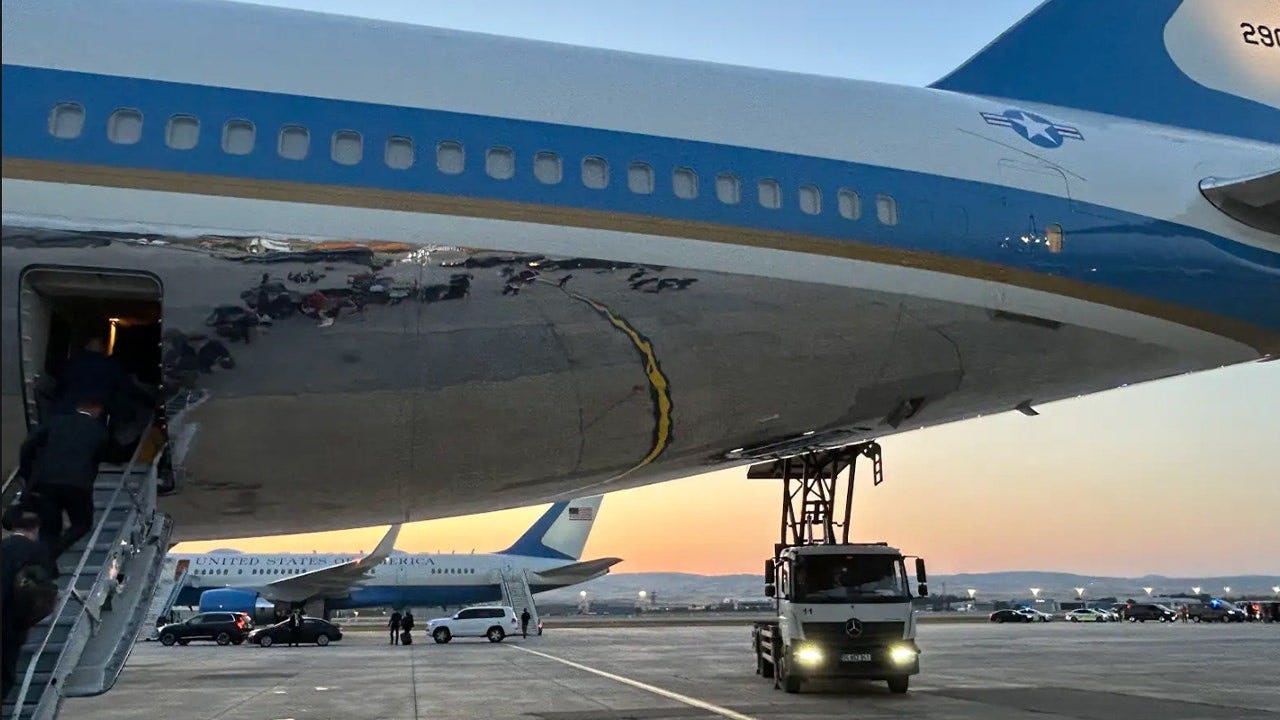
Donald Trump’s reported plane switch during the NATO summit in Turkey has sparked a sharp debate over how far presidential security should go when a threat is believed to be real. The move, if accurate, meant Trump slipped onto a military jet while reporters, staff, Secret Service agents, and military personnel stayed on the decoy aircraft, turning a routine trip into a tense and unusual security operation. Questions quickly followed about who knew what, how much danger existed, and whether the people left aboard were fully protected.
According to the reporting, Trump boarded what appeared to be Air Force One in Turkey before secretly shifting to a different aircraft tied to the military. The president later rejoined the group, but not before the story raised eyebrows because the older plane carried White House staff, journalists, and others who had no apparent role in the switch. Air Force One, of course, is a call sign, not a single jet, but the optics of the maneuver made it look like a classic presidential sleight of hand.
The core concern is simple and uncomfortable: if the threat was serious enough to move the president, what about the passengers who stayed behind? The White House did not answer questions about whether separate risks were considered for those on the original plane, and it remains unclear what protections were in place for them. That gap matters because once a decoy aircraft is used, everyone aboard it becomes part of the security equation whether they signed up for it or not.
Reporters traveling with Trump described being told to close their shades during the flight, a small detail that suddenly sounds a lot less routine in hindsight. When asked about it later, Trump did not exactly calm nerves, saying: “You’re probably on a dangerous flight because of the sleaze bags that we have to deal with.”
He added, “I’m number one on their list, before you,” then followed that with a grim joke about changing professions someday. It was the kind of offhand remark that mixes bravado with unease, and it only made the story feel stranger. The message was clear enough, though: the threat environment around the trip was being taken very seriously.
Former Secret Service agent Bill Gage said the passengers aboard the aircraft “probably did face an elevated risk.” He also suggested the decision to keep details tightly held fit the kind of security posture that usually surrounds a serious threat. In his view, only a very small circle would have known the full plan ahead of time.
Gage went further, saying the move pointed to substantial intelligence and a level of coordination that would have reached the highest levels of government. That tracks with the logic of protective operations, where the more credible the threat, the more dramatic the response tends to be. If the report is accurate, this was not a casual change of plans. It was a calculated move under pressure.
Robert “Bobby” McDonald, another former senior Secret Service official, said deceptive presidential movements, sometimes called “shell games,” are unusual but not unheard of. He noted that the Air Force handles protection of presidential aircraft and said both planes were likely being watched closely. His take was blunt: no one in the presidential security world would simply leave two aircraft hanging out there without oversight.
The reported threat also fits a wider pattern of concern around Trump and Iran, which has repeatedly fueled fears about possible attacks. A separate report said Israeli intelligence had briefed the administration on a threat involving shoulder-fired missiles, and top aides, including Marco Rubio, reportedly remained aboard the older aircraft. That detail only adds to the uneasy picture, because it suggests the decoy flight was not empty by design. It was full of people who may not have known how much danger they were really in.
Past presidents have used deception to stay alive, and history shows that sometimes the safest path is the one nobody sees coming. Bill Clinton’s 2000 Pakistan trip used a decoy aircraft, and secret travel plans have long been part of the protection playbook. But this case feels different because the decoy itself carried staff and media, which makes the whole episode feel less like a controlled diversion and more like a gamble taken in real time.
That is why the story keeps sticking. It is not just about whether Trump moved to a different jet, but about what that choice says about the pressure around him, the intelligence behind the scenes, and the people who were left to ride along with no public explanation. In Washington, security moves are often hidden in plain sight, but this one left a loud trail of questions behind the aircraft doors.
