
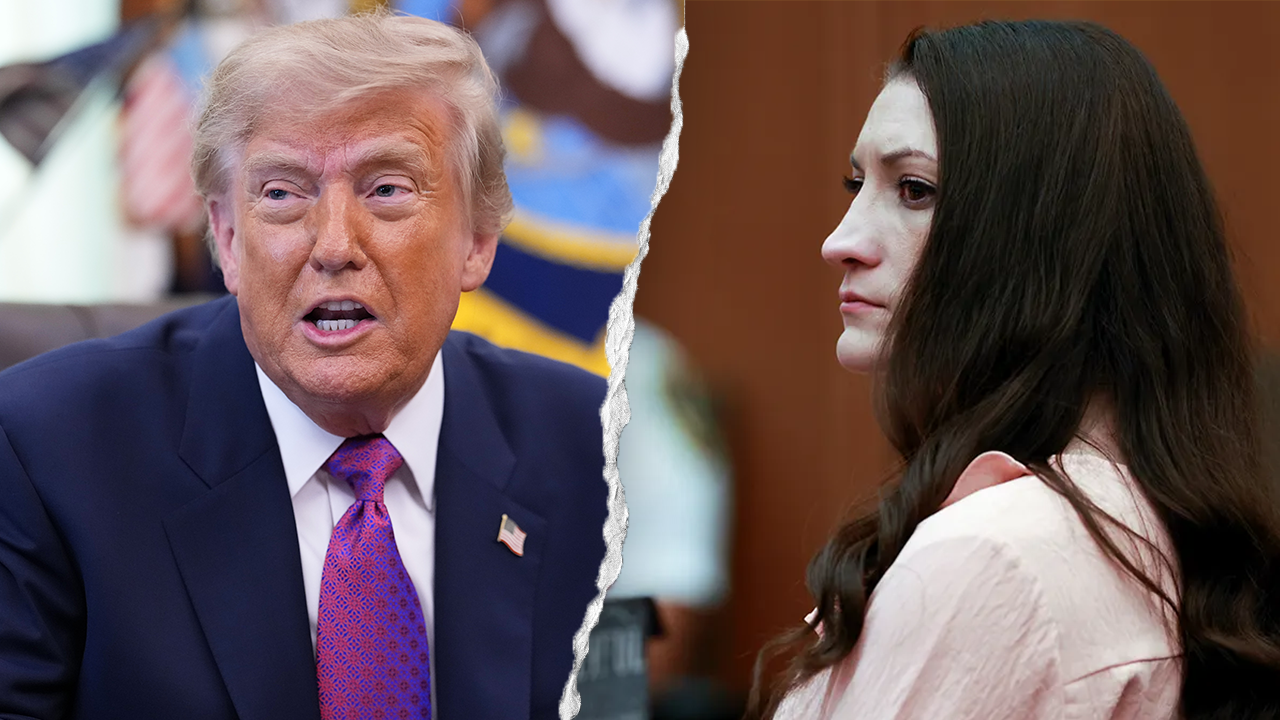
President Donald Trump drew a hard line on the Lindsay Clancy case, saying it belongs in state court and not in Washington. The exchange came after Clancy’s attorney floated a pardon request, even though the legal authority for that kind of move does not exist in a state prosecution.
Trump described the case as tragic and said there was no satisfying outcome, especially with three children dead. That blunt reaction matched the larger reality of the case, where grief, criminal responsibility, and mental health claims all collide in a way that has kept the public glued to every development.
Clancy, a former Massachusetts nurse, is charged with killing her three children in 2023. Her defense has pointed to postpartum psychosis, arguing that she was suffering from a severe psychiatric break after childbirth and was not acting with normal awareness of reality.
The children at the center of the case were 5-year-old Cora, 3-year-old Dawson, and 8-month-old Callan. According to the facts laid out in court coverage, Clancy later attempted to take her own life and was left paralyzed from the injuries, a detail that only deepens the disturbing nature of the case.
The request aimed at Trump came from attorney Kevin Reddington, who publicly urged the former president to pardon his client. Even with that plea, Reddington acknowledged that the case was a state matter, which left the whole idea more symbolic than practical.
Trump said he hoped the lawyers and prosecutors could work it out themselves. He also praised Reddington as a strong attorney, but made it clear that the final call has to come from the people handling the case locally, not from the White House.
That position is consistent with what Trump had said before. He previously suggested Clancy would still have to pay for what happened, while also saying the outcome could involve a mental institution, jail, or some other form of punishment.
The courtroom battle has already been intense, and it is not over yet. After a week of deliberations, jurors failed to reach a verdict, which led Judge William Sullivan to declare a mistrial earlier this month.
The split reportedly stood at 11 to 1, with most jurors leaning toward acquittal because they believed Clancy was not criminally responsible for the killings. That kind of divide shows just how hard the case has been to pin down, even before any retrial gets underway.
Clancy now faces the possibility of going through the entire process again. Prosecutors are expected to keep pursuing a first-degree murder conviction, while the defense continues to lean heavily on mental health arguments and the idea that her condition overwhelmed her ability to understand what she was doing.
The case has become one of those grim legal stories that refuses to soften around the edges. Every part of it is heavy, from the deaths of the children to the claims about psychosis to the open question of whether the next courtroom chapter will end any differently.
