
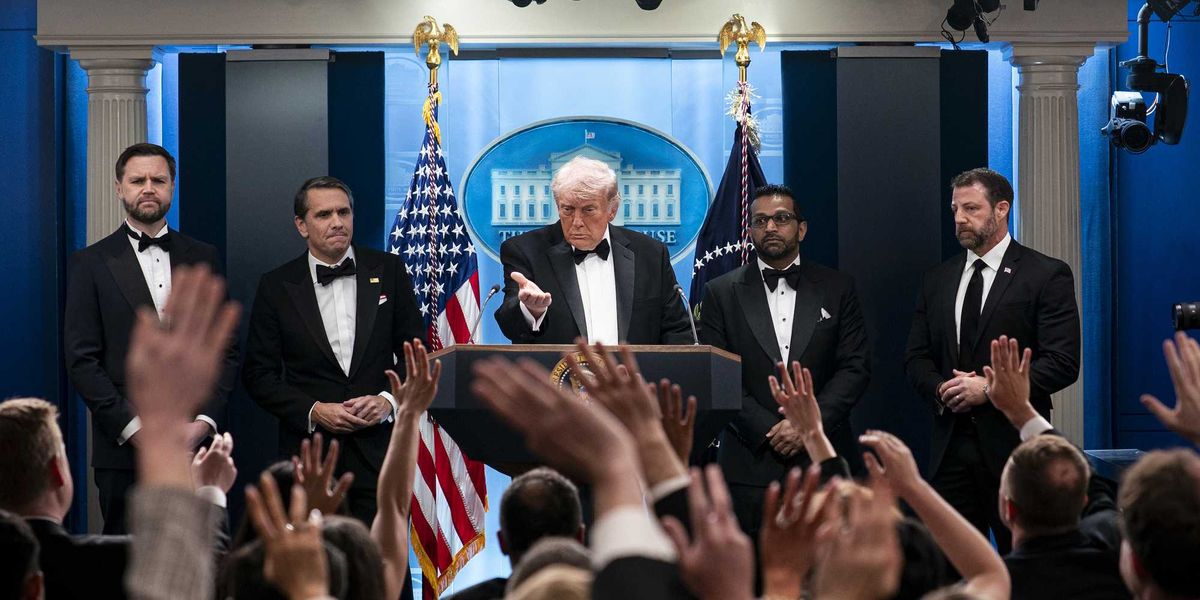
The White House Correspondents’ Dinner was abruptly halted after an alleged shooter rushed into the event, and President Trump has decided to reschedule the dinner as a statement against letting violence dictate our public life. The rescheduled date, the suspect’s charges, the discovery of a manifesto, and the new venue all matter, and this article lays out those facts and the president’s response in plain terms.
The April 25 gathering ended in chaos when a man identified as Cole Allen allegedly forced his way through a security checkpoint and fired a shotgun inside the event space, sparking Secret Service action to remove the president to safety. Attendees were evacuated and the scene was secured, leaving many stunned and the press corps shaken. Authorities moved quickly to take the suspect into custody in the Washington Hilton lobby where he was arrested without further incident.
Two months after the attack, the president announced a firm response: the dinner will go on. “In a sign of Strength and Fortitude, it was just announced that The White House Correspondents’ Dinner, which violently ended rather abruptly on April 25th, will be rescheduled to July 24th,” Trump wrote on his Truth Social account Tuesday. ‘This announcement is a very good thing in that we cannot allow Lunatics to change our way of life, or even its scheduling.’
White House Correspondents’ Association President Weijia Jiang reportedly asked the president to speak at the rescheduled event, and he accepted the invitation. The president added a little theater to the moment, warning that he might still deliver some harsh lines when he addresses certain people, and emphasized that “In any event, it will be a ‘HOT’ ticket!” His tone made it clear he sees the rescheduling as a refusal to be intimidated while also treating the event as a political stage.
Investigators say surveillance footage appears to show Allen charging into the event with a weapon, and they also found a manifesto that allegedly outlines a plan and motive targeting the president. Allen has been charged with a raft of federal crimes, including attempted assassination of a president and assaulting a federal officer with a deadly weapon, and he has pleaded not guilty. If convicted on the most serious counts he could face life behind bars, a punishment reflecting how seriously the justice system treats attacks on public officials.
Keeping the dinner on the calendar sends a signal that public life and civic rituals won’t be canceled by a single act of violence, and that message matters for a country that prizes resilience. At the same time, law enforcement officials have to answer tough questions about how a person carrying a shotgun could get so close to a high-profile event, and organizers will be under pressure to tighten security without turning the gathering into a fortress.
The event’s new venue is the Waldorf Astoria on Pennsylvania Avenue, a ballroom the president renovated during his private career before entering office and later sold in 2021. Choosing that location has practical reasons — it’s familiar, grand, and can handle the kind of high-security footprint the dinner now requires — but it also carries symbolism given the president’s past connection to the property. Organizers will need to balance the ceremonial nature of the night with visible security measures so guests feel safe without the event losing its public character.
Supporters of the president will see the rescheduling as the right move: a refusal to let a violent act rewrite the rules or chill public speech. Critics will argue about tone and rhetoric, and rightly so, because words at an event like this still matter, especially when tensions are high. What should be non-negotiable is that the justice system follows the evidence and that security protocols are reviewed so no similar breach happens again.
The suspect remains in custody as the legal process unfolds, and the country is left wrestling with a dual lesson: protect our institutions with sensible security and never let fear dictate whether we gather, speak, or report the news. This incident will shape how high-profile events operate going forward, and the choice to reschedule is the administration’s way of insisting public life continues even in the face of violence.
