
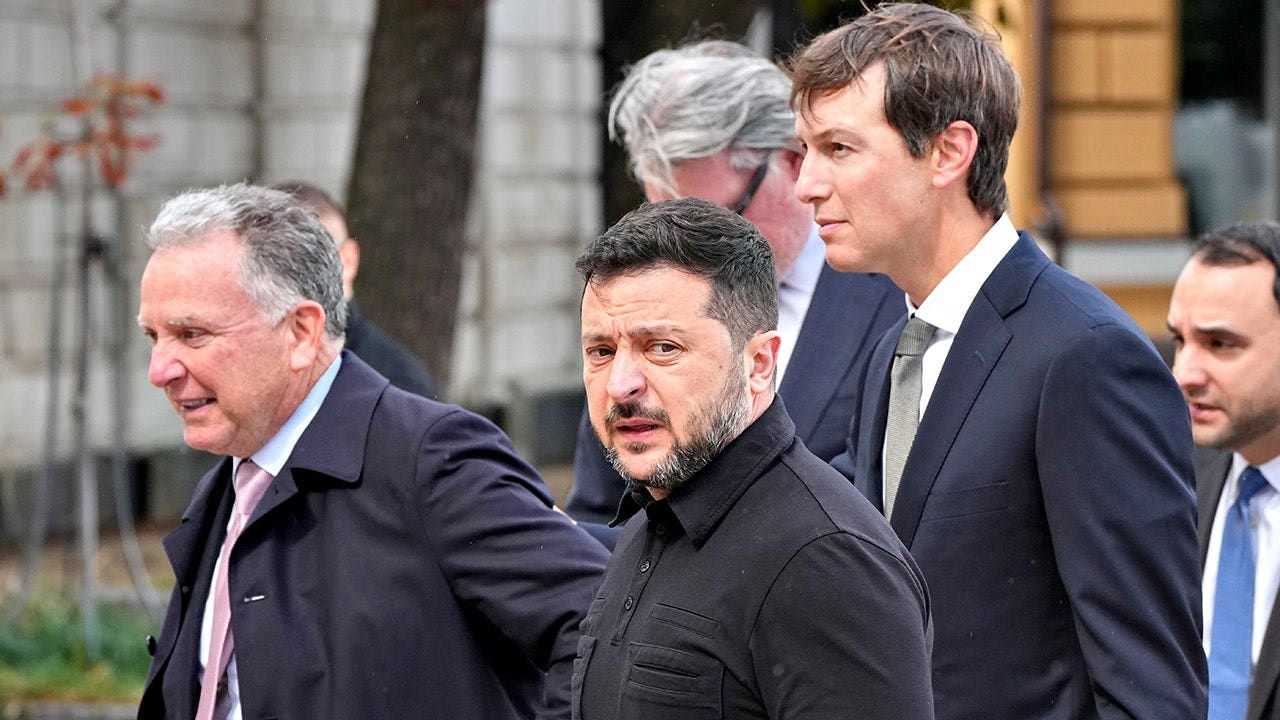
Trump’s peace push is back on the move, with Jared Kushner and Steve Witkoff heading into Kyiv after a long sit-down with Vladimir Putin in Moscow. The talks are part of a fresh attempt to shake loose a war that has dragged on for years, with Ukraine still dug in, Russia still pressing, and Washington trying to force some real movement.
In Kyiv, the American envoys were set to meet with President Volodymyr Zelenskyy after he said Ukraine was ready for the talks. Zelenskyy told his team ahead of time that Kyiv wanted the discussions to be direct, serious, and centered on a workable peace, not some vague promise that falls apart the second the cameras leave.
“Ukraine has always been and will remain constructive,” Zelenskyy wrote on X. “We are interested in bringing the end of the war closer. Peace is needed. Security guarantees are needed. A dignified character of the postwar peace is needed.”
“Our proposals are ready,” he added. “It is important to work in a coordinated, substantive, and realistic manner.”
The Moscow meeting ran for more than three hours behind closed doors, and while it did not produce a public breakthrough, it clearly mattered. Russian foreign policy adviser Yuri Ushakov called the session “constructive, frank and useful,” which is diplomatic language, but it also signals that both sides were at least still talking.
A White House official said the sides discussed “substantive plans for next steps,” with more announcements expected in the coming weeks. The same official said the U.S. delegation was looking ahead to “equally productive meetings” in Ukraine, which puts the pressure squarely on the Kyiv stop to show whether this effort has any traction.
The bigger backdrop is the war itself, which began with Russia’s full-scale invasion of Ukraine in February 2022 and has already reshaped the security map of Europe. Momentum for peace had faded in recent months as U.S. attention drifted toward the conflict with Iran, making this renewed diplomatic sprint look like a deliberate effort to pull the issue back to the front burner.
Even with the fresh movement, the central obstacles have not gone anywhere. Territory remains the biggest fault line, and Kyiv has rejected Moscow’s demand that Ukraine pull back from parts of the eastern Donetsk and Luhansk regions that are still under Ukrainian control.
That means any deal has to thread a brutal needle. Ukraine wants security guarantees that actually mean something, while Russia wants land and leverage, and neither side is in the mood to hand over the kind of concession that would make a settlement easy.
Ushakov said Moscow gave the Americans its “comprehensive assessment” of the battlefield, but the conversation did not stop at military realities. He also said “Economic issues and potentially large, mutually beneficial joint projects for Russia and America were discussed in considerable detail,” a reminder that these talks are about more than just silencing the guns.
Even so, the war is still very much alive on the ground. Russia and Ukraine continued trading drone and missile strikes overnight, despite the diplomatic moves and despite talk of pausing attacks on each other’s capitals during the negotiations.
That mix of back-channel diplomacy and nonstop battlefield pressure gives the whole effort a tense, uncertain feel. The envoys are shuttling between capitals, Zelenskyy is signaling readiness, Moscow is talking substance, and the next stretch of talks will show whether this is a real opening or just another pause between blasts.
