
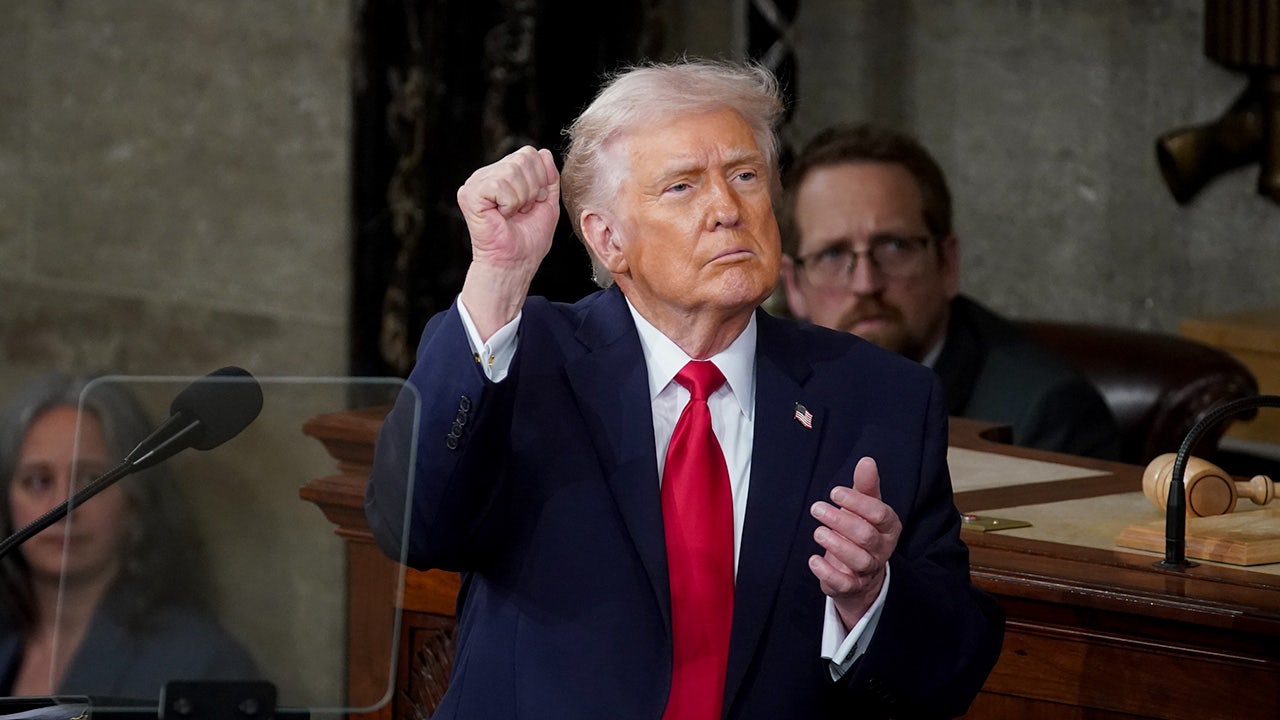
President Trump’s State of the Union was a tight, confident performance that sought to tie national success to his administration and the Republican agenda. He hit themes voters care about — the economy, affordability, immigration, and respect for working Americans — while calling out Democratic leaders for chaos and obstruction. The speech felt designed to set the midterm agenda and rally the base, even if it did not decisively shift the broader electorate.
From the start, Trump worked to own the narrative about America’s comeback, repeatedly framing recent gains as the result of his policies and hard work by ordinary citizens. He used bright, large-picture language — including the phrase “the golden age of America” — to create an uplifting, confident tone. That rhetoric plays well with voters who want clear, positive direction and a sense of national pride.
On the economy, the address stressed that the affordability problems that helped Democrats in 2025 are finally being addressed. He pointed to tax and regulatory choices as tools to ease everyday burdens and boost opportunity for families and retirees. The message was straightforward: Republicans are offering concrete plans on taxes, health care, retirement, and prices that aim to put more power in people’s pockets.
TRUMP TOUTS ECONOMY, CLASHES WITH DEMOCRATS IN COMBATIVE STATE OF THE UNION
The president also made a point of contrasting his vision with what he portrayed as Democratic chaos and hypocrisy in Congress. He repeatedly called out Democratic leaders for disorderly behavior in the chamber, and the spectacle of heckling and empty seats undermined any appearance of unity from the opposition. That contrast reinforced the Republicans-as-order argument Trump wants voters to accept going into the midterms.
Trump leaned into imagery and personal stories to humanize policy points, spotlighting military veterans and public-spirited citizens in the gallery. The use of symbolic moments — from athletes to “military heroes” — underscored his effort to tie policy to real sacrifice and achievement. Those scenes are powerful political stagecraft, designed to create emotional resonance beyond statistics or policy wonkery.
AFTER 80-MINUTE TRUMP ADDRESS, GOP LAWMAKERS SAY MOMENTUM IS BACK AS HEALTHCARE FIGHT LOOMS
Immigration got a pointed, theatrical moment when Trump asked lawmakers to stand if they agreed with the “fundamental principle” that “the first duty of the American government is to protect American citizens, not illegal aliens.” Few Democrats stood, and Republicans gave a long ovation. That exchange drove home his law-and-order message, even while the public remains divided over enforcement tactics in cities versus border control.
The speech doubled as a roadmap for the fall campaign: a populist pitch on economic empowerment, a hard line on borders and crime, and promises of lower taxes and more affordable basics. Trump made clear he plans to run on those themes, forcing Democrats to respond on ground where many voters feel immediate pain. For Republican voters, that clarity is exactly what they wanted to hear.
At the same time, it is reasonable to question whether the address moved independents or weary voters who watched the partisan theater more than the policy. The spectacle of expulsions, jeering, and a rival “People’s State of the Union” from some Democrats likely reinforced impressions of a deeply divided Washington. Political energy was revved for the base, but persuasion across the middle looked limited on the night.
Overall, the night showcased Trump’s strengths as a communicator and organizer of political theater, and it drew a clear line between his priorities and those of his opponents. He aimed to claim credit for national improvement, rally support for a populist midterm push, and set the terms of debate on immigration and the economy. Whether that strategy translates into new wins with undecided voters remains to be seen.
