
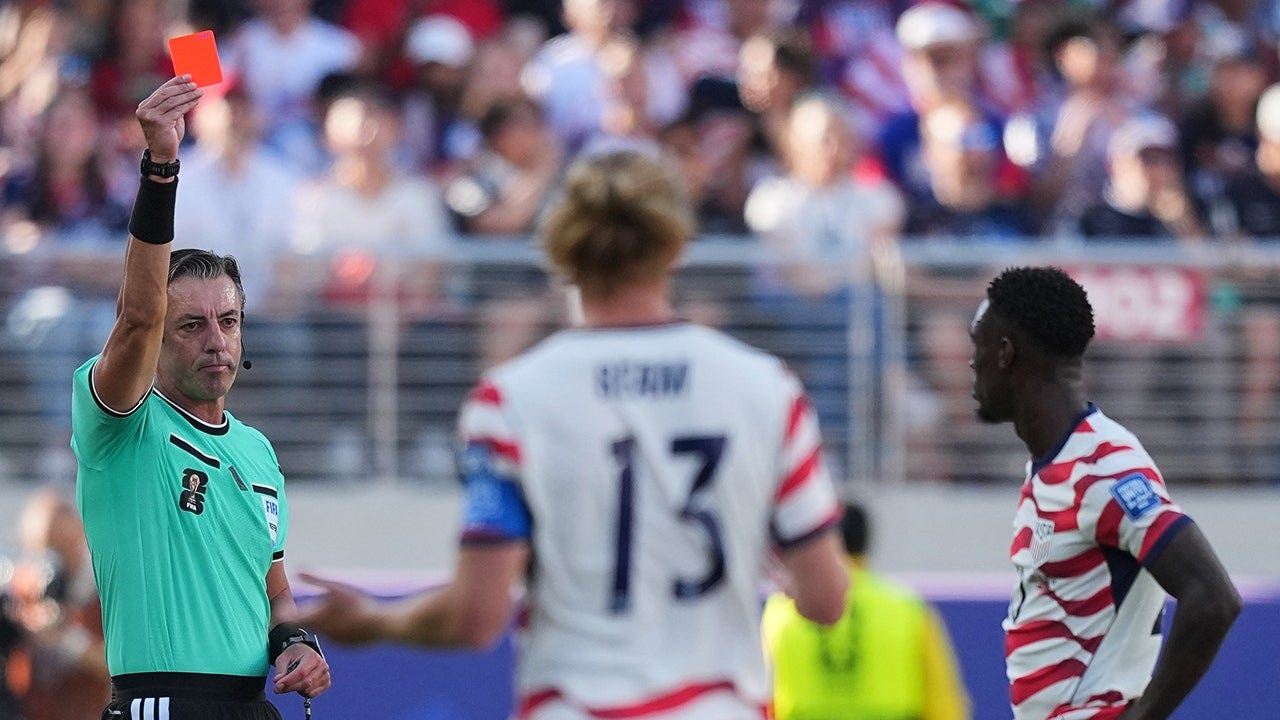
A high-profile World Cup moment turned into a political talking point when Trump reportedly called FIFA president Gianni Infantino after a contentious red card, sparking outrage across Europe, while the governing body defended the decision by citing a rule that has been used before and is not without precedent.
The incident landed squarely at the intersection of sports and politics, and that’s where honest debate belongs. People who care about fair play want clarity, not a media circus that treats every American complaint as interference. The larger issue is consistency — in officiating, in protest, and in how organizations react to powerful voices raising legitimate questions.
When a red card swings a match and a world stage lights up, emotions go high. Trump’s call to Infantino was predictable: leaders engage when national pride and perception are on the line. Criticism that followed was louder in parts of Europe where the play was seen differently, but loud reactions don’t erase the need to examine the rule at the center of the storm.
FIFA pointed to a specific regulation to justify the decision, and pointing to rules is their job. But pointing to rules and applying them evenly are two separate things. Fans and teams deserve to see the same standard applied whether the stakes are a local derby or a World Cup knockout game.
Historical context matters. The rule FIFA cited isn’t some new invention; it has been invoked in high-profile games before, sometimes to similar outrage. That history doesn’t make the call immune to scrutiny — it makes scrutiny sensible and overdue, because precedent should breed predictability, not finger-pointing after the fact.
Across the globe, officiating controversies are common, and soccer is no stranger to messy calls that change outcomes. The right question isn’t whether someone complained publicly, it’s whether the complaint exposes inconsistency. If rules are being enforced unevenly, national leaders have a responsibility to highlight the problem and demand fixes.
European reactions leaned heavy on outrage, as if any American voice is out of bounds. That double standard is worth noting. When officials or powerful figures from other regions challenge decisions, it often gets framed as part of the sport; when an American does it, it becomes a diplomatic incident.
This episode also underscores the role of technology and human judgment in modern officiating. VAR and other tools exist to help, but they don’t remove controversy; they shift it. Transparency about how decisions are reached would reduce the after-the-game frenzy and make protests like this less necessary.
Americans and other fans are not asking for favoritism — they’re asking for predictable enforcement of the rules. That is a conservative position when applied to institutions: stability, clarity, and respect for established procedures. If FIFA wants to rebuild trust, it should prioritize those principles over defensive posturing.
Having a public figure raise a concern can be a catalyst for reform rather than an attack on the sport. Calls for independent review panels, clearer written guidance for referees, and better VAR protocols are practical steps. Those changes would help every team, of every nation, and quiet the predictable post-match blowups.
This is also about perception and respect. When governing bodies respond by citing rules without showing how those rules were applied, it feeds suspicion. A simple, transparent explanation, accompanied by evidence and timeline, would do more to calm tensions than a shrug and a formal citation.
The fans deserve matches decided on the field, and the game deserves governance that earns its credibility. If the red card in question was correct under existing rules, FIFA should demonstrate that clearly. If it wasn’t, then correcting the process matters more than defending a single call.
