
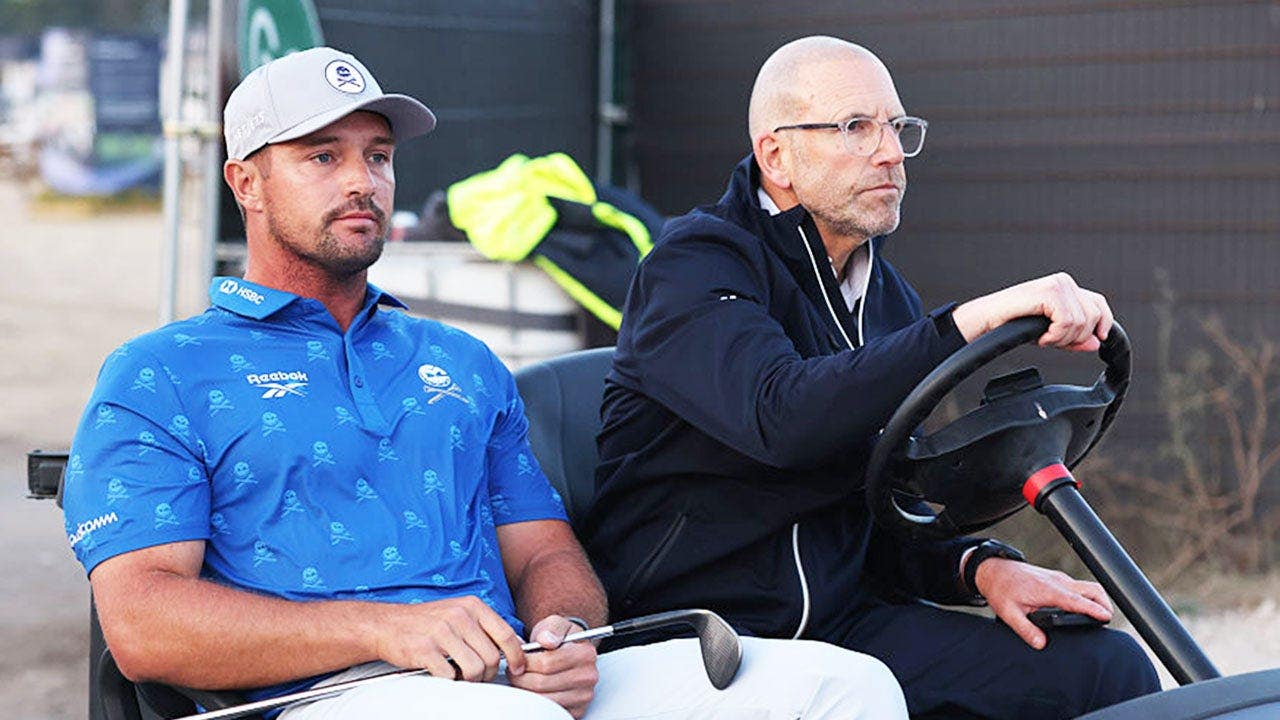
President Donald Trump weighed in on Bryson DeChambeau’s two-stroke penalty at The Open, calling it a “tough call” and making clear he thought the ruling was harsh. The issue had already stirred plenty of debate after DeChambeau was involved in a tense back-and-forth with rules officials, and the president’s comments added another layer to the conversation around one of golf’s biggest stages.
DeChambeau reportedly wanted to reach out to Trump after the ruling, which came after officials said he had affected the lie of the ball by moving through the rough. Trump did not step in, but he did speak sympathetically about the situation when reporters brought it up in the Oval Office. His tone was simple and direct, the kind that tends to land hard in moments like this.
“I thought the Bryson call was a tough call,” Trump told reporters in the Oval Office on Friday.
He said he had watched the scene unfold and had seen players searching for their balls in difficult spots before. That experience seemed to shape his view, since he suggested the ruling felt overly strict rather than fair to the golfer trying to play out of a bad position. In his telling, it was one of those calls that can leave everyone arguing long after the round is over.
DeChambeau’s issue came during the fifth hole of his second round, when he appeared to move through the weeds and flatten part of the rough behind him before making his shot. After the round, he returned to the high fescue and argued his case to officials, but the penalty stood. For a player known for powering through pressure and leaning on every edge available, it was a frustrating moment in a major championship.
Trump was then asked whether there was some sort of pattern to him becoming the guy athletes turn to when they want a call reviewed. The question came after his involvement in a separate soccer situation, where FIFA suspended Folarin Balogun’s red card ahead of the USMNT’s Round of 16 matchup against Belgium. Trump laughed off the idea that he was acting as a fixer and instead framed it as something closer to common sense.
“Well, it’s not a fixer. You mean being a judge,” Trump said.
He also pointed back to the Balogun situation and said the decision to lift the red card ended up working out “brilliantly.” In his view, letting the player suit up was the right move, even if the result did not go Belgium’s way in the end. Trump credited FIFA leadership for handling it well and said his role was limited to asking for a review of a call he thought was wrong.
“I thought the red card was a very tough call, and it worked out brilliantly. Look, supposing that they didn’t let him play and we lost, everyone would have been angry, right? The way it was that they lost with their best player. Now everyone’s happy, including Belgium. Of course, they lost the next game, so they might not that happy, either.
“But it worked out great. (Gianni Infantino) did a good job in making that call. All I did, I asked for a review. I thought that call was not a good call.”
At The Open, DeChambeau stayed in the mix for a while despite the penalty, but the final round turned ugly when he made triple bogey on the 11th hole and dropped out of serious contention. He ultimately finished 4 under and tied for 14th, which still placed him in the upper half of the leaderboard but left him well short of the trophy chase. For a major that had already tested him on the rules front, the finish only deepened the sting.
The result also marked a rough stretch in DeChambeau’s season, since The Open was the only major where he managed to make the cut. That makes the penalty feel even bigger in hindsight, because every shot carried more weight and every mistake had a way of sticking. In golf, the line between a strong week and a painful one can be razor thin, and this one had that sharp edge all over it.
Trump’s comments fit neatly into the broader sports chatter around officiating, fairness, and how much judgment should go into a ruling when a player is under pressure. Golf, maybe more than most sports, lives and dies on those tiny calls that can change a round in a flash. And when a figure like Trump says the call was tough, people tend to keep talking about it.
