
The Trump administration has laid down a firm directive to Harvard University, requiring it to disclose details on any misconduct by foreign students by April 30. Secretary of Homeland Security Kristi Noem announced a significant shift in policy, canceling $2.7 million in grants that criticized conservatives and promoted what she termed “public health propaganda” during the pandemic. Noem emphasized the urgency of this demand with a stern letter, insisting that Harvard provide comprehensive records regarding the unlawful activities of its foreign student visa holders by April 30, 2025.
Secretary Noem expressed her concerns, stating that Harvard’s leadership has allowed antisemitic sentiments to flourish on campus, which in her view, poses a national security threat. She highlighted the university’s shift away from its historical reputation as a leading educational institution due to what she described as an “anti-American, pro-Hamas ideology.” The Secretary underscored the expectation that universities, especially those receiving taxpayer money, should uphold American values.
Following the Hamas attack on Israel in October 2023, Harvard has faced criticism for the antisemitic behavior exhibited by some of its foreign students and faculty. The Department of Homeland Security (DHS) has made it clear that unless Harvard can prove adherence to reporting standards, it risks losing its ability to enroll foreign students. With its substantial $53.2 billion endowment, Noem suggests that Harvard can manage its affairs independently, without relying on taxpayer funds.
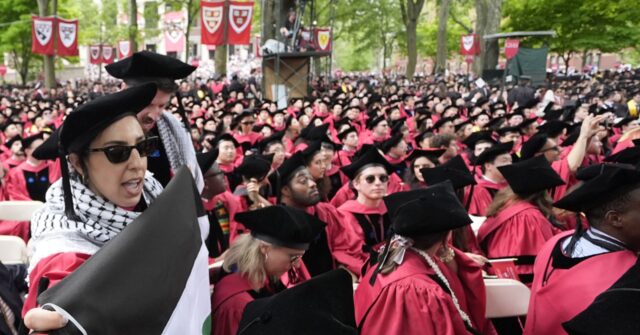
The university has been grappling with significant protests and anti-Israel demonstrations, particularly since the October 7 incident. A notable number of Harvard student organizations have controversially attributed blame to Israel in a public statement. This situation is compounded by the fact that international students make up over a quarter of Harvard’s student body, according to university statistics.
The correlation between elite academic institutions and the presence of anti-Israel sentiments has become increasingly apparent. The current administration’s stance reflects a broader expectation for accountability and transparency from these universities. As the deadline approaches, all eyes are on Harvard to see how it will respond to this demand.
Critics of the university’s handling of these issues point to a lack of decisive leadership in addressing antisemitic actions and rhetoric. The DHS’s intervention is seen as a necessary measure to protect national interests and ensure that educational institutions maintain a conducive environment for all students. This move by the Trump administration signifies a broader crackdown on perceived threats to national security within academic settings.
There is a growing concern about the influence of foreign ideologies on American campuses. This development at Harvard is part of a larger conversation about the role of international students in American universities. With significant financial resources at its disposal, Harvard is expected to meet its obligations and demonstrate compliance with federal standards.
The cancellation of federal grants to Harvard marks a pivotal moment in the relationship between the government and educational institutions. Noem’s decisive action is a clear message that the government will not tolerate behaviors that undermine American values. The controversy surrounding Harvard’s foreign student body underscores the complexities of balancing educational excellence with national security concerns.
As the situation unfolds, the broader implications for other universities with large international student populations remain uncertain. The administration’s decision is likely to have a ripple effect, prompting other institutions to reevaluate their policies and practices. The focus on security and ideological alignment is set to shape the future of higher education in America.
The administration’s firm stance serves as a reminder of the expectations placed on institutions receiving taxpayer support. Harvard’s response to this ultimatum will likely influence its reputation and standing in the academic world. The outcome of this situation will be closely monitored by both supporters and critics of the current administration’s policies.
There is no doubt that the challenges facing Harvard are emblematic of broader issues within the academic landscape. As debates about free speech and ideological diversity continue, universities must navigate these complex waters carefully. The Trump administration’s actions highlight the importance of accountability and the protection of American values in higher education.
In the wake of these developments, conversations about the role of foreign students in shaping campus culture are intensifying. The administration’s approach emphasizes the need for vigilance in preserving the integrity of American educational institutions. As Harvard grapples with these demands, the broader implications for academic freedom and national security remain at the forefront of public discourse.
The interplay between international influence and domestic policy is a key concern for policymakers and educators alike. The administration’s actions are a clear indication of its commitment to safeguarding national interests. As the deadline approaches, the spotlight remains on Harvard and its ability to address the concerns raised by the Department of Homeland Security.
