
Textbooks once stirred curiosity and pride; now many read like instruction manuals for grievance, and that matters because what boys read shapes what they become. This piece argues that the Progressive-era redesign of “social studies” traded vivid, motivating stories for sterile social narratives, that committees toned down heroism and adventure, and that restoring concrete, action-filled history and inventions would better engage young minds. It points to George Washington and Thomas Edison as examples of the kinds of human stories that inspire effort, resilience, and practical problem solving.
Textbooks labeled “social studies” began as a deliberate project, not an accident. “The social studies are understood to be those whose subject matter relate to the organization and development of human society, and to man as a member of social groups,” decided the National Education Association’s (NEA) Committee on Social Studies in 1916. That choice to frame history through social themes shifted emphasis from individual grit to broad social analysis.
The result is obvious in many classrooms today: tales that once crackled with danger and daring are flattened into summary paragraphs. Boys who might be captivated by a young officer’s desperate charge or an inventor’s risky experiment instead see moralized essays about systemic issues. When dramatic scenes are removed, so is the chance to feel the tension, the fear, the payoff of courage.
OBAMA TAKES NEW SWIPE AT FOUNDING FATHERS AHEAD OF AMERICA’S 250TH BIRTHDAY: ‘DEEP FLAW’
Take George Washington. Textbooks rarely put students next to him as two horses were shot from under him in the Battle of the Monongahela in 1755, or show him refusing to become a monarch at Newburgh. Those episodes teach leadership under pressure, the awkwardness of authority and the moral choices leaders make when victory is fragile.
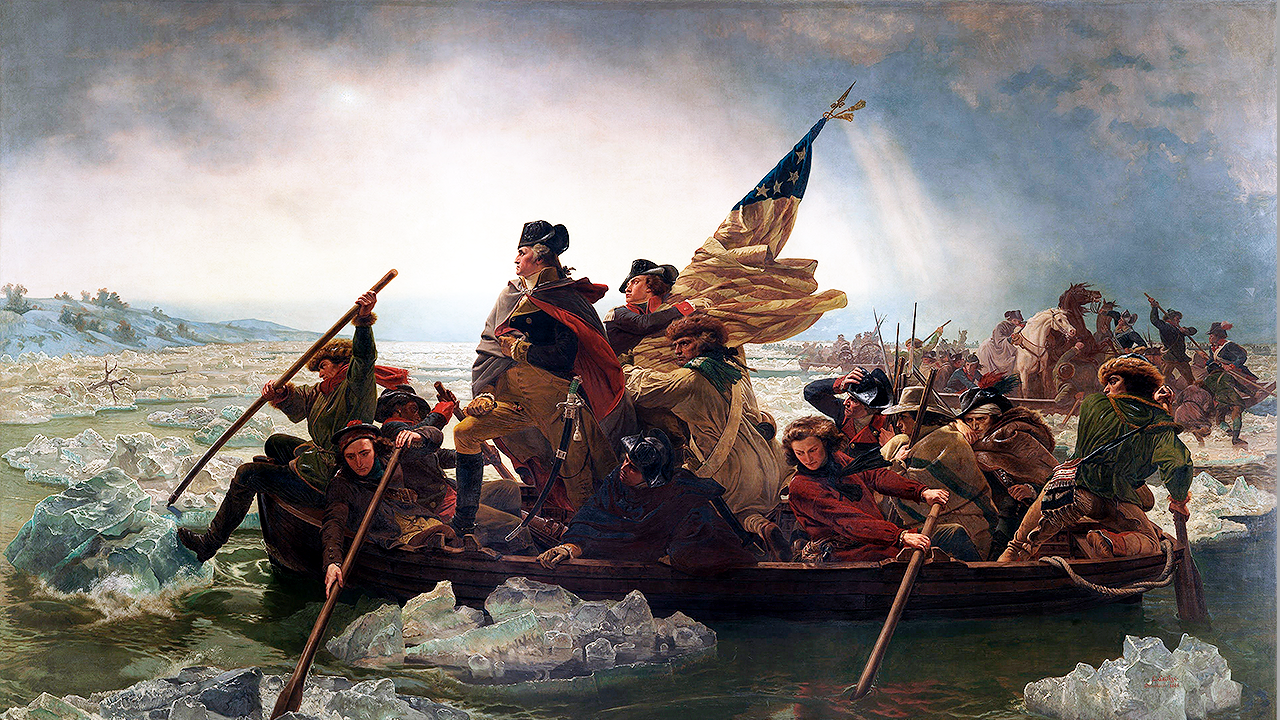
Christmas at Trenton deserves more than a date on a page; it deserves the chill of a river crossing and the hush before a surprise attack. Kids need the beat-by-beat of how a desperate plan rewrote a moment in history, not a paragraph that treats courage like a footnote. That kind of storytelling builds grit and practical imagination in a way abstract social analysis cannot.
SECRETS OF REVOLUTIONARY WAR BATTLEFIELDS EMERGE 250 YEARS AFTER AMERICA’S FOUNDING
Then there is invention—the messy, combustible side of progress. Instead of dry tallies about patents, tell students that Thomas Edison was once called “addled” and was tossed out of school, or that as a boy he accidentally set a train on fire while printing his own newspaper. Those incidents show trial and error, curiosity, and how a helpful stationmaster teaching telegraph work changed one boy’s path and eventually altered the world.
DISCOVERIES THAT RESHAPED WHAT HISTORIANS KNEW ABOUT AMERICA’S FOUNDING FATHERS
Textbook committees in the Progressive Era made choices with political intent, turning full characters into cautionary sketches usable for social lessons. The problem is not that social themes are ignored; the problem is balance, or rather the lack of it. When curricula lean heavily into conflict between classes or identities, they often shortchange the vivid accounts that taught perseverance and inspired careers in science, engineering and public service.
We can teach about injustices and social context while still giving students the raw stories that kindle ambition. Show a boy how Washington stayed standing when others fell, how Edison kept messing with filaments until he made a marketable bulb, and let those concrete scenes do the heavy lifting of inspiration. That approach respects facts while offering young people models of risk taking and recovery.
Policy and parents should insist on textbooks that place real human action back at the center of history and science. Schools should not be factories producing ideological certainties; they should be workshops that train minds to think, to try, and to take measured risks. If we want boys to love learning again, we must stop serving them bland, politically curated gruel and start feeding them stories that earn their attention and spark their ambition.
