
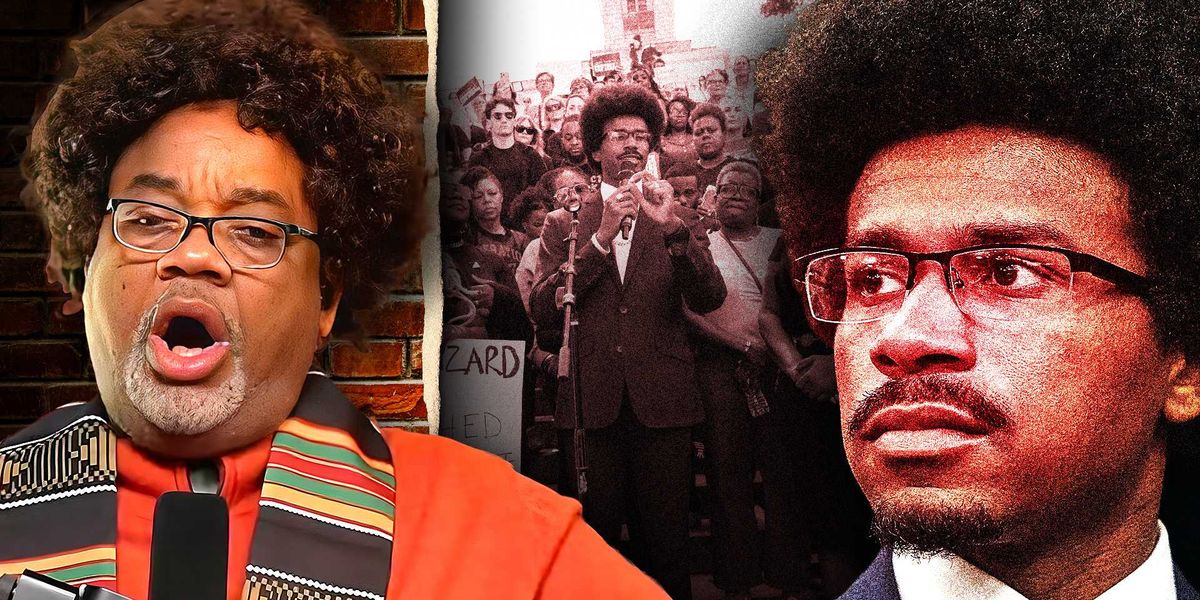
Tennessee Rep. Justin Pearson drew sharp criticism after a heated confrontation with state troopers during a redistricting special session, using charged language that shocked onlookers and commentators. BlazeTV host Jason Whitlock and others condemned the outburst, arguing it undercuts the very causes Pearson claims to champion and exposes partisan motives behind the redistricting fight. The episode has prompted calls for accountability and a reminder that elected officials should model respect, not spectacle.
The incident unfolded when Pearson, visibly upset about the redistricting outcome, confronted state troopers and used language that many called inflammatory and unprofessional. He addressed the troopers as “boy,” and yelled, “You stupid motherf**ker!” in a moment that drew immediate rebuke across the political spectrum. That choice of words turned a legislative disagreement into a public controversy about decorum and responsibility.
Jason Whitlock reacted sharply to what he saw as a role reversal, where the historical pattern of authority using demeaning language is now mirrored by an elected official. “What a juxtaposition, what a transformation that we went from the 1960s, where law enforcement was speaking disrespectfully to black protesters and black people and calling them ‘boy’ and being intimidating to in 2026, we have an elected official, a college-educated person, someone in a suit and tie that is supposed to be a professional person shouting ‘boy’ and dropping ‘MFs’ and all of this other stuff,” Whitlock comments. His point was blunt: behavior like this undercuts moral authority.
“Like, wow, things have changed. And people want to pretend like things haven’t changed, but clearly they have,” he adds. Whitlock also pushed back on the racial framing of the redistricting argument, noting that while some are treating it as a “black-white thing,” the real fight is “a Democrat-Republican thing.” He went further to suggest motives from the other side, saying, “Republicans, I believe, have a black woman that they want to put in that seat,” he continues, adding, “This is crazy.”
That perspective shifts the conversation away from raw emotion and back to political strategy, which is where it belongs. When the conflict is primarily partisan, rhetoric that plays into stereotypes only hands the other side a talking point. Republicans watching the clip saw not a principled stand but a moment that weakened the message and handed opponents a weapon to dismiss genuine concerns.
Other commentators agreed that the optics were damaging regardless of intent. “He’s very dramatic,” Anthony Walker agrees. “That video was just appalling to me because … if you’re really trying to fight for voter rights, what does this behavior do to support any of that? All it does is support the stereotype. All it does is support, you know, just foolishness,” he adds. Those words capture why many people, even sympathetic observers, were disappointed.
The episode matters because public trust depends on consistent behavior from public servants, and voter-rights advocacy is fragile when headlines highlight controversy over substance. Republicans argue that holding elected officials to high standards is essential to protect institutions and to win arguments on the merits. Whatever the long-term political fallout, one clear outcome is that the drama distracted from the policy debate and raised questions about judgment.
There are practical stakes here beyond sound bites: redistricting decides who represents communities and how power is allocated in elections, and those decisions deserve sober, respectful debate. Voters will take note of who resorts to theatrics and who sticks to clear, constitutional arguments. In the end, elected officials answer to constituents, and scenes like this tend to leave a bad impression on the very people whose support they need most.
