
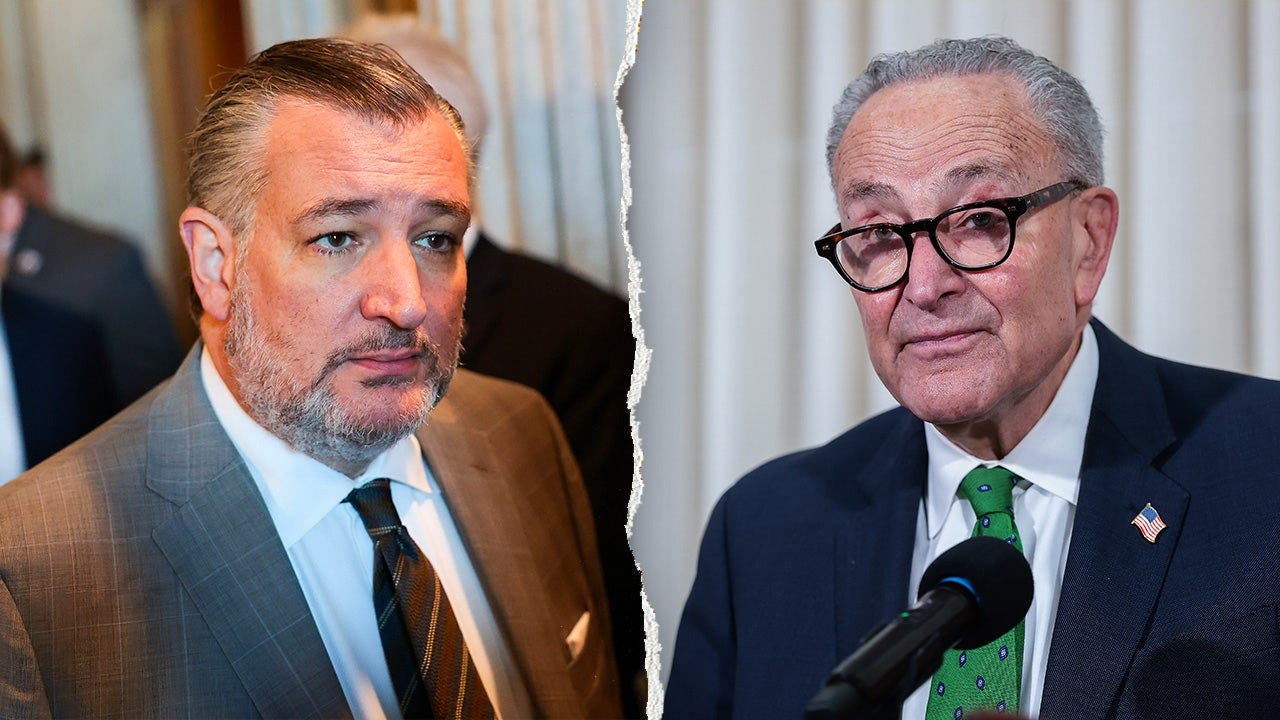
Republican lawmakers are still trying to cut through the noise on energy permitting, but Ted Cruz says the Democratic Party’s leftward drift is making that job a whole lot harder. At a recent energy summit, the Texas senator argued that fear of socialist-backed candidates is freezing bipartisan momentum and pushing establishment Democrats into a defensive crouch.
Cruz pointed to Senate Minority Leader Chuck Schumer as the clearest example of that pressure. In his view, Democrats are looking over their shoulders at an energized progressive wing and choosing caution over cooperation, especially on issues like permitting reform where both parties could, at least in theory, find common ground.
“That dynamic is dangerous right now because they are terrified of the extreme left. Finding a middle ground on ideological issues right now is … the prospects for success, particularly between now and election day, are not high,” Cruz said at an energy summit hosted by Club for Growth and Arnold Ventures. He added, “Schumer is truly terrified right now,” making his point bluntly and without much interest in softening the edges.
The larger backdrop is a Democratic Party that increasingly looks split between older institutional power and a younger, more aggressive activist base. Cruz said that split matters because it shapes how lawmakers behave on the Hill, especially when the political climate rewards purity tests more than compromise.
He also argued that the real force in Democratic politics is no longer centered in the middle. According to Cruz, the energy is coming from the left, where activists, interest groups, and rising candidates are setting the tone and squeezing out anyone who wants to sound more moderate.
“They’re in the middle of a revolution,” Cruz said. “Their problem is that they’re very driven by their interest groups. They’re captured by their activists.” That kind of line fits neatly with his broader warning that bipartisan dealmaking is getting crowded out by party pressure and election-year anxiety.
The summit itself focused on permitting reform, a subject that rarely grabs headlines but has real consequences for energy development, infrastructure, and costs that land on ordinary Americans. The basic idea is simple: when government approvals drag on for years, projects stall, investors back away, and the country loses time and money.
Lawmakers and officials at the event stressed that trimming red tape could open the door to more domestic energy production and a stronger supply chain. Even when there are disagreements about how far to go, the practical payoff is hard to ignore, especially in a country still wrestling with high prices and uncertain energy security.
Energy Secretary Chris Wright highlighted how the permitting maze has slowed nuclear growth in the United States. He said the country has only built three new nuclear reactors in roughly the last four decades, a startling figure for a technology many see as crucial to future energy needs.
“We created the Nuclear Regulatory Commission… in the name of safety, no malintent. But since that creation, we’ve built almost no reactors in the United States since. If it’s so uncertain and so long to permit something, it’s just not worth investing in. That’s awful! Nuclear is just an awesome energy technology,” Wright said.
That message landed with Republican senators like Bernie Moreno of Ohio, who said the conversation was less about partisan theater and more about the mechanics of making things work. He framed permitting reform as a practical win for lower prices, cleaner stewardship, and a more reliable path to building the projects Americans actually need.
“There’s a lot of conversations going on not about who’s going to fight with whom or who is going to take credit for it, but rather what is the mechanics of getting it done,” Moreno said. “When it comes to permitting reform, if we can actually pull this off, Scott, what does it mean? It means lower energy prices for all Americans, us taking better care of our environment, being good stewards for the next generation. Those are worthy goals that should unite all of us, and I’m hopeful that we can get that done,”
Still, Cruz kept circling back to the political reality inside the Democratic coalition, where socialist candidates and activists have been gaining ground in key races. He said that the rise of figures like New York City socialist mayor Zohran Mamdani shows where the momentum is, and why many Senate Democrats are hesitant to break with the left.
“It is not the case that every Senate Democrat is a Marxist or Islamist. What is the case is that every Senate Democrat is terrified of the Marxists and Islamists. Because that’s where the energy is in their party, that’s where the power is, that’s where the money is; it’s where the young people are. I think Mamdani is the single most powerful Democrat in the country,” Cruz said.
That pressure has already shown up in primary battles around the country, where Democratic Socialists of America-backed candidates have knocked off entrenched incumbents and shaken up old alliances. For Cruz, those wins are more than isolated surprises, since they signal a deeper shift that keeps moderate Democrats on edge and makes big legislative bargains much tougher to seal.
“Look, Schumer is known for a lot of things but acts of principle and courage are not among them,” Cruz said.
