
The Supreme Court’s ruling in Louisiana v. Callais clarified that Section 2 of the Voting Rights Act targets intentional racial discrimination, not engineered racial outcomes, and the political aftermath has been loud and ugly. House Minority Leader Hakeem Jeffries called the court “illegitimate,” and several Democrats and academic voices are openly pushing ideas that would remake or replace the court. This piece pushes back, explains the legal distinction at the center of the fight, and warns about the real aim behind the delegitimization campaign.
The Court spent 36 pages explaining that Section 2 is focused on stopping intentional racial discrimination, not endorsing race-based gerrymanders. Its point was simple: legislators cannot redraw districts to ensure a particular race always wins. The law was always meant to prevent a state from creating a voting disadvantage for people because of their race, not to give one race an advantage.
That distinction matters because it keeps the Voting Rights Act tied to equal protection principles, not to engineered outcomes. The act’s text pointedly condemns creating districts “to afford minority voters less opportunity because of their race.” Preserving that text keeps election law about equality under the law, not about social engineering.
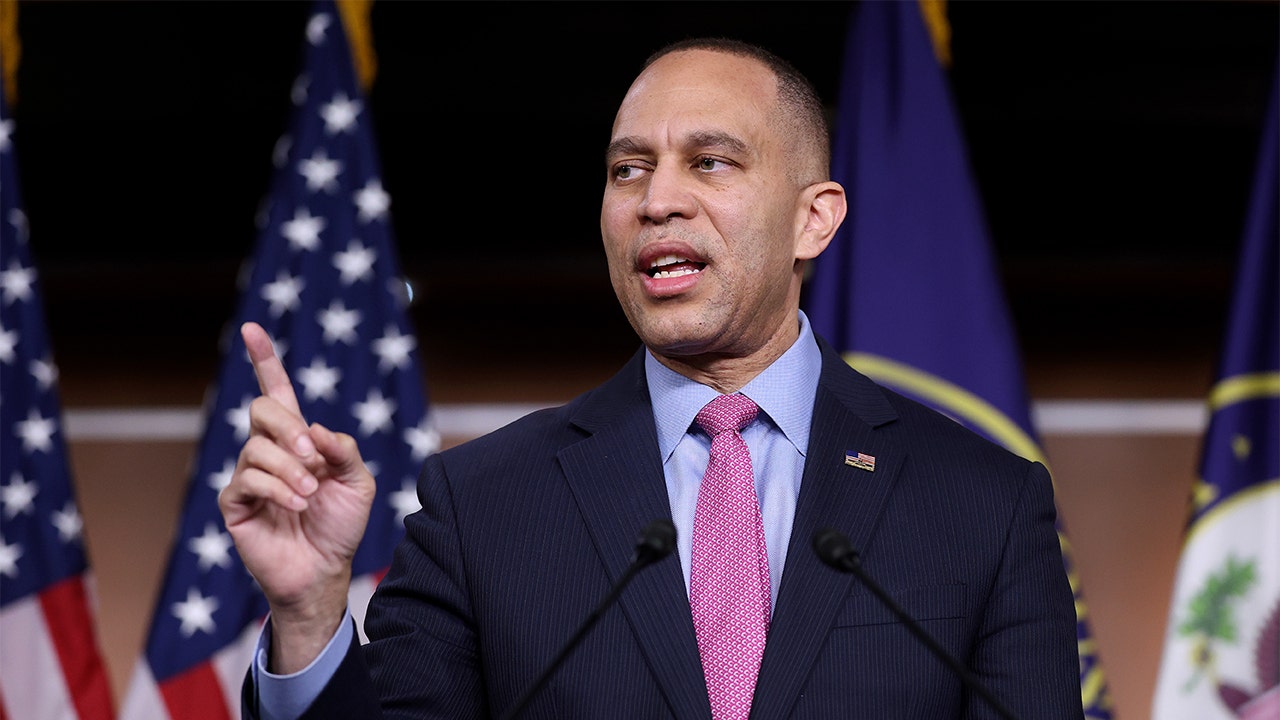
Some responses have been shrill and political rather than legal. House Minority Leader Hakeem Jeffries labeled the Court “illegitimate.” Representative Jamie Raskin demanded “We’re going to have to try to transform the way the Supreme Court has been gerrymandered itself and stacked and packed with MAGA appointees.” Those are not arguments, they are calls to remake institutions because the result is disliked.
On the academic left, the rhetoric has moved into more radical territory. Titles and columns have ranged from “The Slaying of the Voting Rights Act by the Coward Alito” to calls that “It’s Time to Accept that the US Supreme Court is Illegitimate and Must Be Replaced.” When legal disagreement becomes a demand to replace the Constitution’s referees, you are no longer debating law. You are chasing power.
Some prominent law professors have gone further, labeling conservative judges “partisan hacks” and publishing books such as “No Democracy Lasts Forever: How the Constitution Threatens the United States.” Others call to “reclaim America from constitutionalism” and even argue for “remaking institutions like the US Supreme Court so that Americans don’t have to suffer future decades of oligarchy-facilitating rule that makes a parody of the democracy they were promised.” Those are sweeping proposals to rip up the system rather than defend it.
There is a clear political endgame: court packing, aggressive reforms, even treating the court itself as an obstacle to be removed. Democratic strategist James Carville said plainly, “They’re going to recommend that the number of Supreme Court justices go from nine to 13. That’s going to happen, people.” He also advised, “Don’t run on it. Don’t talk about it. Just do it.” That is an admission the idea lacks public consent.
Power-hungry talk does not become legitimacy through repetition. Former Attorney General Eric Holder admitted the motive: “[We’re] talking about the acquisition and the use of power, if there is a Democratic trifecta in 2028.” When officials openly frame institutional change as a tool for partisan advantage, conservatives have every reason to defend the rule of law and the Constitution.
There is also irony in the delegitimizers’ claims. The Court hands down many unanimous or near-unanimous decisions, and most opinions are not narrow 6-3 ideological splits. Yet the response to any conservative victory is immediate delegitimization rather than reasoned critique. That reaction says less about the Court’s legal grounding and more about an appetite for power.
Chief Justice John Roberts captured a core conservative concern years ago: “It is a sordid business, this divvying us up by race.” He added in another case that “the way to stop discriminating on the basis of race is to stop discriminating on the basis of race.” That principle insists on equal treatment, and the Callais decision fits within that approach rather than abandoning voting protections.
Democratic calls to delegitimize the judiciary, then remake or pack it, are a dangerous path for any republic. Conservatives can disagree with rulings while defending the Court’s role as an independent umpire. When critics trade legal argument for plans to reengineer the institution, the debate becomes about seizing power, not improving law.
