
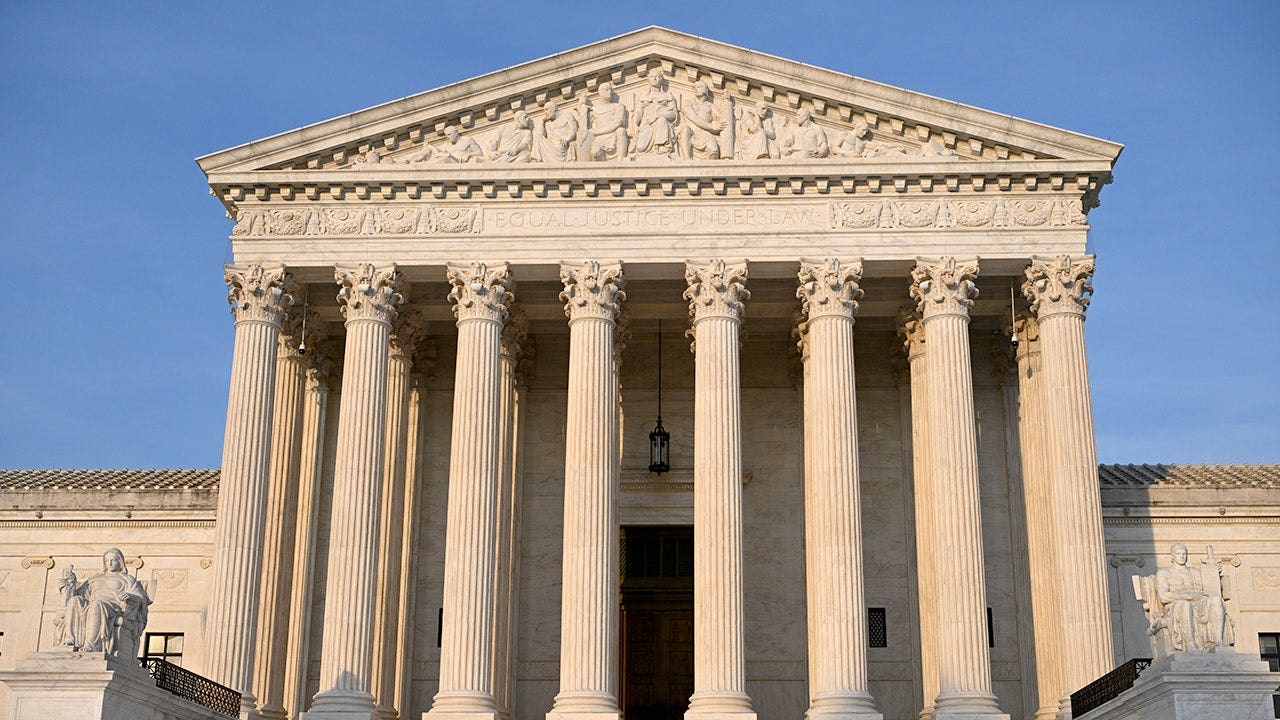
The Supreme Court’s recent term shattered the partisan caricature pushed by many on the left, showing a court guided by constitutional fidelity, separation of powers and stability rather than pure politics. Conservative rulings aligned with the Roberts Court’s long-standing project to rein in the administrative state, restore federalism and protect core liberties, while the court still checked overreaching presidential moves when they crossed constitutional lines. The result is a judiciary that neither marches in lockstep with any politician nor caves to partisan pressure.
Democrats and liberal commentators loudly criticize what they call “the MAGA Supreme Court” and complain it turns government into “members-only clubs for his golf buddies and cronies.” They hype phrases like “the corrupt conservative majority on the Supreme Court appointed by Donald Trump” and threaten court-packing as a cure. Those attacks are political theater designed to distract from a deeper shift: the court is returning to constitutional basics, not pursuing a narrow partisan agenda.
That return shows up in rulings that preserve presidential authority while also protecting institutional limits. In Slaughter, the court affirmed the president’s power to remove officers who execute federal law, citing the Framers’ intent to have a “Chief Magistrate” with final responsibility. That decision reduces entrenched administrative independence but stopped short of blowing up the entire administrative system, keeping precedent and stability in view.
At the same time, the court rejected attempts to expand executive power beyond statutes Congress enacted. When the administration pushed sweeping tariffs and other extraordinary measures, the justices pushed back, reminding the White House that delegated authority has bounds and that Congress must speak clearly. Those checks reflect a consistent conservative principle: restore the separation of powers so policy comes from elected lawmakers, not unaccountable agencies.
On culture-war flashpoints, the majority has chosen restraint and deference to states on sensitive questions. The ruling on transgender participation in school sports sided with the view that states can make sex-based classifications for athletic competition, consistent with an approach that keeps domestic social policy local. That posture mirrors the court’s handling of abortion after Dobbs, which moved the decision-making back to state democracies rather than federalize every contested issue.
Race-conscious policymaking also faced limits as the court reinforced a move away from judicially enforced racial considerations in politics and education. In redistricting and admissions decisions the justices continued to peel back practices that treated race as a determining factor, emphasizing equal treatment under the law and leaving room for states to set their own course. This is not partisan engineering; it is a structural choice to reduce judicial micromanagement of political processes.
The court’s path has not been uniformly pro-Trump or anti-Trump. When presidential tactics ran into constitutional tradition, the justices said no. Trump’s attempts to alter birthright citizenship and to unilaterally seize control of agencies like the Federal Reserve met resistance because the court is attentive to centuries of practice and institutional necessity. Those losses show the court enforces limits on anyone who overreaches.
That balance infuriated Trump and some of his supporters, who branded the justices a “disgrace to our nation” and called them “disloyal” after certain rulings. But the better takeaway for conservatives and for the White House is that the court is consistent in restoring structural guardrails—ending the administrative state’s unchecked growth, curbing government use of race, and protecting First and Second Amendment principles. Expect rulings driven by legal reasoning and institutional history rather than raw political loyalty.
Political leaders on the left respond to these trends with calls for court expansion, declaring “We [should] talk about the idea of Supreme Court reform, which includes expanding the Supreme Court,” as a quick fix. That impulse treats judicial independence as a plaything for whoever controls Congress. The more enduring lesson is that a court rooted in original understanding and cautious about upsetting long-term governance will frustrate both parties when they try to turn justices into political operatives.
“GORSUCH SAYS IDEOLOGICAL DIVIDES ON SUPREME COURT COME DOWN TO ‘HOW YOU READ LAW,’ NOT POLITICS” captures the essential point: the fights are about interpretive methods, not pure partisan loyalty. For voters and elected officials, the sensible path is to engage in politics where it belongs—legislatures and statehouses—while respecting a judiciary that, for now, seems committed to principles over partisanship.
