
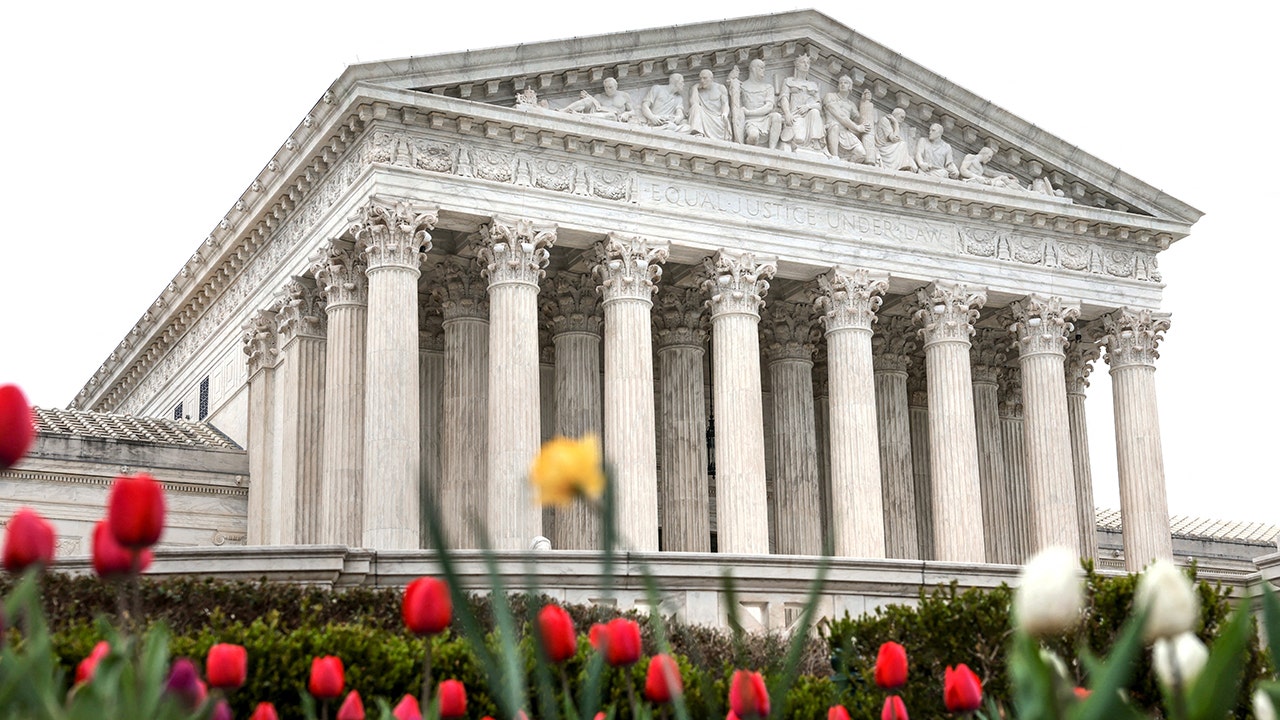
The Supreme Court’s 6-3 decision in Louisiana v. Callais rejects race-based congressional mapmaking done to satisfy § 2 of the Voting Rights Act, finding that complying with § 2 is not a narrowly tailored compelling interest under strict scrutiny. The opinion, written by Justice Samuel Alito and opposed by Justice Elena Kagan, reaffirms that race cannot drive district lines while preserving the VRA’s core protections against vote denial and dilution.
The Court applied settled law and an exacting standard. It held that race cannot be treated as the dominant or controlling factor when states draw congressional districts, and it declined to treat compliance with § 2 as a free pass to base maps on race. This is a decision that, from a conservative perspective, restores common sense to redistricting and limits federal overreach into state political processes.
Section 2 prevents states from denying or abridging “the right of any citizen of the United States to vote on account of race or color,” and courts evaluate violations “based on the totality of the circumstances” to decide whether the “political processes” are “equally open to participation.” The statute also says there is “no right to have members of a protected class elected in numbers equal to their proportion in the population.” Those textual limits matter and the Court enforced them.
The Callais respondents insisted Louisiana needed an extra majority-Black district to comply with § 2. The Court asked whether following § 2 justified using race as a decisive mapmaking tool under strict scrutiny, and it answered no. The opinion stressed that “allowing race to play any part in government decision-making represents a departure from the constitutional rule that applies in almost every other context” and that “the Constitution almost never permits the Federal Government or a State to discriminate on the basis of race.”
This ruling fits into a line of cases that balance race-conscious remedies against constitutional bans on racial classification. Justice Kagan herself in Cooper v. Harris required courts to “disentangle race from politics and prove that the former drove a district’s lines.” Callais builds on that principle rather than discarding it, insisting plaintiffs must show race, not politics, was the driving force behind a map.
The Court also took its cues from Allen v. Milligan, where Chief Justice Roberts wrote there is a difference “between being aware of racial considerations and being motivated by them” and that the former is permissible while the latter usually is not. The Court reiterated that “race-neutral considerations” cannot be made to look like an afterthought “
