
The case for rebuilding America’s nuclear industrial base is simple: state-led hubs, smart federal support, and a restored fuel cycle will drive jobs, strengthen national security, and break our dependence on rival suppliers. This article explains why a Nuclear Lifecycle Innovation Campus model makes sense, how past policy choices hollowed out our capabilities, and what practical steps are underway to revive enrichment, fabrication, recycling and advanced reactor deployment. It argues from a conservative perspective that competitive federalism, clear leadership, and practical industrial policy can restore American advantage in nuclear energy.
The states that invested in nuclear power decades ago reaped durable economic and security benefits, and the same logic applies now. A state-centered approach lets regional strengths be leveraged, talent pools assembled, and supply chains grow where they make the most sense. That bottom-up energy aligns with conservative principles of local control and accountability while advancing a strategic national interest.
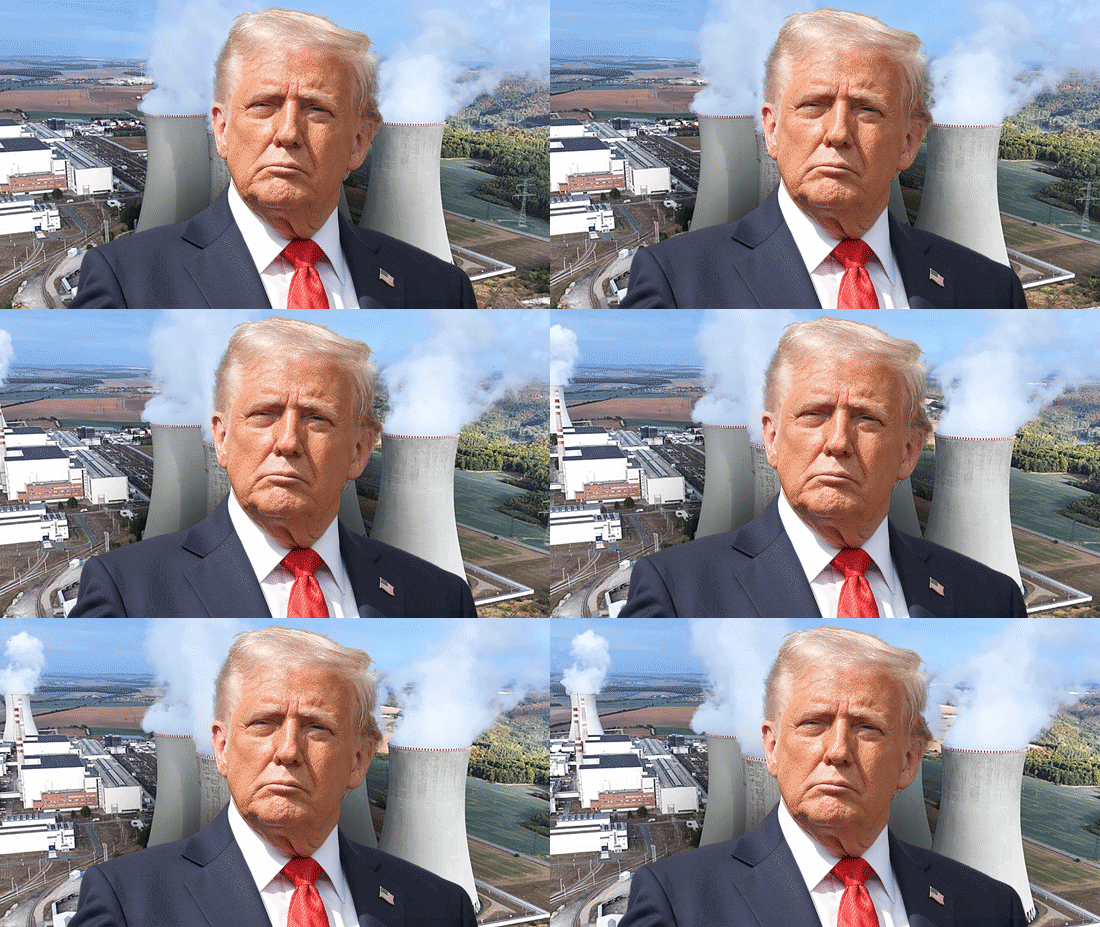
President Donald Trump acted to put states in the driver’s seat for reviving our nuclear industry, and that executive action matters. The Department of Energy has since created a framework encouraging states to rebuild the full fuel cycle at home. When states lead, industry notices and capital follows.
The Nuclear Lifecycle Innovation Campus idea is straightforward: build regional hubs that combine research, production and workforce training so nuclear technology and manufacturing cluster again. These hubs would host fuel fabrication, recycling experiments, advanced reactor demonstrations and materials testing in one place. Co-location speeds innovation, reduces costs and creates the scale needed to compete globally.
US POWER CRUNCH LOOMS AS OKLO CEO SAYS GRID CAN’T KEEP UP WITHOUT NEW INVESTMENT
America once supported a fully integrated nuclear enterprise, with enrichment, conversion, fabrication and reprocessing spread across multiple states. That industrial web created skilled jobs, heavy manufacturing, and technological depth that powered private industry and national defense alike. When it withered, whole supply chains and artisanal capabilities disappeared.
The decline did not happen by accident. Heavy-handed regulation, shifting public opinion, and the economics of cheap natural gas made nuclear less attractive. Policy decisions like the post-1977 move away from commercial reprocessing compounded the problem, leaving growing inventories of spent fuel and lost opportunities to recycle usable material.
TRUMP ADMIN POURS $1B INTO MASSIVE EFFORT TO RESTART NUCLEAR REACTOR AT HISTORIC MELTDOWN SITE
Other nations seized the opening and built vertically integrated nuclear businesses that control fuel services, reactor builds and long-term support. Today competitors supply critical services and exercise leverage over utilities and policymakers. Rebuilding our domestic capability is not nostalgic; it is strategic and urgent.
Advanced reactors and many modern designs can make use of recycled materials and alternative fuels, reducing waste while boosting efficiency. Restoring a domestic fuel cycle would let the United States capture those benefits and keep critical technologies in friendly hands. A regional campus model creates the ecosystem needed to test, deploy and scale these innovations fast.
DEPARTMENT OF WAR TRANSPORTS NEXT-GENERATION REACTOR IN NUCLEAR ENERGY MILESTONE
Under Secretary Chris Wright and the Department of Energy have moved to expand domestic enrichment, support HALEU production and shore up allied supply chains. Those are the right kinds of moves because they pair federal backing with state initiative. States that choose to host these campuses will attract investment, talent and suppliers, and that competition will sharpen performance across the country.
Rebuilding the nuclear industrial base also protects national sovereignty. Russia controls a large share of global enrichment capacity and remains an important supplier of reactor fuel to international utilities. A strong U.S. supply chain reduces exposure to geopolitical pressure and ensures we control technologies vital to our defense and economy.
The task is practical and local: cluster manufacturers, retrain workers, incentivize fabrication and recycling, and give states the tools to build on regional strengths. Competitive federalism produced America’s greatest industrial successes, and it can do the same for nuclear energy if policymakers back clear, accountable, and pragmatic programs. States that move first will prove the model and drive others to follow, restoring both industrial power and strategic independence.
