
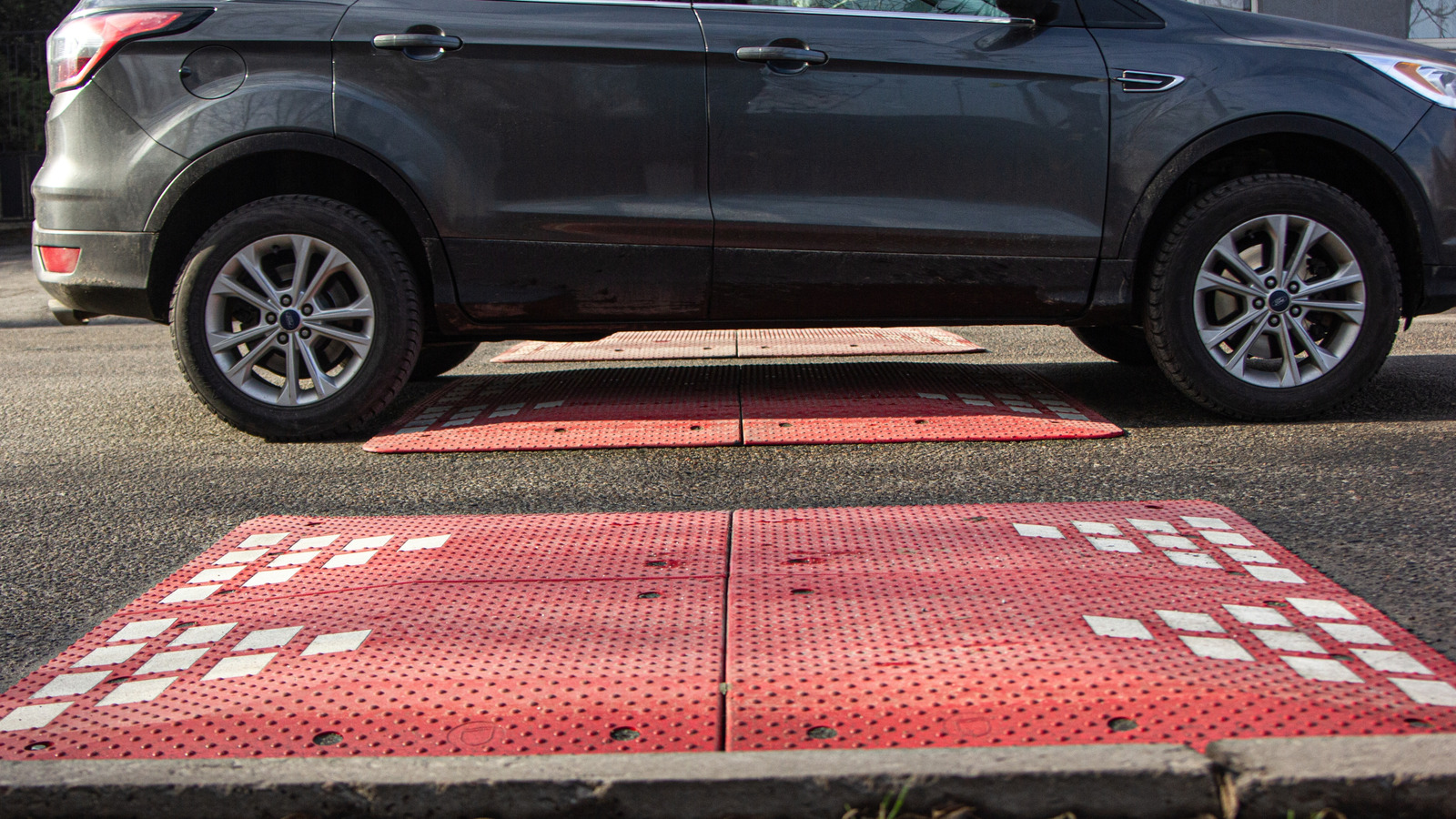
Gaps in some speed bumps are not accidental; they are a planned feature that changes how different vehicles experience traffic calming. This article explains why engineers leave openings, how those gaps affect bikes, buses, emergency crews and drainage, and what drivers should keep in mind when they encounter them. You’ll come away knowing the practical reasons behind those odd little channels in the road.
Not every raised area on the street is a single continuous hump. Some installations use separated modules or cushions with spaces between them, and those spaces line up with typical wheel paths or bike lanes. The visual oddity looks like a flaw if you’re not familiar with the design, but it’s actually purposeful engineering.
One of the main reasons for the gaps is to accommodate narrow-wheel vehicles like bicycles and motorcycles. A bicycle rider or scooter operator can pass through a gap without hitting the full height of the hump, which reduces the risk of losing control. That makes these designs friendlier to mixed-use streets where people on two wheels share space with cars.
Gaps also help larger, multi-axle vehicles such as buses and trucks. By aligning openings with the wheelbase of transit vehicles, engineers allow buses to straddle the cushions and maintain smoother operation. This lets cities calm traffic without disrupting public transport schedules or causing damage to heavy vehicles.
There’s a drainage benefit too. Continuous humps can trap water and debris, creating puddles or accelerating pavement deterioration. Channels allow stormwater to move along the curb and prevent pooling right where drivers or cyclists need traction the most. In wet climates, that small design choice contributes to safer, longer-lasting streets.
Emergency response is another factor that shapes the gaps. Fire trucks and ambulances need to keep moving fast and often have wider axles that can straddle segmented cushions. Designers accept some reduction in speed-calming effectiveness for those vehicles in exchange for faster emergency response times. That trade-off is intentional, not accidental.
Of course there are trade-offs. A design that favors buses and cyclists may be less effective at slowing every passenger car, and motorcyclists still need to take care since gaps can shift a rider’s line. Municipal engineers balance local priorities — transit frequency, cycling routes, emergency access — when choosing which layout to install.
Maintenance considerations push some cities toward modular cushions with gaps as well. Individual segments are easier and cheaper to replace than resurfacing a continuous hump, and rubber or precast units can be removed for winter plowing or street repairs. That modularity keeps costs down and minimizes long disruptions on busy corridors.
Standards and signage usually accompany these features, though practice varies. Where gaps are intended for bike lanes or bus wheel paths, paint and markings often make that clear, and local policies dictate placement and height limits. Road users who spot these markings benefit from adjusting speed and lane position accordingly.
Finally, behavior matters. Drivers shouldn’t swerve aggressively to hit a gap because that creates danger for other road users and defeats the calming goal. Cyclists and motorcyclists should approach gaps straight and steady, taking the safe line rather than weaving. Next time you notice that odd channel in a speed cushion, remember it’s a small piece of street design aimed at keeping different users moving safely and efficiently.
