
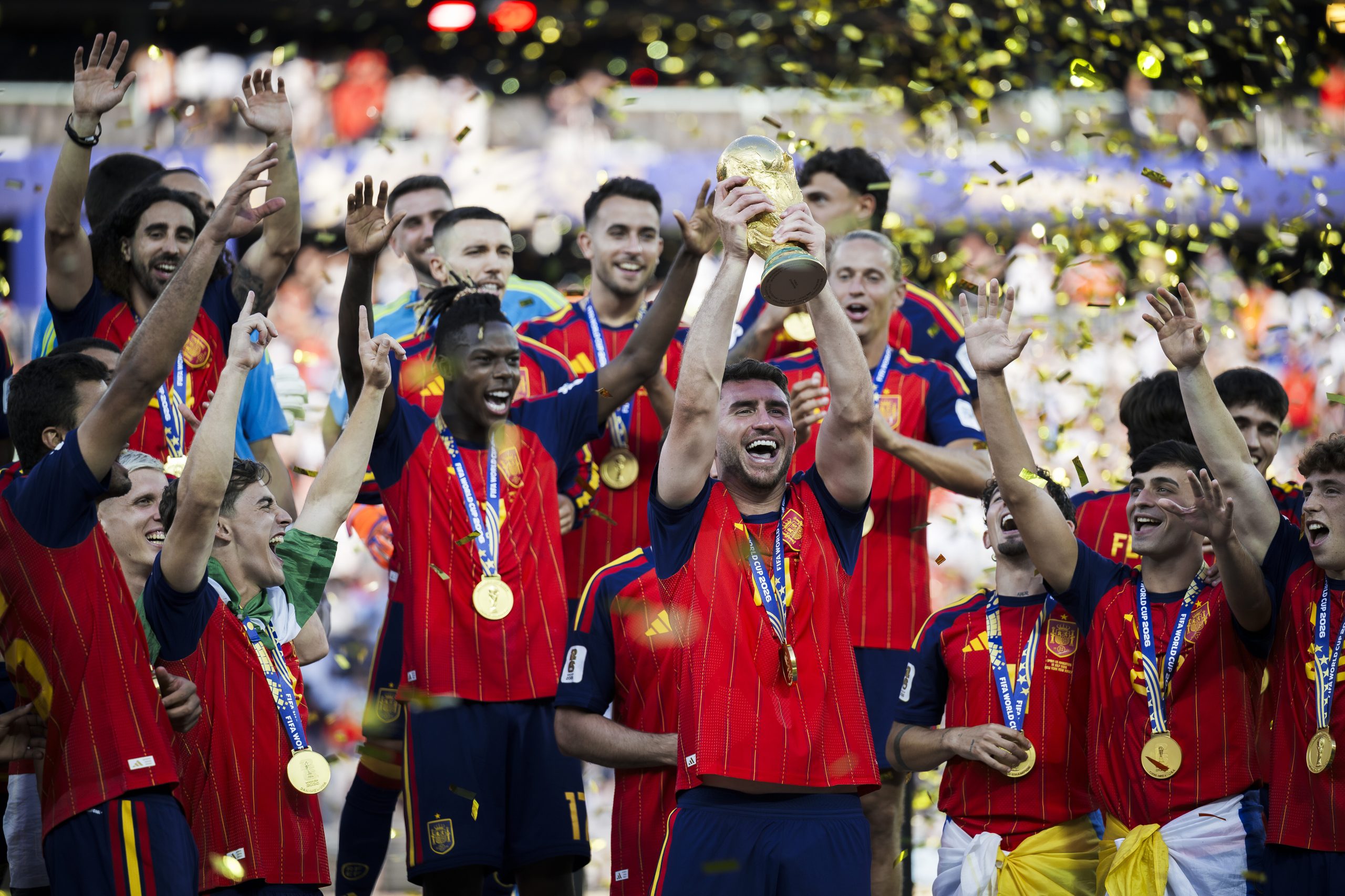
Spain’s latest World Cup triumph left a clear question hanging in the air: where do the biggest names go from here? The answer is a mix of club pressure, rising expectations, and a few career-defining storylines, with several stars heading back to huge roles at some of Europe’s most recognizable teams.
Spain lifted its second men’s World Cup after a 1-0 victory over Argentina, and the path there was about as efficient as it gets. La Roja barely bled goals, conceding only once across eight matches, while grinding through the tournament with a mix of control, patience, and bursts of real quality.
The group stage started with a scoreless draw against Cape Verde, but Spain quickly shook that off with a 4-0 win over Saudi Arabia. A 1-0 result against Uruguay sealed first place in Group H, and once the knockout rounds arrived, Spain kept the same steady rhythm all the way to the trophy.
Rodri was at the center of it all, even without stuffing the stat sheet. The midfielder, who took home the Golden Ball as the tournament’s best player, delivered the kind of all-around performance that makes a team feel complete, breaking up attacks, moving play forward, and setting the tone every time he stepped on the field.
He did not score or assist, but that hardly mattered to anyone watching closely. Rodri added another major prize to a career that already includes a World Cup, a European Championship, a Champions League title, and a Ballon d’Or, putting him in a rare class of football greats.
Now he heads back to Manchester City, where he has already collected every major club honor available during his seven seasons in England. There is also plenty of chatter about a possible move to Real Madrid, which only adds another layer to a career that keeps getting bigger.
Lamine Yamal had a different kind of tournament, one that came with enormous hype and a teenager’s learning curve. He turned 19 during the event, came in managing a hamstring issue, and still flashed enough skill to make it obvious that this is only the beginning.
His lone goal came against Saudi Arabia, and that strike put him into some pretty wild company. He became the second player 18 or younger to score the opening goal in a World Cup match since Pelé in 1958, and he also became the youngest player ever to win both the World Cup and the UEFA European Championship.
Back at Barcelona, Yamal returns as a centerpiece for a club that has already leaned on him heavily. The Catalan side has won back-to-back LaLiga titles with him in the mix, and the next step is clear: helping Barcelona chase its first Champions League crown since 2015.
Pau Cubarsi showed a different side of Spain’s future, anchoring the defense with a calm that looked almost unfair for someone his age. The 19-year-old Barcelona center back partnered with Aymeric Laporte in the middle and handled the pressure like a veteran, even in the final stages of the tournament.
One of the more eye-catching details from the final was Cubarsi becoming just the second player on record to complete more than 100 passes in a World Cup final. That kind of composure earned him the Young Player of the Tournament award, and it fits neatly alongside the Olympic gold he won with Spain’s Under-23 side in Paris in 2024.
Mikel Oyarzabal may not have entered the tournament as the obvious headline name, but he kept finding ways to matter. He finished with five goals, which was enough to make him a surprise contender in the Golden Ball conversation and one of the most productive finishers in the entire competition.
What made Oyarzabal so useful was not just the goals, but the way he fit into Spain’s passing-heavy style. He kept showing up in the right spaces, finished chances cleanly, and once again proved why he has become such a trusted piece of Luis de la Fuente’s setup after also playing a major role in Spain’s 2024 Euro title run.
He now heads back to Real Sociedad, the only professional club he has ever known, with his reputation bigger than ever. Matching the single-tournament goal record for a Spanish player, previously set by Emilio Butragueño and David Villa, gives his summer a little extra shine.
Unai Simon rounded things out at the back with the kind of tournament that goalkeepers dream about, even when they are not facing a heavy shot count. He took home the Golden Glove after allowing just one goal in eight matches, and that lone blemish came against Belgium in the quarterfinals.
Simon did not have much drama in the final either, seeing only two shots from Argentina and none of them on target. Athletic Club in Bilbao gets him back now, and after a run like that, he returns home carrying a lot more respect than he already had.
