
Progressive politicians who rail against corporate power are now getting hit with a very familiar charge: saying one thing in public while cashing checks from the same business world they love to criticize. The tension is especially sharp because the donations involved do not just come from political committees, but from executives tied to major companies, defense firms, and tech outfits that these candidates regularly attack on the campaign trail. That gap between slogan and behavior is what has turned this story into a blunt little referendum on political honesty.
Questions about money in politics are old news, but they land harder when the people making the loudest complaints seem willing to make exceptions for themselves. An examination of Federal Election Commission filings found that several candidates associated with the Democratic Socialists of America accepted contributions after publicly pushing to shut corporate money out of elections. Critics say that makes the anti-corporate message look less like a principle and more like a costume.
Rep.-elect Jerry Carl, R-Ala., put the frustration in plain language, saying, “If you’re taking money from them, at least be man enough to admit you’re going to take the money,” in reference to Rep. Rashida Tlaib, D-Mich. That jab came after filings showed Tlaib received $10,600 in contributions from L3Harris executive Faisal Munir across 2023 and 2025, even after she wrote an op-ed criticizing lawmakers who profit from the defense industry. The point is not subtle: if the fight is against money in politics, the optics get messy fast when defense-industry checks are still welcome.
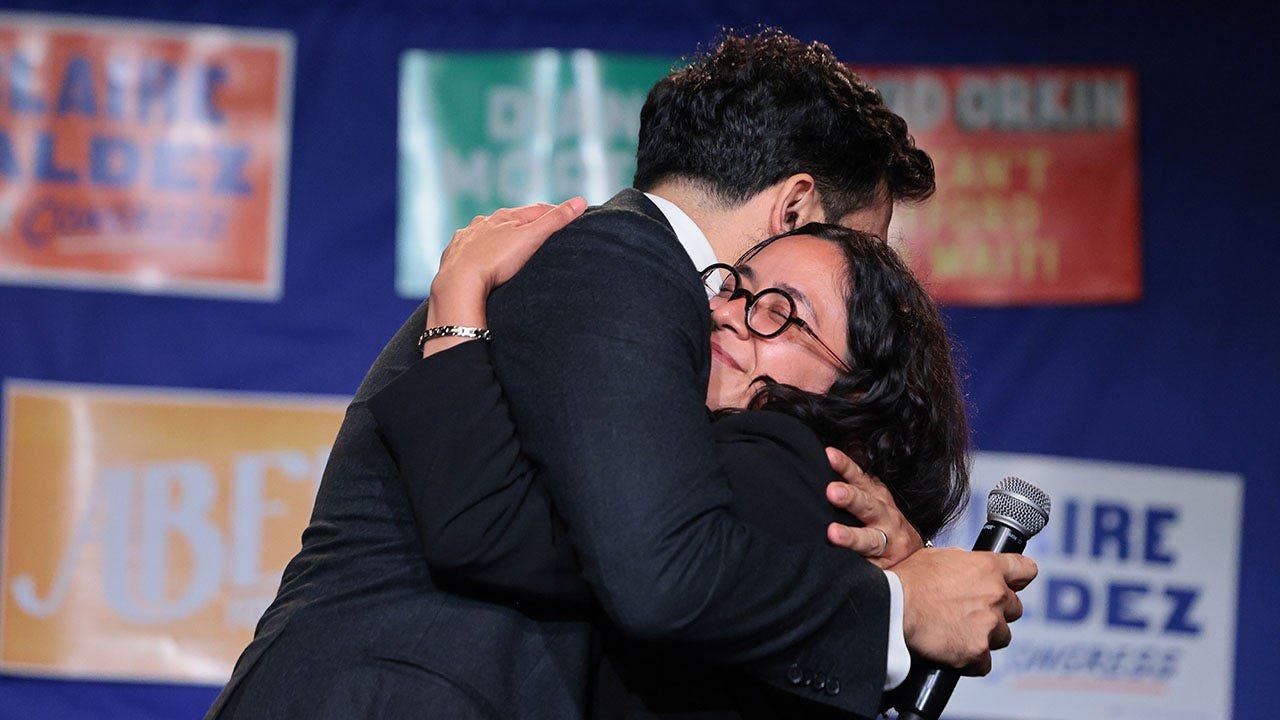
Tlaib was not the only one under the microscope. Other DSA-aligned names, including Reps.-elect Donavan McKinney, D-Mich., Claire Valdez, D-N.Y., and Darializa Avila Chevalier, D-N.Y., had publicly pledged to reject corporate PAC contributions, but the filings showed they still received money tied to PACs and corporate executives. One catch is that these promises often stop short of spelling out whether they apply only to PACs or also to the people who run big companies and write personal checks.
That gray area is where the whole debate gets slippery. Chevalier’s campaign page attacks super PAC money as a system that props up “the wealthy elite, corporations, and political machines over working people,” while Valdez has blasted “AIPAC, crypto and AI” for dumping “millions and millions of dollars” into elections. McKinney, meanwhile, has argued that the campaign finance system keeps officeholders from answering to voters in any meaningful way.
The receipts, however, tell a more complicated story. Omar Tawakol, CEO of AI advertising platform Rembrand, gave $13,600 to Tlaib, $7,000 to McKinney, and $3,500 each to Valdez and Chevalier. On top of that, the investigation said 24 corporate executives contributed a combined $675,300 to DSA-endorsed congressional candidates over two election cycles, with 17 of them giving $126,300 directly to the candidates themselves.
Another chunk of that money flowed through groups that help amplify the same political lane. Justice Democrats, Leaders We Deserve, and the Working Families Party PAC collected the remaining $549,000, and those groups in turn backed the very candidates who were busy denouncing the influence of big money. Justice Democrats supported Chevalier, Tlaib, and Valdez, while Leaders We Deserve backed McKinney and Valdez, and the Working Families Party PAC supported McKinney.
The donor list is the kind that makes the whole argument even harder to ignore. Justice Democrats took $150,000 from Desmos Studio CEO Eli Luberoff and $85,000 from Hims & Hers Health CEO Andrew Dudum, while Android co-founder Rich Miner gave $65,000 to Leaders We Deserve. Former Google chief scientist Jeff Dean also sent $100,000 to the Working Families Party PAC, showing just how often the anti-corporate lane is still bankrolled by the corporate class.
That does not automatically prove any quid pro quo, and the filings do not show that any donor got special treatment in return. Still, E.J. Antoni of the Heritage Foundation said executives often give with an eye toward future “carve-outs, exemptions, and exclusions” if their preferred candidates gain power and shape policy. In politics, even the appearance of selective outrage can be enough to make the entire message look hollow.
For now, the silence is doing its own talking. Valdez, Chevalier, McKinney, Tlaib, the DSA, and the PACs tied to the donations did not respond to requests for comment, leaving the criticism to hang in the air without much pushback. That kind of quiet tends to make the double-standard charge stick even harder, especially when the issue at hand is the one thing these candidates say they cannot stand.
