
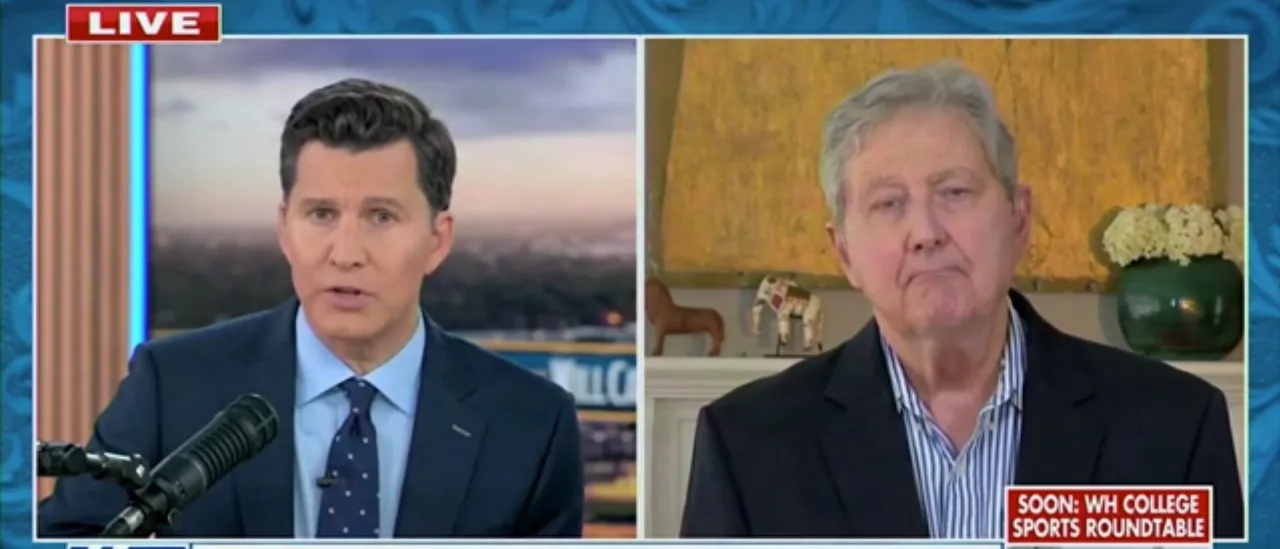
Sen. John Kennedy publicly pushed back on internal chaos at the Department of Homeland Security, arguing that distractions inside the agency are weakening the GOP’s standing on immigration and pulling focus from the administration’s priorities. He told Will Cain he speaks plainly and won’t hide concerns that others might privately share. This article lays out Kennedy’s reasoning, his public confrontation over a costly ad program, and the leadership changes at DHS that followed.
Kennedy told a national audience that he refuses to play by quiet, inside-the-beltway rules when the stakes are this high. He said bluntness is part of his job and that voters deserve to hear about managerial problems that undercut the department’s mission. From a Republican perspective, airing those problems is practical: you can’t fix what you won’t acknowledge publicly.
Will Cain asked a direct question that exposed the difference between speaking up and staying silent: “You had concerns about managerial issues at DHS, and there were concerns you said were shared by several other senators who did not choose to speak out, and you did. Why didn’t we hear from other senators?” Will Cain asked. The question tightened the focus on accountability and why leadership inside DHS had not been more transparent.
Kennedy answered his way: “Well, I can’t speak for them. I play outside the pocket. I will never completely fit in, which I consider to be one of my best qualities. I’m very frank. Sometimes, some people might think, to a fault. I have the right to remain silent, not the ability,” Kennedy told Cain. “That’s my job as a senator. And I’m not the only one that has these concerns. And the White House has had some concerns for a while.”
The senator warned that internal distractions at DHS are not a niche personnel matter; they have real consequences for policy priorities. When an agency meant to secure the border and support lawful immigration is bogged down by management controversies, it weakens the broader Republican case on immigration enforcement. Kennedy framed his criticism as loyalty to the agenda, not as personal animus toward individuals at the department.
He also singled out specific concerns that forced his hand. During a Senate Judiciary Committee hearing he pressed departing DHS leadership about a nationwide television promotion effort with a reported price tag in the hundreds of millions, asking why competitive processes were bypassed. That confrontation was aimed squarely at the appearance of cronyism and misallocation of taxpayer funds, which is exactly the sort of issue voters expect Republicans to call out.
Reports raised questions about roughly $220 million in advertising deals going to firms linked to insiders without open bidding, and Kennedy made that a topic of public debate. Republicans can use that moment to argue for streamlined, transparent management at DHS that focuses on border security and enforcement instead of expensive PR campaigns. In Kennedy’s view, letting these matters stay quiet only invites more waste and distracts from what matters most.
Leadership changes followed quickly. President Trump announced that Sen. Markwayne Mullin will take over DHS on March 31, and that Kristi Noem will move into a diplomatic role in a regional security initiative. Those decisions will test whether new leadership can reset priorities, restore competence, and rebuild the public’s confidence in the department’s mission.
Kennedy stressed the bigger political risk: immigration used to be a core Republican strength, and internal disorder can hand that advantage back to opponents. “It’s not personal. I’m very fond of Kristi [Noem]. But the problems and many more are going to be discussed. At the department, we’re distracting from our agenda and the president’s agenda. Immigration used to be our strongest issue. It’s clearly not right now,” Kennedy said. His point was simple—if Republicans want to lead on immigration they must insist on effective, accountable management at DHS.
The senator’s choice to speak openly is a reminder that public scrutiny can force fixes when private conversations fail. For Republicans focused on results, transparency and tough oversight are practical tools, not performative gestures. Kennedy’s approach underlines a straightforward idea: accountability matters, and bold, plain talk can move the needle when institutions veer off course.
!function(r,u,m,b,l,e){r._Rumble=b,r[b]||(r[b]=function(){(r[b]._=r[b]._||[]).push(arguments);if(r[b]._.length==1){l=u.createElement(m),e=u.getElementsByTagName(m)[0],l.async=1,l.src=”https://rumble.com/embedJS/ukxsg”+(arguments[1].video?’.’+arguments[1].video:”)+”/?url=”+encodeURIComponent(location.href)+”&args=”+encodeURIComponent(JSON.stringify([].slice.apply(arguments))),e.parentNode.insertBefore(l,e)}})}(window, document, “script”, “Rumble”);
Rumble(“play”, {“video”:”v74kgfk”,”div”:”rumble_v74kgfk”});
