
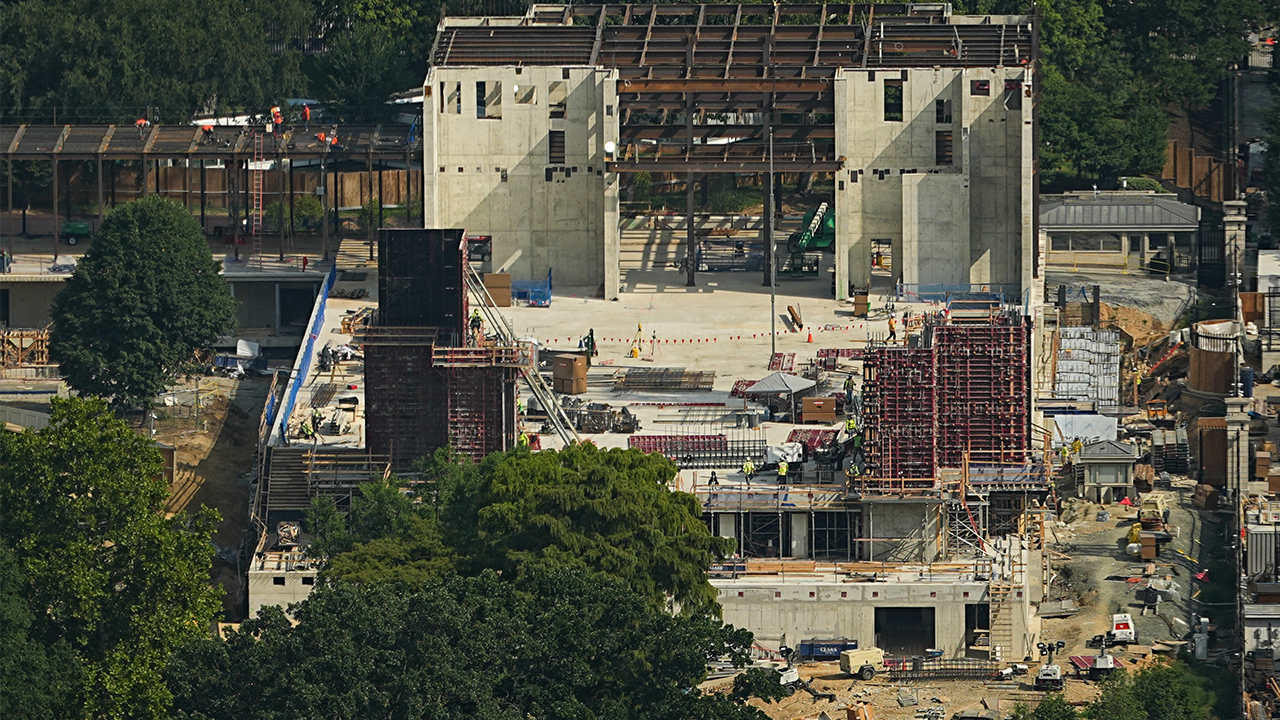
The White House ballroom fight just got a fresh jolt from the Supreme Court, which let construction keep moving while the legal battle grinds on below. The decision keeps the project alive for now, even as sharp disagreement inside the Court leaves the larger question hanging in the air.
The latest order came in a narrow 5-4 split and replaced a temporary move by Chief Justice John Roberts that had been poised to block the work. That means the project can keep advancing while the lower courts sort through the dispute, and some parts may be finished before the lawsuit catches up.
President Donald Trump wasted no time celebrating the ruling, calling it a green light for the project to keep going “without any further contingency, doubt, or threat.” He also said, “We are living in the Golden Age of America, and this Building will be one of the Greatest ever constructed in Washington, D.C.”
Trump has framed the ballroom as a major addition to the White House grounds, saying the “magnificent Ballroom and Military Complex” should be wrapped up by summer 2028. He also brushed off critics by calling the legal fight a “baseless lawsuit” and insisting the project is ahead of schedule and under budget.
He has repeated that the ballroom is being paid for by “Great Patriots and Corporations” and that it will cost taxpayers nothing. That line is central to how the administration has sold the project, especially as opponents argue that the construction raises bigger questions than just money.
Roberts was not on board. In a dissent that came down hard, he said the ballroom is “likely unlawful” and warned that the executive branch may be stepping into Congress’ lane when it comes to federal property and spending authority.
His view leaned heavily on federal law that limits new buildings on certain government parklands in Washington without explicit approval from Congress. Roberts argued that the White House grounds fall within that rule and that the ballroom sits squarely inside the restriction because it is being built on President’s Park.
He wrote that the project is “a building or structure being erected on federal park grounds” and said Congress has not granted the kind of clear permission he says would be needed. That is the heart of the separation-of-powers dispute, and it is why the case has become bigger than a single construction project.
Roberts also pushed back on how the Court treated the woman who first challenged the project, saying the White House is not just any building and historic preservation matters here. “The White House is not just any building, and—when it comes to historic preservation—Hoagland is not just any person,” he wrote.
That language gave the dissent a sharper edge, turning the case into a clash over preservation, constitutional limits, and who gets the final say over the People’s House. The lower courts still have to hear the case, so the Supreme Court’s move is not the last word on whether the ballroom can stand on legal ground.
Even so, the practical effect is immediate. Construction continues, the timeline keeps moving, and the legal challenge now has to outrun the bulldozers if it wants to change anything on the ground.
Trump has leaned into the symbolism from the start, treating the ballroom as both a statement project and a test of authority. His allies see a grand addition funded by private money, while critics see a president pushing ahead first and asking permission later.
Roberts ended his dissent with a warning that reached beyond this one fight, invoking Churchill and stressing that the rules matter when the White House is involved. “Winston Churchill once remarked that ‘[w]e shape our buildings, and afterwards our buildings shape us,’” he wrote, before adding, “All the more reason to ensure that those responsible follow the rules in deciding what to tear down and what to build up at the People’s House.”
For now, the legal battle is still open, the construction crews are still working, and the White House ballroom remains one of the most tightly watched projects in Washington. The next move belongs to the courts below, where the argument over law, power, and the future of the East Wing is still far from settled.
