
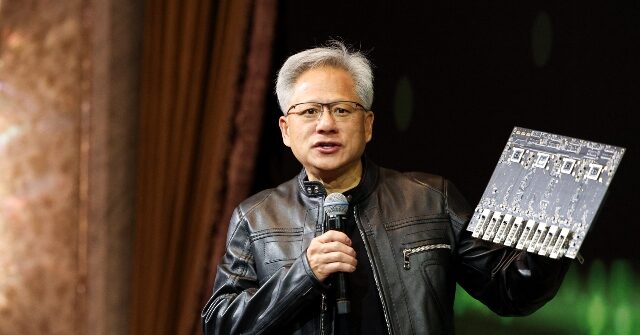
In the wake of tightened export controls imposed by the Trump administration, a significant black market for Nvidia’s advanced AI processors has emerged in China. Despite efforts to curb China’s technological advancement, Chinese distributors have managed to sell over $1 billion worth of restricted Nvidia chips. This thriving underground market highlights the ongoing demand for high-performance technology in China.
The Financial Times uncovered that Chinese distributors in Guangdong, Zhejiang, and Anhui provinces facilitated these transactions. These distributors sold the chips in ready-built racks, each containing eight B200 processors, along with necessary components. The racks are priced at a 50 percent premium compared to similar products in the United States.
Interestingly, while selling these restricted Nvidia chips within China is legal if tariffs are paid, exporting them from the U.S. violates American regulations. Nvidia insists there is no evidence of diversion or its involvement in these sales. However, the sheer volume of transactions suggests a well-organized operation to bypass U.S. export restrictions.
Nvidia’s B200 chips are in high demand due to their performance and ease of maintenance. Chinese AI companies struggle to obtain these chips legally, forcing smaller tech, finance, and healthcare companies to rely on third-party data centers. This scenario has made third-party operators critical players in China’s tech landscape.
Reports from Breitbart News allege that China’s DeepSeek AI is powered by these smuggled Nvidia chips. Scale AI CEO Alexandr Wang claims DeepSeek covertly uses high-performance H100 chips, violating U.S. export restrictions. Elon Musk weighed in, agreeing with Wang’s assertions, further fueling the debate on AI innovation and U.S. regulations.
Wang revealed that DeepSeek uses around 50,000 Nvidia H100 GPUs, a staggering number given the export controls. He noted that DeepSeek employees are unable to publicly discuss this due to U.S. regulations. Musk’s agreement with Wang’s statement has brought increased attention to the issue.
Experts have pointed out that Southeast Asian countries have become key markets for obtaining restricted chips. This has led the U.S. Department of Commerce to consider expanding export controls to these countries, including Thailand. Malaysia has already implemented stricter controls on advanced AI chip exports to China.
Despite these regulatory efforts, Chinese insiders believe new shipping routes through European countries will emerge. Supplies are reportedly already arriving via these countries, which are not on the restricted list. This has prompted a rush to secure orders before potential new regulations take effect.
The persistent demand for U.S. semiconductors in China reveals the challenges Washington faces in controlling Beijing’s tech ambitions. While export controls have somewhat constrained Chinese AI companies, the appetite for cutting-edge technology remains unquenched. Middlemen willing to take risks continue to fulfill this demand.
This situation underscores the complexities of enforcing export controls in a globalized tech market. As long as there is demand, there will likely be avenues to circumvent restrictions. The global nature of technology supply chains adds layers of difficulty to regulatory enforcement.
The debate over AI innovation and U.S. export restrictions is far from over. As new routes and methods for bypassing controls are discovered, the issue will continue to evolve. The implications for global tech development and international relations are significant.
This ongoing scenario highlights the tension between national security concerns and technological progress. Balancing these priorities will be a key challenge for policymakers. The decisions made will have far-reaching effects on the global tech landscape.
Ultimately, the situation calls for a nuanced approach to export controls. Policymakers must consider both the immediate impacts and long-term consequences. The outcome of these efforts will shape the future of AI and technological innovation worldwide.
