
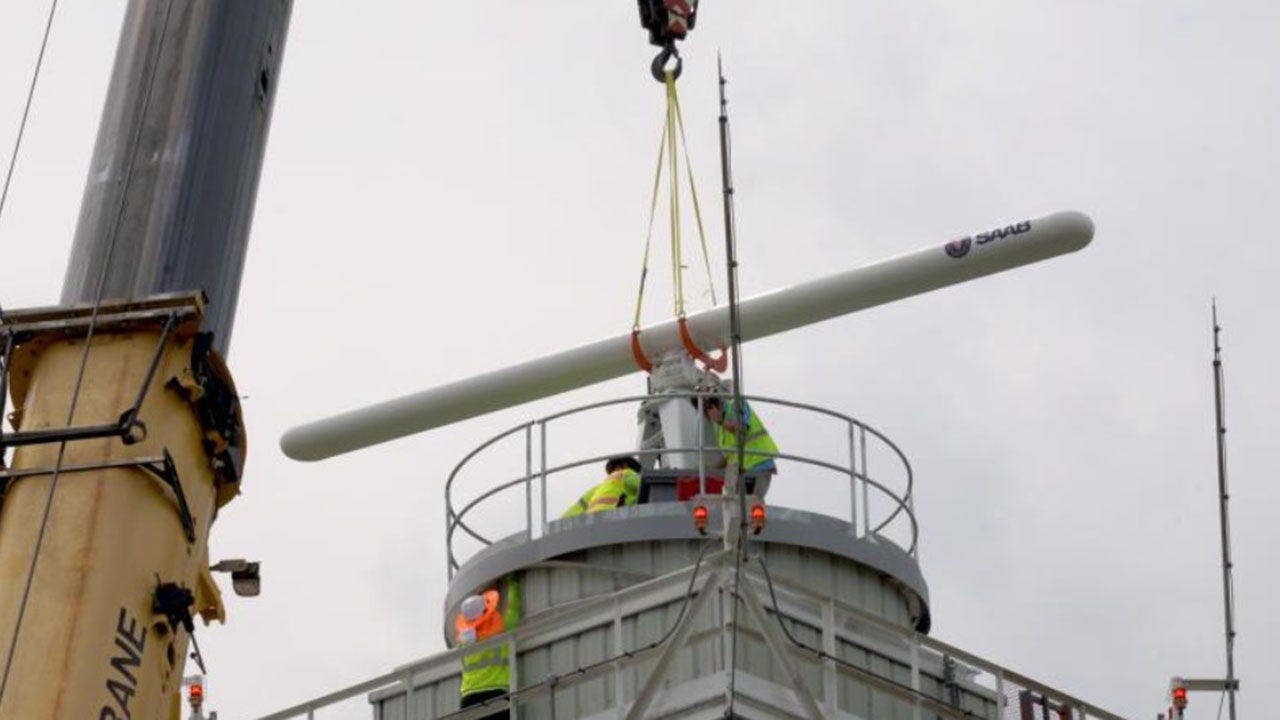
Ronald Reagan Washington National Airport has a new layer of protection after one of the deadliest aviation disasters in recent memory forced a hard look at how aircraft move around the capital’s crowded airspace. The upgrade centers on radar designed to help controllers spot planes and vehicles on runways and taxiways when visibility drops and pressure is highest.
The new system, called Surface Movement Radar-4, or SMR-4, was announced after a 2025 midair collision that killed 67 people and exposed failures that went well beyond one bad night. Transportation Secretary Sean Duffy said the technology is meant to give controllers a sharper view of airport activity and help keep traffic moving more safely in low-visibility conditions.
“This new radar is our latest reinforcement tool to equip our controllers as they safeguard our air travel. We’re working at the speed of Trump to deliver the world-class air traffic control system America deserves,” Duffy said.
The radar at Reagan National is now the sixth airport to get the system, joining other facilities that have already brought the tool online. Newark Liberty International Airport received similar technology earlier in the week, showing how quickly the government is trying to spread the upgrade to major hubs where close calls can turn serious in a heartbeat.
The logic behind the move is simple: more eyes on the ground means fewer blind spots for the people guiding aircraft in and out of tight spaces. In bad weather or heavy traffic, a better picture of every moving object can make the difference between a routine operation and a dangerous near miss.
Federal officials also said the airport will see $30.5 million in safety and technology improvements over the next three years. That money is supposed to back up the radar upgrade with broader changes that make the airfield safer and the system more reliable under pressure.
The push for fixes traces directly back to Jan. 29, 2025, when American Airlines Flight 5342, a regional jet operated by PSA Airlines, collided with a U.S. Army Black Hawk helicopter over the Potomac River near the airport. All 64 people on the passenger flight and the three people aboard the helicopter were killed, making it a shock that rattled the aviation world.
The federal government admitted liability for the crash, and the National Transportation Safety Board pointed to deeper problems in the way the airspace was designed and supervised. The agency said failures in safety oversight and risk management by the Federal Aviation Administration and the Army helped set the stage for the disaster.
That finding hit especially hard because it suggested the tragedy was not just about one moment of bad luck. Jennifer Homendy, who chairs the NTSB, said in a January 2026 report that the investigation uncovered serious and long-standing safety gaps in the airspace over the nation’s capital, adding, “Sadly, the conditions for this tragedy were in place long before the night of Jan. 29.”
The new radar is part of a broader effort to prevent another catastrophic failure from developing in plain sight. It also arrives at a time when aviation safety remains under a microscope, with every near miss and controller warning drawing renewed attention to how much depends on fast decisions and clear information.
At Reagan National, that means the stakes are still enormous, and the pressure is not fading anytime soon. The airport sits in one of the most sensitive and congested patches of airspace in the country, where even small gaps in awareness can create big problems fast.
